What does 2 Kings 3:13 mean?
“And Elisha said unto the king of Israel, What have I to do with thee? get thee to the prophets of thy father, and to the prophets of thy mother. And the king of Israel said unto him, Nay: for the LORD hath called these three kings together, to deliver them into the hand of Moab.” — 2 Kings 3:13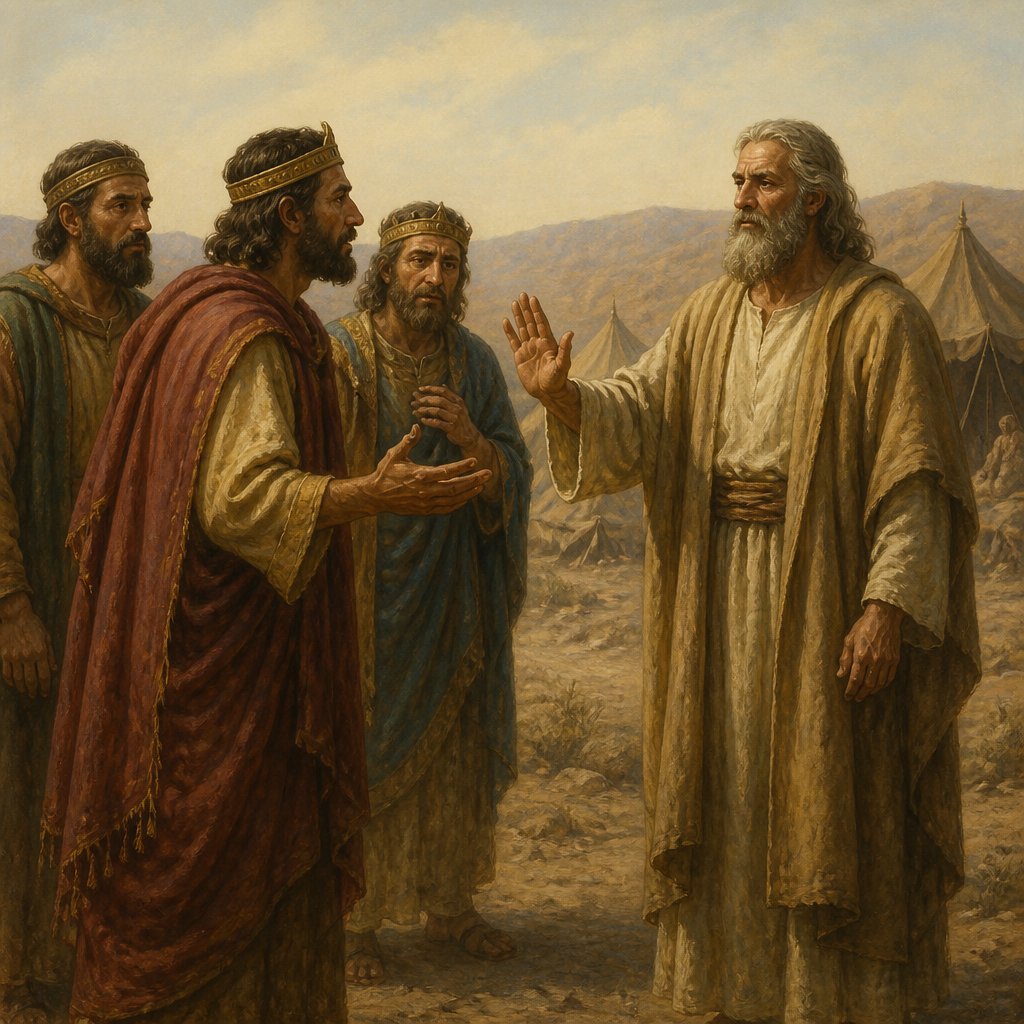
Verse 13 of 2 Kings 3 in the King James Version of the Bible reads: "And Elisha said unto the king of Israel, What have I to do with thee? get thee to the prophets of thy father, and to the prophets of thy mother. And the king of Israel said unto him, Nay: for the Lord hath called these three kings together, to deliver them into the hand of Moab."
This verse is part of a larger narrative in which the kings of Israel, Judah, and Edom join forces to fight against the king of Moab. In the preceding verses, we learn that the armies of the three kings have found themselves in a desert without water, and they seek the help of the prophet Elisha. The kings are in a desperate situation, looking for guidance and divine intervention to overcome their enemies.
In verse 13, Elisha initially rebuffs the king of Israel, asking him, "What have I to do with thee? get thee to the prophets of thy father, and to the prophets of thy mother." This response is a reflection of Elisha's commitment to serving God rather than getting involved in the political or personal affairs of the kings. Elisha is making it clear that his allegiance is to God above any earthly authority.
However, the king of Israel insists that Elisha help them, claiming that the Lord has called them together to deliver them into the hand of Moab. This suggests that the king of Israel is seeking divine justification for their military campaign and is hoping that Elisha will provide them with a favorable prophecy. Elisha eventually agrees to help the kings, and he does so by inquiring of the Lord and receiving a message from God regarding their situation.
One theme that emerges from this passage is the tension between earthly power and divine authority. The kings of Israel, Judah, and Edom come to Elisha seeking assistance, but they are reminded that their ultimate dependence should be on God rather than on their own military might or political alliances.
Another important theme is the idea of obedience and faithfulness to God. Elisha's initial reluctance to assist the kings may be seen as a reminder that he serves God above all else. The kings' insistence on seeking divine intervention also reflects their acknowledgment of the need for God's guidance in their endeavors.
The context of this passage is also significant. The kings are facing a dire situation, with their armies stranded in a desert and facing the threat of the enemy. Their decision to seek out Elisha suggests that they recognize the limitations of their own power and the need for a higher authority to intervene on their behalf.
There are also symbolic elements in this verse. Elisha's rebuke of the king of Israel can be seen as a reminder of the prophet's role as a mediator between God and the people. His insistence on seeking God's guidance before offering assistance serves as a symbol of the importance of seeking divine wisdom and direction in times of trouble.
Ultimately, this passage conveys a message about the need for humility, faithfulness, and reliance on God in the face of challenging circumstances. It serves as a reminder that earthly power and human efforts are ultimately limited, and that true deliverance comes from God. Through this story, readers are encouraged to turn to God in times of need and to trust in His providence rather than in their own strength.
Get our apps


Artwork for 2 Kings 3:13

2 Kings 3:13 - "And Elisha said unto the king of Israel, What have I to do with thee? get thee to the prophets of thy father, and to the prophets of thy mother. And the king of Israel said unto him, Nay: for the LORD hath called these three kings together, to deliver them into the hand of Moab."
"And Elisha said unto the king of Israel, What have I to do with thee? get thee to the prophets of thy father, and to the prophets of thy mother. And the king of Israel said unto him, Nay: for the LORD hath called these three kings together, to deliver them into the hand of Moab." - 2 Kings 3:13

2 Kings 13:3 - "¶ And the anger of the LORD was kindled against Israel, and he delivered them into the hand of Hazael king of Syria, and into the hand of Ben-hadad the son of Hazael, all their days."

2 Kings 3:15

2 Kings 3:15

2 Kings 3:15

2 Kings 13:13 - "And Joash slept with his fathers; and Jeroboam sat upon his throne: and Joash was buried in Samaria with the kings of Israel."

2 Kings 3:16-19

2 Kings 13:22 - "¶ But Hazael king of Syria oppressed Israel all the days of Jehoahaz."

2 Kings 13:8 - "¶ Now the rest of the acts of Jehoahaz, and all that he did, and his might, are they not written in the book of the chronicles of the kings of Israel?"

2 Kings 19:13 - "Where is the king of Hamath, and the king of Arpad, and the king of the city of Sepharvaim, of Hena, and Ivah?"

2 Kings 3:10 - "And the king of Israel said, Alas! that the LORD hath called these three kings together, to deliver them into the hand of Moab!"

1 Kings 3:13 - "And I have also given thee that which thou hast not asked, both riches, and honour: so that there shall not be any among the kings like unto thee all thy days."

2 Kings 3:23 - "And they said, This is blood: the kings are surely slain, and they have smitten one another: now therefore, Moab, to the spoil."

2 Kings 2:13 - "He took up also the mantle of Elijah that fell from him, and went back, and stood by the bank of Jordan;"

2 Kings 3:6 - "¶ And king Jehoram went out of Samaria the same time, and numbered all Israel."

2 Kings 13:12 - "And the rest of the acts of Joash, and all that he did, and his might wherewith he fought against Amaziah king of Judah, are they not written in the book of the chronicles of the kings of Israel?"

2 Kings 3:16 - "And he said, Thus saith the LORD, Make this valley full of ditches."

2 Thessalonians 3:13 - "But ye, brethren, be not weary in well doing."

2 Kings 13:20 - "¶ And Elisha died, and they buried him. And the bands of the Moabites invaded the land at the coming in of the year."

2 Kings 13:24 - "So Hazael king of Syria died; and Ben-hadad his son reigned in his stead."

"And Joash slept with his fathers; and Jeroboam sat upon his throne: and Joash was buried in Samaria with the kings of Israel." - 2 Kings 13:13

2 Kings 11:13 - "¶ And when Athaliah heard the noise of the guard and of the people, she came to the people into the temple of the LORD."

2 Kings 3:3 - "Nevertheless he cleaved unto the sins of Jeroboam the son of Nebat, which made Israel to sin; he departed not therefrom."

2 Kings 13:2 - "And he did that which was evil in the sight of the LORD, and followed the sins of Jeroboam the son of Nebat, which made Israel to sin; he departed not therefrom."

2 Kings 3:5 - "But it came to pass, when Ahab was dead, that the king of Moab rebelled against the king of Israel."

2 Kings 13:9 - "And Jehoahaz slept with his fathers; and they buried him in Samaria: and Joash his son reigned in his stead."

2 Kings 13:15 - "And Elisha said unto him, Take bow and arrows. And he took unto him bow and arrows."

2 Kings 13:4 - "And Jehoahaz besought the LORD, and the LORD hearkened unto him: for he saw the oppression of Israel, because the king of Syria oppressed them."

2 Kings 3:18 - "And this is but a light thing in the sight of the LORD: he will deliver the Moabites also into your hand."