What does 2 Kings 3:7 mean?
“And he went and sent to Jehoshaphat the king of Judah, saying, The king of Moab hath rebelled against me: wilt thou go with me against Moab to battle? And he said, I will go up: I am as thou art, my people as thy people, and my horses as thy horses.” — 2 Kings 3:7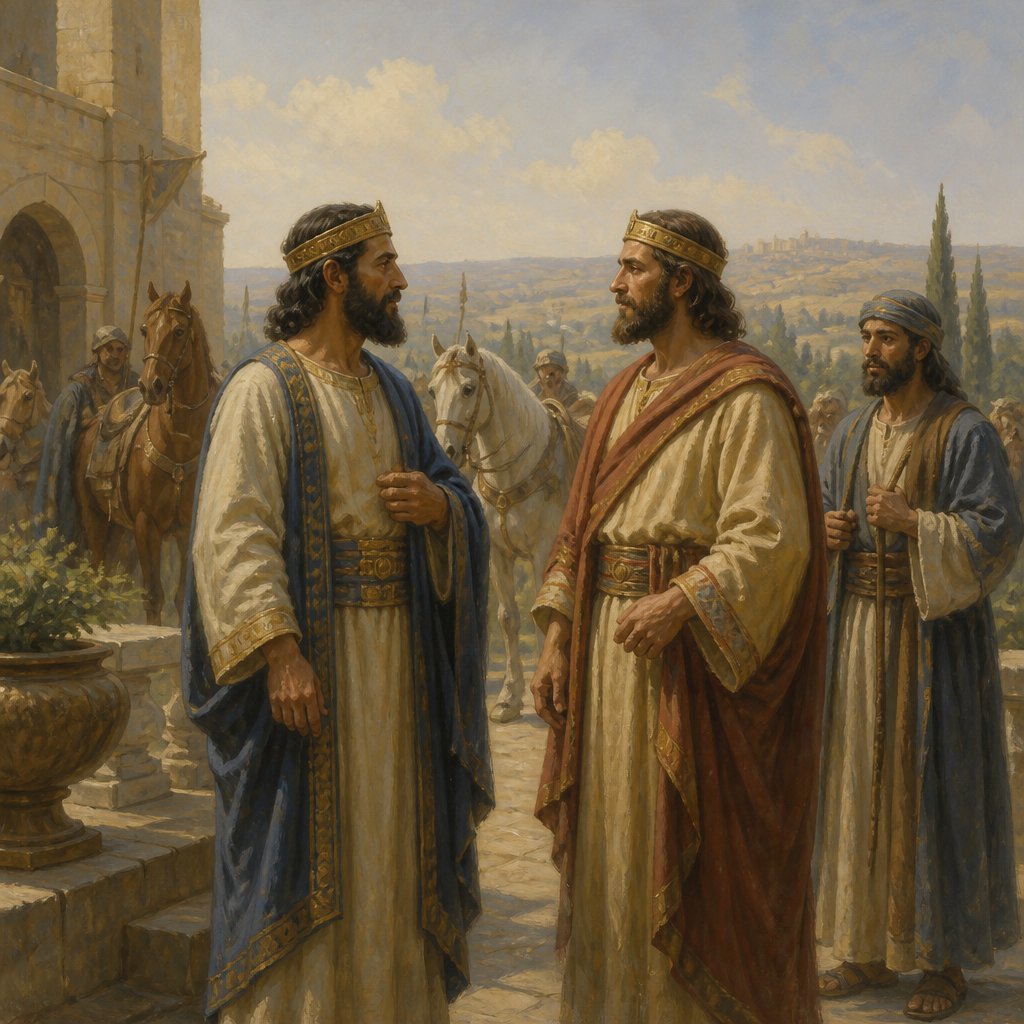
The verse 2 Kings 3:7 from the King James Version (KJV) reads:
"And he went and sent to Jehoshaphat the king of Judah, saying, The king of Moab hath rebelled against me: wilt thou go with me against Moab to battle? And he said, I will go up: I am as thou art, my people as thy people, and my horses as thy horses."
This verse is part of a larger passage that details the alliance between the kings of Israel, Judah, and Edom as they prepare to wage war against the Moabites. The verse serves as a call to action from the king of Israel to Jehoshaphat, the king of Judah, seeking his assistance in the upcoming battle with the Moabites.
The verse is rich in themes such as alliances, leadership, and military strategy. It also provides insight into the relationships and power dynamics between the different kings and their respective kingdoms.
In the historical context of the book of 2 Kings, the kingdom of Israel had split from the kingdom of Judah after the death of King Solomon, with Israel being ruled by the northern tribes and Judah by the southern tribes. The relationship between these two kingdoms was often strained, with periods of conflict and cooperation. In this verse, we see an example of the leaders of these two kingdoms coming together in a time of need, setting aside their differences for a common goal.
The verse also highlights the importance of leadership and making strategic alliances in times of conflict. The king of Israel recognizes the need for additional military support in the face of the Moabite rebellion and reaches out to Jehoshaphat for assistance. This demonstrates a practical approach to leadership, seeking help when needed and putting aside pride for the greater good.
The response of Jehoshaphat is also notable in the verse. He agrees to join forces with the king of Israel, proclaiming, "I am as thou art, my people as thy people, and my horses as thy horses." This statement conveys a sense of unity and solidarity between the two kingdoms, emphasizing their shared interests and common destiny. It also reflects the importance of loyalty and commitment in forming and maintaining alliances.
Symbolism can also be found in this verse. The act of joining forces and going to battle together can be seen as a symbol of unity and strength in the face of adversity. The horses mentioned in the verse can symbolize the military power and resources that each kingdom brings to the alliance. Furthermore, the willingness of the two kings to come together despite their differences can be seen as a symbol of the potential for cooperation and reconciliation in the face of conflict.
In conclusion, 2 Kings 3:7 is a verse that offers valuable insights into themes of alliances, leadership, and military strategy. It provides a snapshot of the political and military relationships between the kingdoms of Israel and Judah, as well as the practical considerations and symbolic significance of their alliance. This verse serves as a reminder of the importance of unity and cooperation in times of crisis, and the potential for strength and success that comes from joining forces towards a common goal.
Get our apps


Artwork for 2 Kings 3:7

2 Kings 3:7 - "And he went and sent to Jehoshaphat the king of Judah, saying, The king of Moab hath rebelled against me: wilt thou go with me against Moab to battle? And he said, I will go up: I am as thou art, my people as thy people, and my horses as thy horses."
"And he went and sent to Jehoshaphat the king of Judah, saying, The king of Moab hath rebelled against me: wilt thou go with me against Moab to battle? And he said, I will go up: I am as thou art, my people as thy people, and my horses as thy horses." - 2 Kings 3:7

2 Kings 7:3 - "¶ And there were four leprous men at the entering in of the gate: and they said one to another, Why sit we here until we die?"

2 Kings 3:15

2 Kings 3:15

2 Kings 3:15

2 Kings 3:16-19

2 Kings 7:2

2 Kings 7:11 - "And he called the porters; and they told it to the king's house within."

2 Kings 7:7 - "Wherefore they arose and fled in the twilight, and left their tents, and their horses, and their asses, even the camp as it was, and fled for their life."

1 Kings 7:3 - "And it was covered with cedar above upon the beams, that lay on forty five pillars, fifteen in a row."

2 Kings 3:10 - "And the king of Israel said, Alas! that the LORD hath called these three kings together, to deliver them into the hand of Moab!"

1 Kings 3:7 - "And now, O LORD my God, thou hast made thy servant king instead of David my father: and I am but a little child: I know not how to go out or come in."

2 Kings 3:23 - "And they said, This is blood: the kings are surely slain, and they have smitten one another: now therefore, Moab, to the spoil."

2 Kings 3:6 - "¶ And king Jehoram went out of Samaria the same time, and numbered all Israel."

2 Kings 2:7 - "And fifty men of the sons of the prophets went, and stood to view afar off: and they two stood by Jordan."

2 Kings 3:16 - "And he said, Thus saith the LORD, Make this valley full of ditches."

2 Kings 3:3 - "Nevertheless he cleaved unto the sins of Jeroboam the son of Nebat, which made Israel to sin; he departed not therefrom."

2 Thessalonians 3:6-7

2 Kings 22:7 - "Howbeit there was no reckoning made with them of the money that was delivered into their hand, because they dealt faithfully."

2 Kings 20:7 - "And Isaiah said, Take a lump of figs. And they took and laid it on the boil, and he recovered."

2 Kings 3:5 - "But it came to pass, when Ahab was dead, that the king of Moab rebelled against the king of Israel."
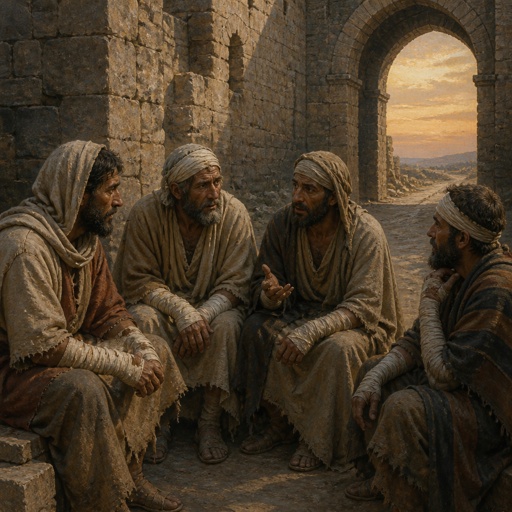
"¶ And there were four leprous men at the entering in of the gate: and they said one to another, Why sit we here until we die?" - 2 Kings 7:3

2 Kings 7:14 - "They took therefore two chariot horses; and the king sent after the host of the Syrians, saying, Go and see."

2 Kings 3:18 - "And this is but a light thing in the sight of the LORD: he will deliver the Moabites also into your hand."

2 Kings 25:3 - "And on the ninth day of the fourth month the famine prevailed in the city, and there was no bread for the people of the land."

2 Kings 3:21 - "¶ And when all the Moabites heard that the kings were come up to fight against them, they gathered all that were able to put on armour, and upward, and stood in the border."

2 Kings 6:7 - "Therefore said he, Take it up to thee. And he put out his hand, and took it."

2 Kings 7:20 - "And so it fell out unto him: for the people trode upon him in the gate, and he died."

2 Kings 7:6 - "For the Lord had made the host of the Syrians to hear a noise of chariots, and a noise of horses, even the noise of a great host: and they said one to another, Lo, the king of Israel hath hired against us the kings of the Hittites, and the kings of the Egyptians, to come upon us."