What does 2 Kings 9:3 mean?
"Then take the box of oil, and pour it on his head, and say, Thus saith the LORD, I have anointed thee king over Israel. Then open the door, and flee, and tarry not." - 2 Kings 9:3
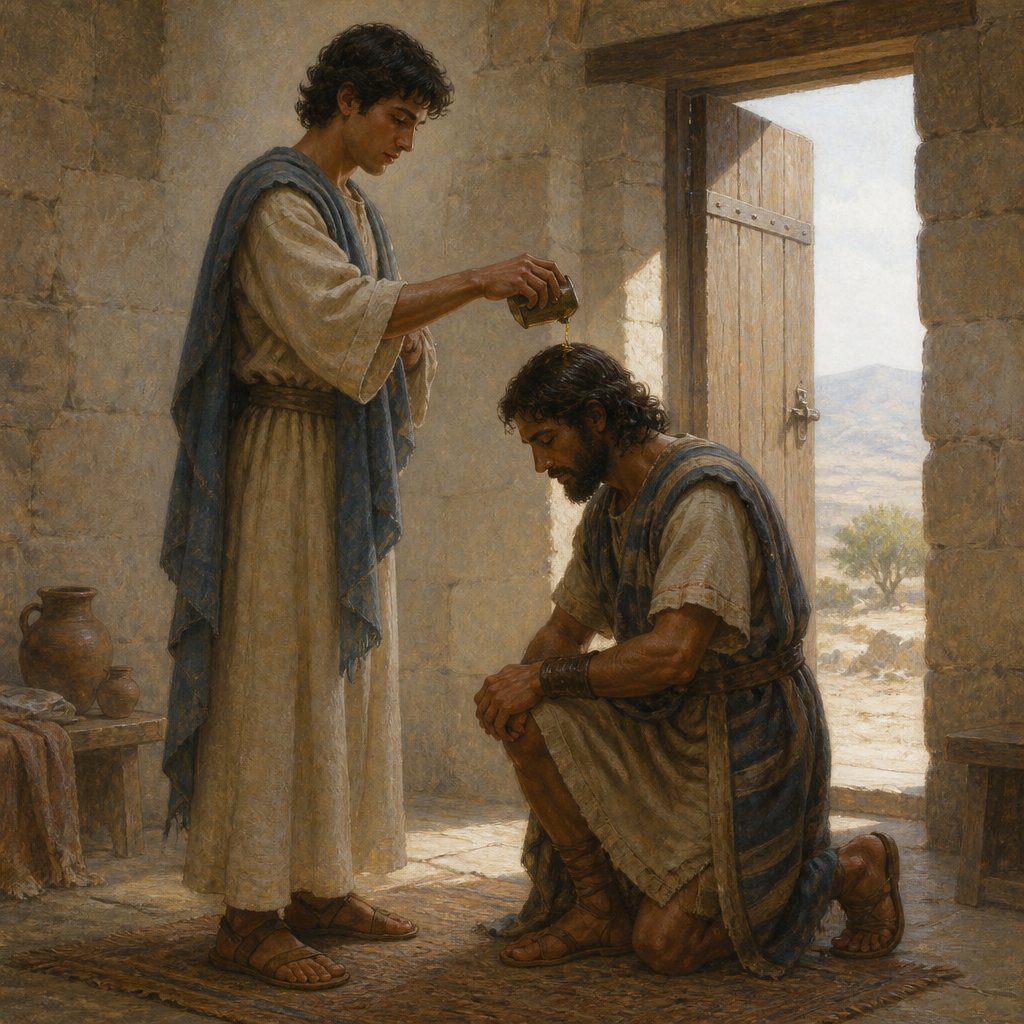
The Bible verse 2 Kings 9:3 from the King James Version (KJV) states, "Then take the box of oil, and pour it on his head, and say, Thus saith the Lord, I have anointed thee king over Israel. Then open the door, and flee, and tarry not." This verse is part of a larger story in the Old Testament that describes the anointing of Jehu as the king of Israel. In order to fully understand the meaning and significance of this verse, it is important to examine it in its broader context within the biblical narrative and consider the themes, symbolism, and cultural significance it holds.
The book of 2 Kings is part of the historical books of the Old Testament and continues the narrative of the Israelite monarchy. The verse in question is situated within the larger story of the prophet Elisha commissioning Jehu to carry out God's judgment on the house of Ahab, who had been the king of Israel. Ahab and his wife Jezebel had led the people of Israel into idolatry and wickedness, and as a result, they incurred God's wrath. In 2 Kings 9, Elisha sends one of his disciples to anoint Jehu as the new king of Israel, instructing him to pour oil on Jehu's head and deliver the message that he is God's chosen leader to bring about judgment and restoration.
The act of anointing was a significant ritual in ancient Israel, symbolizing God's choice and empowerment of an individual for a particular role or task. The pouring of oil on the head signified a consecration and setting apart for divine purpose. In the case of Jehu, this anointing marked the beginning of his reign as the instrument of God's judgment on the house of Ahab and the eradication of Baal worship from the land. Thus, the verse underscores the divine authority behind Jehu's ascension to the throne and the significance of his mission to carry out God's will.
The themes present in this verse include divine sovereignty, obedience to God's call, and the fulfillment of prophecy. God's sovereignty is evident in the selection and anointing of Jehu as king, emphasizing that he is the ultimate authority over the affairs of nations and the course of history. Elisha's disciple demonstrates obedience by faithfully carrying out his instructions to anoint Jehu and deliver the message from the Lord. This highlights the importance of responding to God's call and serving as instruments of His will. Additionally, the verse reflects the fulfillment of prophecy, as the anointing of Jehu aligns with the earlier predictions of judgment upon the house of Ahab and the establishment of a new dynasty.
The symbolism in this verse also holds great significance. The act of anointing with oil symbolizes empowerment, consecration, and divine approval. It signifies the transfer of authority and the divine commissioning of a leader for a specific purpose. In the case of Jehu, the use of oil as a symbol of anointment underscores the divine backing behind his rise to power and the authority vested in him to execute God's judgment. Furthermore, the act of anointing Jehu in secret and then instructing the messenger to quickly flee and not tarry serves as a symbol of the urgency and secrecy surrounding the mission entrusted to Jehu. It reflects the clandestine nature of God's plan to overthrow the wickedness of the house of Ahab.
In conclusion, 2 Kings 9:3 from the King James Version of the Bible holds deep meaning and significance within the broader biblical narrative. It illuminates themes of divine sovereignty, obedience to God's call, and the fulfillment of prophecy, while also employing powerful symbolism to convey the gravity of Jehu's anointing as the king of Israel. Through this verse, we gain insight into the divine mechanisms behind the rise and fall of rulers, as well as the faithful obedience required of those called to carry out God's purposes.
Have questions about 2 Kings 9:3?
Dive deeper into this scripture with Bible Chat — an AI-powered tool for exploring God's Word through conversation. Ask questions, get context, and grow in your understanding of the Bible.
Get Our Apps


2 Kings 9:3 Artwork

2 Kings 9:3 - "Then take the box of oil, and pour it on his head, and say, Thus saith the LORD, I have anointed thee king over Israel. Then open the door, and flee, and tarry not."
"Then take the box of oil, and pour it on his head, and say, Thus saith the LORD, I have anointed thee king over Israel. Then open the door, and flee, and tarry not." - 2 Kings 9:3

2 Kings 3:9 - "So the king of Israel went, and the king of Judah, and the king of Edom: and they fetched a compass of seven days' journey: and there was no water for the host, and for the cattle that followed them."

1 Kings 3:9

2 kings 9:34-36

2 Kings 3:15

2 Kings 3:15

2 Kings 3:15

2 Chronicles 9:22 - "And king Solomon passed all the kings of the earth in riches and wisdom."

2 Kings 3:16-19

2 Kings 3:10 - "And the king of Israel said, Alas! that the LORD hath called these three kings together, to deliver them into the hand of Moab!"

2 Kings 9:9 - "And I will make the house of Ahab like the house of Jeroboam the son of Nebat, and like the house of Baasha the son of Ahijah:"

"So the king of Israel went, and the king of Judah, and the king of Edom: and they fetched a compass of seven days' journey: and there was no water for the host, and for the cattle that followed them." - 2 Kings 3:9

2 Kings 3:23 - "And they said, This is blood: the kings are surely slain, and they have smitten one another: now therefore, Moab, to the spoil."

2 Kings 9:4 - "¶ So the young man, even the young man the prophet, went to Ramoth-gilead."

2 Kings 9:23 - "And Joram turned his hands, and fled, and said to Ahaziah, There is treachery, O Ahaziah."

2 Kings 9:29 - "And in the eleventh year of Joram the son of Ahab began Ahaziah to reign over Judah."

2 Kings 3:3 - "Nevertheless he cleaved unto the sins of Jeroboam the son of Nebat, which made Israel to sin; he departed not therefrom."

2 Kings 3:6 - "¶ And king Jehoram went out of Samaria the same time, and numbered all Israel."

2 Kings 5:9 - "So Naaman came with his horses and with his chariot, and stood at the door of the house of Elisha."

1 Kings 9:2 - "That the LORD appeared to Solomon the second time, as he had appeared unto him at Gibeon."

2 Kings 3:5 - "But it came to pass, when Ahab was dead, that the king of Moab rebelled against the king of Israel."

2 Kings 3:16 - "And he said, Thus saith the LORD, Make this valley full of ditches."

2 Kings 9:31 - "And as Jehu entered in at the gate, she said, Had Zimri peace, who slew his master?"

2 Kings 9:35 - "And they went to bury her: but they found no more of her than the skull, and the feet, and the palms of her hands."

2 Kings 24:9 - "And he did that which was evil in the sight of the LORD, according to all that his father had done."

1 Kings 9:3 - "And the LORD said unto him, I have heard thy prayer and thy supplication, that thou hast made before me: I have hallowed this house, which thou hast built, to put my name there for ever; and mine eyes and mine heart shall be there perpetually."

2 Kings 3:18 - "And this is but a light thing in the sight of the LORD: he will deliver the Moabites also into your hand."

2 Kings 25:3 - "And on the ninth day of the fourth month the famine prevailed in the city, and there was no bread for the people of the land."

2 Kings 3:21 - "¶ And when all the Moabites heard that the kings were come up to fight against them, they gathered all that were able to put on armour, and upward, and stood in the border."