What does 2 Samuel 11:12 mean?
"And David said to Uriah, Tarry here to day also, and to morrow I will let thee depart. So Uriah abode in Jerusalem that day, and the morrow." - 2 Samuel 11:12
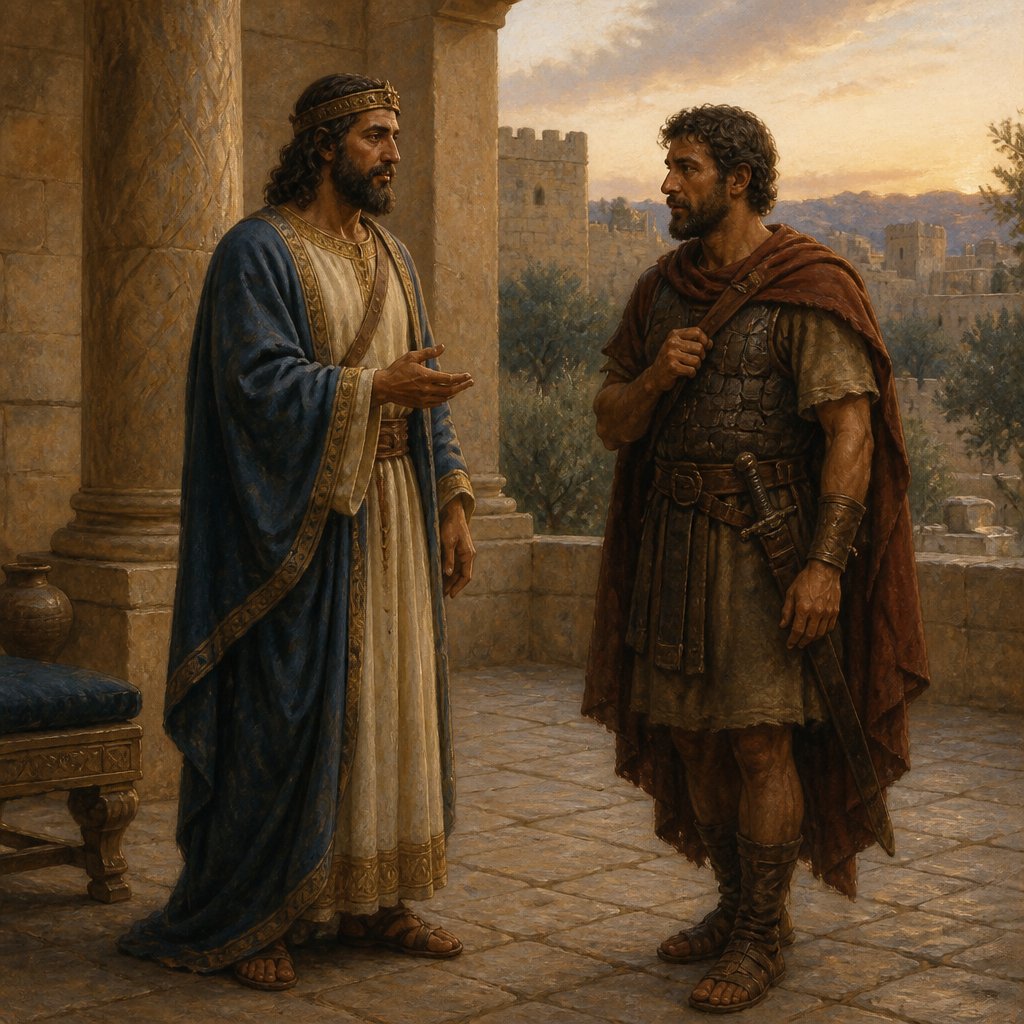
2 Samuel 11:12 (KJV) "And David said to Uriah, Tarry here today also, and to morrow I will let thee depart. So Uriah abode in Jerusalem that day, and the morrow."
This verse comes from the second book of Samuel, which chronicles the life and reign of King David, the second king of Israel. The chapter in which this verse appears tells the tragic story of David's adultery with Bathsheba and the subsequent murder of her husband, Uriah. This verse specifically focuses on David's attempt to cover up his sin by manipulating Uriah into spending the night with his wife, Bathsheba, in the hopes of concealing her pregnancy and passing off the child as Uriah's.
The verse captures the depth of David's deceit and manipulation as he tries to orchestrate a situation that would mask his own wrongdoing. It provides insight into the lengths to which he was willing to go to preserve his reputation and avoid the consequences of his actions. Additionally, this verse also highlights the tragic irony of a man like David, who was chosen by God to be a king after His own heart, succumbing to such moral depravity.
In the larger context of the biblical narrative, this verse serves as a pivotal moment in David's life and reign. It marks the beginning of a downward spiral for the king, as his once honorable and righteous character is tarnished by his sinful choices. The consequences of David's actions in this chapter reverberate throughout the rest of his reign, ultimately leading to a series of calamities for him and his family.
This verse also sheds light on the theme of abuse of power and privilege. As the king, David wielded immense authority over his subjects, yet he chose to abuse his power for personal gain. His actions reveal the corrupting influence of unchecked authority and the dangers of moral compromise. It serves as a cautionary tale for those in positions of power, urging them to remain vigilant against the temptations of privilege and to uphold their moral integrity.
Furthermore, the symbolism in this verse is profound. Uriah, the loyal and honorable soldier, represents the innocent victim of David's sin. His unwavering loyalty to his king, even in the face of manipulation, stands in stark contrast to David's betrayal. This juxtaposition of characters underscores the contrast between righteousness and corruption, loyalty and betrayal.
Moreover, David's manipulation of Uriah reflects a broader theme of injustice and exploitation. It illustrates the abuse of authority and the disregard for the well-being of others for selfish gain. In doing so, it condemns the systemic oppression and manipulation of the vulnerable by those in power.
In conclusion, 2 Samuel 11:12 captures a critical moment in the life of King David, serving as a powerful reminder of the consequences of moral compromise and the abuse of power. It illuminates themes of deceit, manipulation, abuse of authority, and the tragic consequences of sin. It stands as a timeless warning against the pitfalls of unchecked power and the enduring need for moral accountability and integrity.
Have questions about 2 Samuel 11:12?
Dive deeper into this scripture with Bible Chat — an AI-powered tool for exploring God's Word through conversation. Ask questions, get context, and grow in your understanding of the Bible.
Get Our Apps


2 Samuel 11:12 Artwork

2 Samuel 11:12 - "And David said to Uriah, Tarry here to day also, and to morrow I will let thee depart. So Uriah abode in Jerusalem that day, and the morrow."
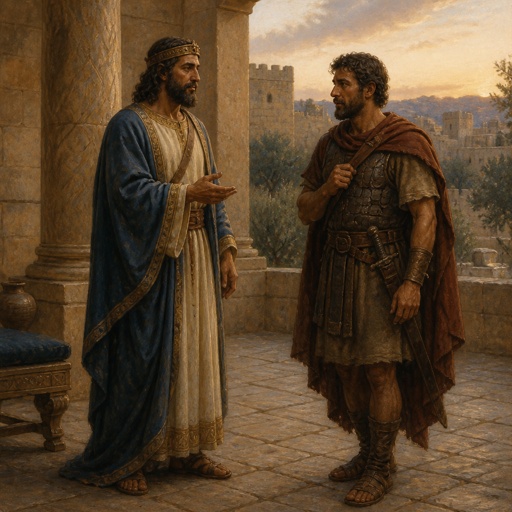
"And David said to Uriah, Tarry here to day also, and to morrow I will let thee depart. So Uriah abode in Jerusalem that day, and the morrow." - 2 Samuel 11:12

2 Samuel 11:9

2 Samuel 11

2 samuel 11

2 Samuel 11:11

1 Samuel 12:11 - "And the LORD sent Jerubbaal, and Bedan, and Jephthah, and Samuel, and delivered you out of the hand of your enemies on every side, and ye dwelled safe."

1 Samuel 11:12 - "¶ And the people said unto Samuel, Who is he that said, Shall Saul reign over us? bring the men, that we may put them to death."

2 Samuel 5:12

1 Samuel 2:12

2 Samuel 12:2 - "The rich man had exceeding many flocks and herds:"

2 Samuel 12:12 - "For thou didst it secretly: but I will do this thing before all Israel, and before the sun."

2 Samuel 2:11 - "And the time that David was king in Hebron over the house of Judah was seven years and six months."

2 Samuel 2:12 - "¶ And Abner the son of Ner, and the servants of Ish-bosheth the son of Saul, went out from Mahanaim to Gibeon."

2 Samuel 11:18 - "¶ Then Joab sent and told David all the things concerning the war;"

1 Samuel 2:12 - "¶ Now the sons of Eli were sons of Belial; they knew not the LORD."

2 Samuel 21:11 - "And it was told David what Rizpah the daughter of Aiah, the concubine of Saul, had done."

2 Samuel 11:5 - "And the woman conceived, and sent and told David, and said, I am with child."

2 Samuel 12:26 - "And Joab fought against Rabbah of the children of Ammon, and took the royal city."

2 Samuel 11:22 - "¶ So the messenger went, and came and shewed David all that Joab had sent him for."

2 Samuel 3:11 - "And he could not answer Abner a word again, because he feared him."

2 Samuel 12:29 - "And David gathered all the people together, and went to Rabbah, and fought against it, and took it."

2 Samuel 11:14 - "¶ And it came to pass in the morning, that David wrote a letter to Joab, and sent it by the hand of Uriah."

2 Samuel 22:11 - "And he rode upon a cherub, and did fly: and he was seen upon the wings of the wind."

2 Samuel 23:12 - "But he stood in the midst of the ground, and defended it, and slew the Philistines: and the LORD wrought a great victory."

2 Samuel 11:6 - "¶ And David sent to Joab, saying, Send me Uriah the Hittite. And Joab sent Uriah to David."

2 Samuel 11:26 - "¶ And when the wife of Uriah heard that Uriah her husband was dead, she mourned for her husband."

2 Samuel 8:12 - "Of Syria, and of Moab, and of the children of Ammon, and of the Philistines, and of Amalek, and of the spoil of Hadadezer, son of Rehob, king of Zobah."

2 Samuel 22:12 - "And he made darkness pavilions round about him, dark waters, and thick clouds of the skies."

2 Samuel 16:12 - "It may be that the LORD will look on mine affliction, and that the LORD will requite me good for his cursing this day."