What does 2 Samuel 12:9 mean?
“Wherefore hast thou despised the commandment of the LORD, to do evil in his sight? thou hast killed Uriah the Hittite with the sword, and hast taken his wife to be thy wife, and hast slain him with the sword of the children of Ammon.” — 2 Samuel 12:9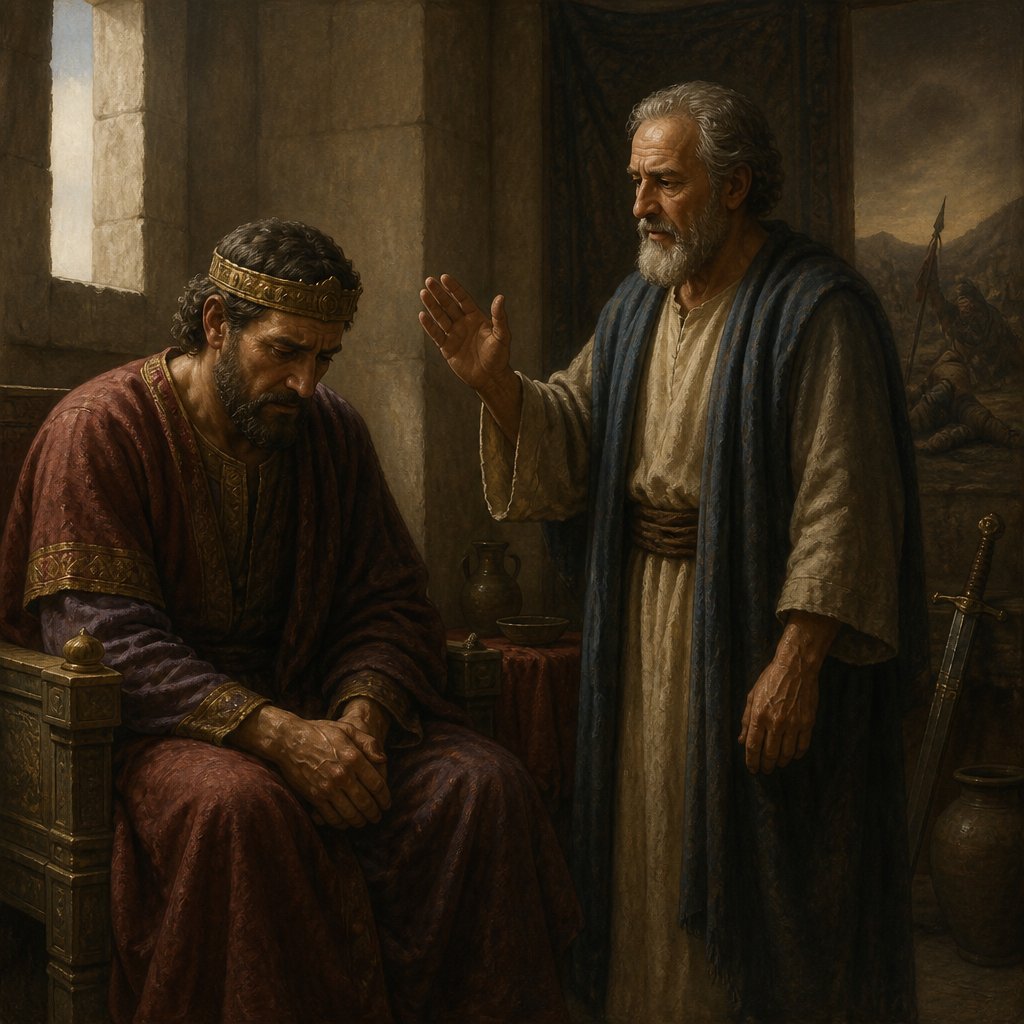
The Bible verse 2 Samuel 12:9 in the King James Version reads, "Wherefore hast thou despised the commandment of the LORD, to do evil in his sight? thou hast killed Uriah the Hittite with the sword, and hast taken his wife to be thy wife, and hast slain him with the sword of the children of Ammon."
This verse is part of a larger passage in which the prophet Nathan confronts King David about his sin of adultery with Bathsheba and the murder of her husband, Uriah. In this particular verse, Nathan is directly addressing David and exposing his sins before the Lord. This verse is a pivotal moment in the narrative of David's reign as king of Israel, as it marks the beginning of the consequences he will face for his grievous actions.
The context of this verse is essential for understanding its significance. In 2 Samuel 11, we read about David's adulterous affair with Bathsheba, the wife of Uriah, one of David's loyal soldiers. David succumbed to temptation and committed the grave sins of adultery and murder to cover up his wrongdoing. His actions were a direct violation of the commandments of the Lord, and Nathan was sent by God to confront David about his sins.
In 2 Samuel 12:1-7, Nathan tells David a parable about a rich man who took a poor man's only lamb to illustrate the gravity of David's sin and how he had taken Uriah's wife. When David reacts with anger and demands justice for the poor man, Nathan reveals to him that he is the rich man in the story, and he has sinned against the Lord. This sets the stage for the verse in question, where Nathan explicitly calls out David for despising the commandment of the Lord and committing evil in his sight.
The themes present in this verse are manifold. Firstly, it underscores the importance of obedience to God's commandments. David's actions demonstrate a blatant disregard for the laws that God had set in place, and the consequences he faces are a testament to the severity of his transgressions. This serves as a warning to all believers about the destructive nature of sin and the importance of staying faithful to God's commands.
Secondly, this verse speaks to the consequences of sin. David's sins have far-reaching implications, not only for himself but for his kingdom and his family. The death of his and Bathsheba's first child, the internal strife within his family, and the turmoil that plagued his reign are all direct results of his disobedience. This verse serves as a powerful reminder that our actions have consequences, and sin can lead to devastation.
Furthermore, this passage highlights the need for repentance and humility before God. Despite David's unfathomable sins, he is given the opportunity to repent and seek forgiveness from the Lord. His psalm of repentance in Psalm 51 reflects his contrite heart and the depth of his remorse for his actions. The story of David and Bathsheba is a poignant reminder that God is merciful and forgiving to those who turn to Him in true repentance.
Symbolically, this verse represents the universal struggle between temptation and righteousness. David, a man after God's own heart, fell prey to the allure of sin and suffered the consequences. His story serves as a cautionary tale, reminding believers to remain vigilant against the temptations of the world and to uphold God's commandments with unwavering obedience.
In conclusion, 2 Samuel 12:9 is a pivotal verse in the biblical narrative, encapsulating themes of obedience, consequences of sin, repentance, and the universal struggle between temptation and righteousness. The context of David's sins and Nathan's rebuke provides a profound and timeless lesson for believers about the destructive nature of sin and God's unwavering justice and mercy. This verse serves as a powerful reminder of the importance of living in accordance with God's commandments and seeking His forgiveness when we fall short.
Get our apps


Artwork for 2 Samuel 12:9

2 Samuel 12:9 - "Wherefore hast thou despised the commandment of the LORD, to do evil in his sight? thou hast killed Uriah the Hittite with the sword, and hast taken his wife to be thy wife, and hast slain him with the sword of the children of Ammon."
"Wherefore hast thou despised the commandment of the LORD, to do evil in his sight? thou hast killed Uriah the Hittite with the sword, and hast taken his wife to be thy wife, and hast slain him with the sword of the children of Ammon." - 2 Samuel 12:9

2 Samuel 9:12 - "And Mephibosheth had a young son, whose name was Micha. And all that dwelt in the house of Ziba were servants unto Mephibosheth."

2 Samuel 5:12

1 Samuel 2:12

2 Samuel 11:9

2 Samuel 12:2 - "The rich man had exceeding many flocks and herds:"

2 Samuel 12:12 - "For thou didst it secretly: but I will do this thing before all Israel, and before the sun."

1 Samuel 9:1-2

2 samuel 9:7 fhdhdhdhhd

2 Samuel 2:12 - "¶ And Abner the son of Ner, and the servants of Ish-bosheth the son of Saul, went out from Mahanaim to Gibeon."

2 Corinthians 12:9

2 Corinthians 12:9

2 Corinthians 12:9

1 Samuel 2:12 - "¶ Now the sons of Eli were sons of Belial; they knew not the LORD."
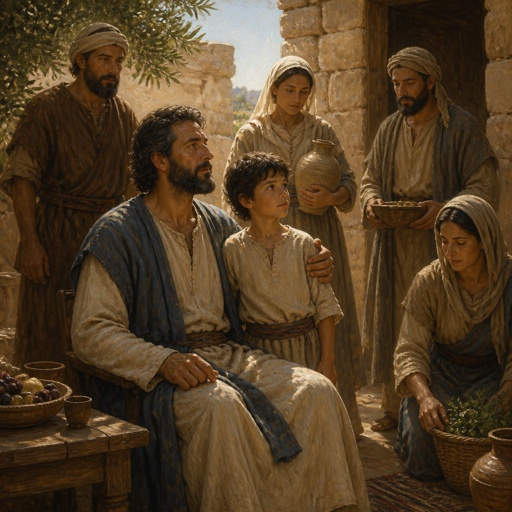
"And Mephibosheth had a young son, whose name was Micha. And all that dwelt in the house of Ziba were servants unto Mephibosheth." - 2 Samuel 9:12

2 Samuel 12:26 - "And Joab fought against Rabbah of the children of Ammon, and took the royal city."
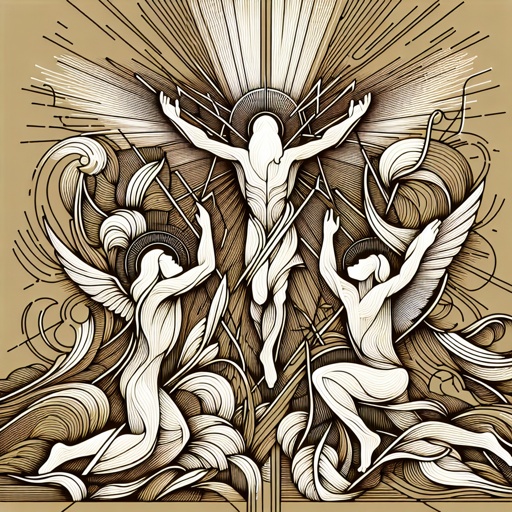
2 Corinthians 12:9-10

2 Samuel 12:29 - "And David gathered all the people together, and went to Rabbah, and fought against it, and took it."

2 Samuel 2:9 - "And made him king over Gilead, and over the Ashurites, and over Jezreel, and over Ephraim, and over Benjamin, and over all Israel."

2 Samuel 23:12 - "But he stood in the midst of the ground, and defended it, and slew the Philistines: and the LORD wrought a great victory."

2 Samuel 8:9 - "¶ When Toi king of Hamath heard that David had smitten all the host of Hadadezer,"
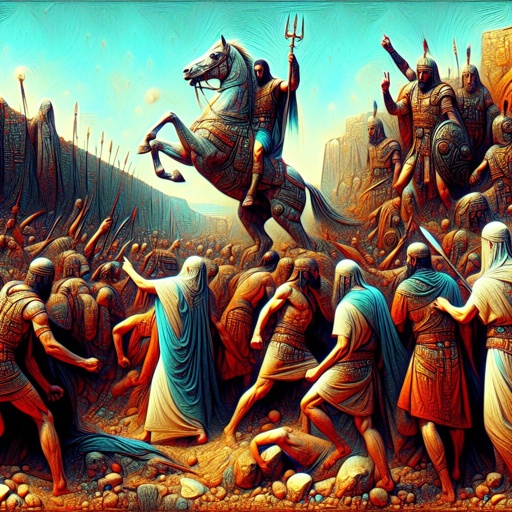
1 Samuel 12:9 - "And when they forgat the LORD their God, he sold them into the hand of Sisera, captain of the host of Hazor, and into the hand of the Philistines, and into the hand of the king of Moab, and they fought against them."

2 Samuel 9:9 - "¶ Then the king called to Ziba, Saul's servant, and said unto him, I have given unto thy master's son all that pertained to Saul and to all his house."

2 Samuel 6:9 - "And David was afraid of the LORD that day, and said, How shall the ark of the LORD come to me?"

2 Samuel 15:9 - "And the king said unto him, Go in peace. So he arose, and went to Hebron."

1 Samuel 9:12 - "And they answered them, and said, He is; behold, he is before you: make haste now, for he came to day to the city; for there is a sacrifice of the people to day in the high place:"

2 Samuel 7:1–29

2 Samuel 8:12 - "Of Syria, and of Moab, and of the children of Ammon, and of the Philistines, and of Amalek, and of the spoil of Hadadezer, son of Rehob, king of Zobah."

2 Samuel 22:12 - "And he made darkness pavilions round about him, dark waters, and thick clouds of the skies."