What does 2 Samuel 13:16 mean?
"And she said unto him, There is no cause: this evil in sending me away is greater than the other that thou didst unto me. But he would not hearken unto her." - 2 Samuel 13:16
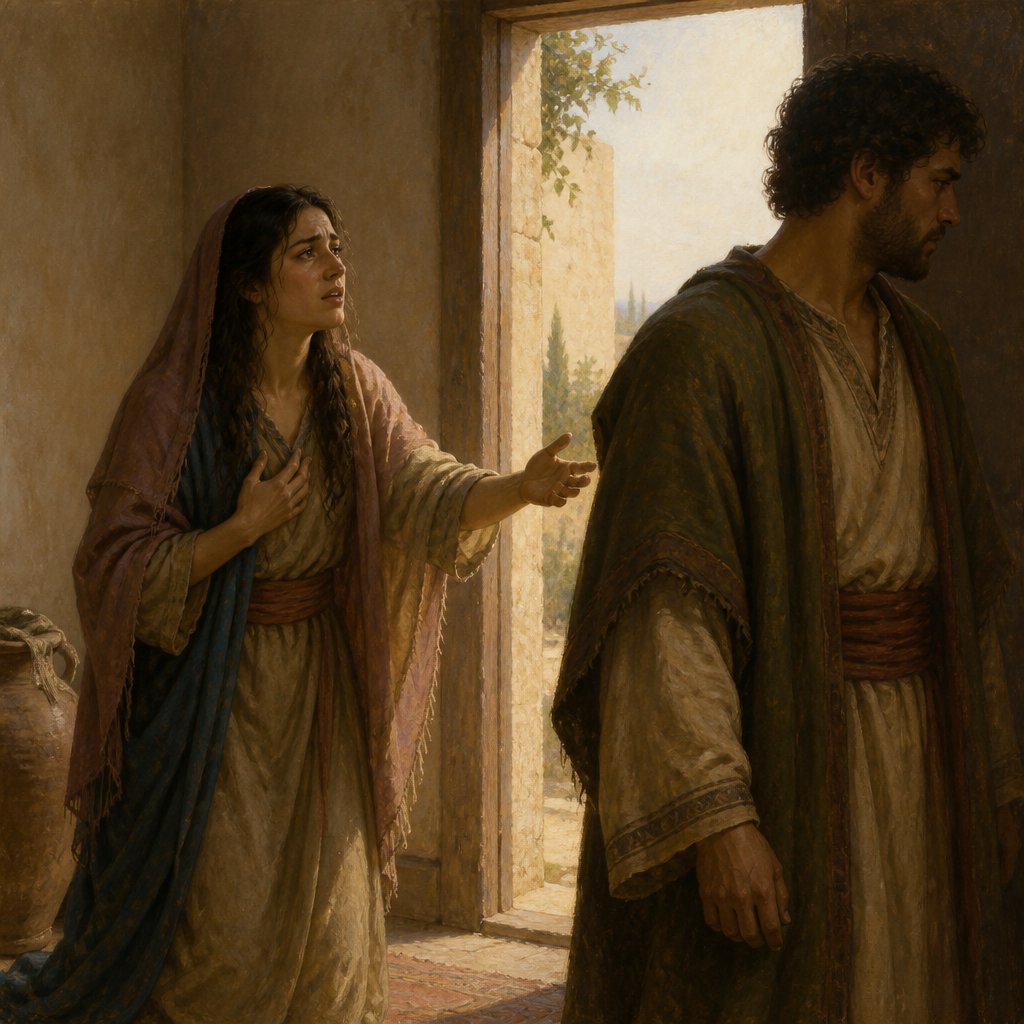
The verse 2 Samuel 13:16, as per the King James Version, reads: "And she said unto him, There is no cause: this evil in sending me away is greater than the other that thou didst unto me. But he would not hearken unto her."
Context
This verse takes place within the larger narrative of the rape of Tamar, the daughter of King David and the half-sister of Amnon. The story is a tragic and disturbing account of abuse and misuse of power within David's own household. Amnon, consumed with desire for Tamar, pretends to be sick and requests her presence to prepare him food. Once she arrives, he forcefully rapes her. The verse occurs when Tamar pleads with Amnon not to send her away, but he does not listen to her.
Commentary
The verse captures the heartbreaking and unjust response of Amnon to his victim's plea. Despite Tamar's desperate attempt to reason with Amnon, he callously dismisses her, refusing to acknowledge the gravity of his actions. This scene paints a vivid picture of the pervasive disregard for women's voices and agency in a patriarchal society.
Tamar's statement, "this evil in sending me away is greater than the other that thou didst unto me," reveals the deep emotional and psychological harm of being discarded and rejected after experiencing such trauma. Her words poignantly illustrate the betrayal and abandonment she feels at the hands of her own brother. Furthermore, Tamar's plea also emphasizes the social stigma and shame attached to being a survivor of sexual violence in ancient Israelite culture.
The verse underscores the abuse of power and privilege, as well as the destructive consequences of unchecked desire and entitlement. Amnon's refusal to listen to Tamar's appeal highlights the arrogance and lack of empathy that often accompany acts of violence and exploitation. This narrative serves as a cautionary tale about the dangers of unchecked lust and the devastating impact it can have on both the victim and the perpetrator.
Themes
The verse touches on several predominant themes that recur throughout the Bible, including justice, mercy, and the consequences of sin. Tamar's cry for recognition and validation echoes the yearning for justice and restoration in the face of oppression. Her plea for Amnon to heed her voice resonates with the biblical theme of seeking mercy and reconciliation in times of affliction and suffering. Furthermore, the verse illuminates the destructive consequences of sin and the detrimental effects of transgressing moral boundaries.
Symbolism
The verse also holds symbolic significance within the broader biblical narrative. Tamar's plea and Amnon's callous response symbolize the age-old struggle between good and evil, righteousness and sin. The rejection of Tamar's plea symbolizes the pervasive social and cultural marginalization of the vulnerable and oppressed. Additionally, Tamar's voice represents the silenced and disenfranchised individuals whose stories have been overshadowed and disregarded.
In conclusion, 2 Samuel 13:16 offers a sobering depiction of the abuse of power, exploitation, and the silencing of voices. The verse serves as a poignant reminder of the profound and lasting impact of violence and the importance of listening to the cries of the oppressed. Tamar's plea for recognition and justice continues to resonate as a timeless call for compassion, empathy, and advocacy for the marginalized. This verse stands as a powerful testament to the need for accountability, restoration, and healing in the face of injustice and wrongdoing.
Have questions about 2 Samuel 13:16?
Dive deeper into this scripture with Bible Chat — an AI-powered tool for exploring God's Word through conversation. Ask questions, get context, and grow in your understanding of the Bible.
Get Our Apps


2 Samuel 13:16 Artwork

2 Samuel 13:16 - "And she said unto him, There is no cause: this evil in sending me away is greater than the other that thou didst unto me. But he would not hearken unto her."
"And she said unto him, There is no cause: this evil in sending me away is greater than the other that thou didst unto me. But he would not hearken unto her." - 2 Samuel 13:16

1 Samuel 16:1–13

2 Samuel 16:13 - "And as David and his men went by the way, Shimei went along on the hill's side over against him, and cursed as he went, and threw stones at him, and cast dust."

1 Samuel 16:13 - "Then Samuel took the horn of oil, and anointed him in the midst of his brethren: and the Spirit of the LORD came upon David from that day forward. So Samuel rose up, and went to Ramah."

2 Samuel 5:16 - "And Elishama, and Eliada, and Eliphalet."

1 Samuel 13:16 - "And Saul, and Jonathan his son, and the people that were present with them, abode in Gibeah of Benjamin: but the Philistines encamped in Michmash."

2 Samuel 13:38 - "So Absalom fled, and went to Geshur, and was there three years."

2 Samuel 8:16 - "And Joab the son of Zeruiah was over the host; and Jehoshaphat the son of Ahilud was recorder;"

"And Elishama, and Eliada, and Eliphalet." - 2 Samuel 5:16

2 Samuel 22:13 - "Through the brightness before him were coals of fire kindled."

2 Samuel 16:15 - "¶ And Absalom, and all the people the men of Israel, came to Jerusalem, and Ahithophel with him."

2 Samuel 16:14 - "And the king, and all the people that were with him, came weary, and refreshed themselves there."

2 Samuel 15:13 - "¶ And there came a messenger to David, saying, The hearts of the men of Israel are after Absalom."

2 Samuel 13:21 - "¶ But when king David heard of all these things, he was very wroth."

1 Samuel 16:2 - "And Samuel said, How can I go? if Saul hear it, he will kill me. And the LORD said, Take an heifer with thee, and say, I am come to sacrifice to the LORD."

2 Samuel 16:16 - "And it came to pass, when Hushai the Archite, David's friend, was come unto Absalom, that Hushai said unto Absalom, God save the king, God save the king."

2 Samuel 16:20 - "¶ Then said Absalom to Ahithophel, Give counsel among you what we shall do."

2 Samuel 16:12 - "It may be that the LORD will look on mine affliction, and that the LORD will requite me good for his cursing this day."

2 Samuel 13:27 - "But Absalom pressed him, that he let Amnon and all the king's sons go with him."

2 Samuel 16:17 - "And Absalom said to Hushai, Is this thy kindness to thy friend? why wentest thou not with thy friend?"

2 Chronicles 13:16 - "And the children of Israel fled before Judah: and God delivered them into their hand."

2 Samuel 12:16 - "David therefore besought God for the child; and David fasted, and went in, and lay all night upon the earth."

2 Samuel 13:35 - "And Jonadab said unto the king, Behold, the king's sons come: as thy servant said, so it is."

2 Samuel 7:13 - "He shall build an house for my name, and I will stablish the throne of his kingdom for ever."

2 Samuel 22:16 - "And the channels of the sea appeared, the foundations of the world were discovered, at the rebuking of the LORD, at the blast of the breath of his nostrils."

2 Samuel 18:16 - "And Joab blew the trumpet, and the people returned from pursuing after Israel: for Joab held back the people."

2 Samuel 19:16 - "¶ And Shimei the son of Gera, a Benjamite, which was of Bahurim, hasted and came down with the men of Judah to meet king David."

2 Samuel 10:13 - "And Joab drew nigh, and the people that were with him, unto the battle against the Syrians: and they fled before him."

2 Samuel 6:13 - "And it was so, that when they that bare the ark of the LORD had gone six paces, he sacrificed oxen and fatlings."