What does 2 Samuel 13:19 mean?
“And Tamar put ashes on her head, and rent her garment of divers colours that was on her, and laid her hand on her head, and went on crying.” — 2 Samuel 13:19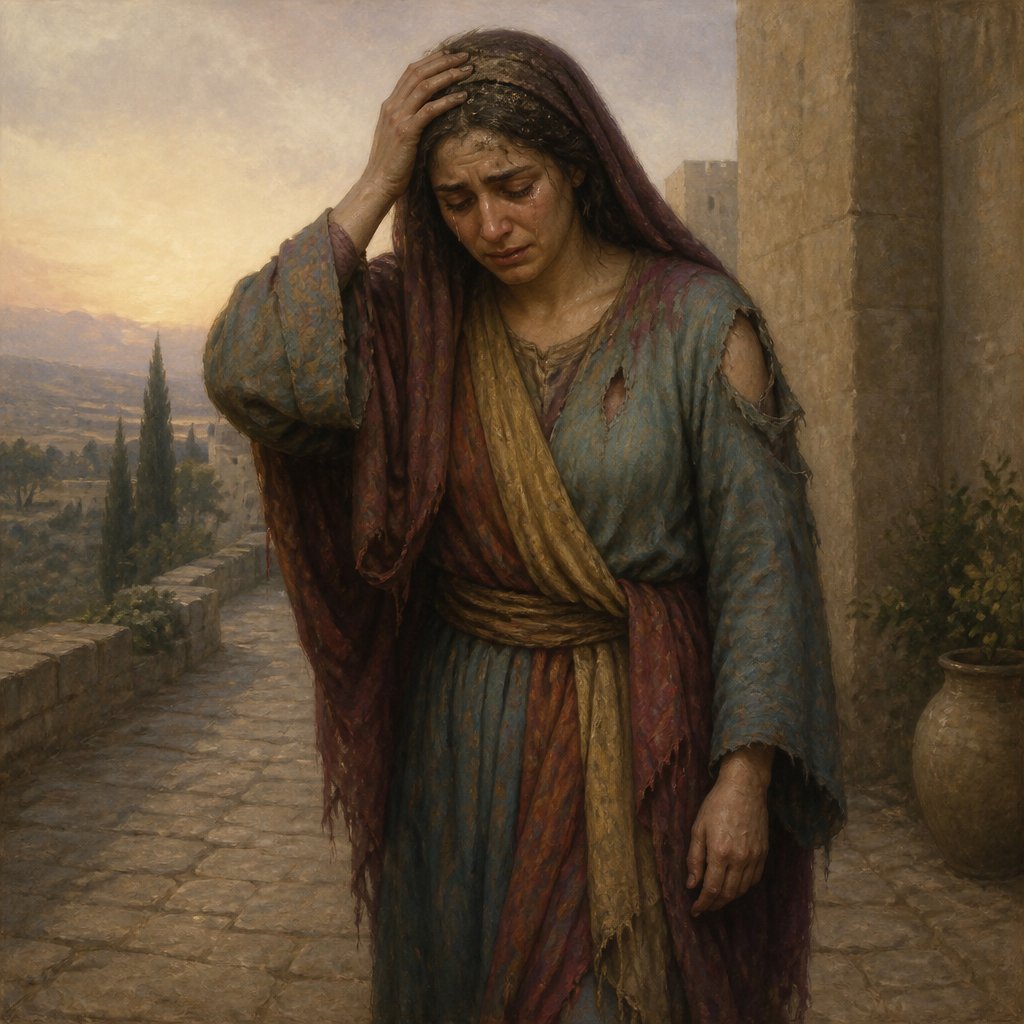
2 Samuel 13:19 (KJV) - "And Tamar put ashes on her head, and rent her garment of divers colours that was on her, and laid her hand on her head, and went on crying."
This verse comes from the Old Testament book of 2 Samuel, which tells the story of King David and the events of his reign. The specific passage recounts a tragic event in the life of Tamar, daughter of King David, and her half-brother Amnon. The theme of this verse revolves around the devastating consequences of sin and the pain it inflicts on innocent individuals.
The context of this verse is crucial to understanding its significance. The preceding verses describe how Amnon deceitfully lured Tamar to his home and then raped her. This violation of Tamar is an act of great evil, and it brings shame and devastation to Tamar and her family. The aftermath of this heinous act is the focus of this verse, as it describes Tamar's reaction to the trauma she endured.
The act of putting ashes on her head and tearing her garment of diverse colors was a common expression of grief and mourning in ancient Jewish culture. These actions symbolize Tamar's deep anguish and sorrow over the violation she suffered at the hands of her half-brother. By laying her hand on her head and going on crying, Tamar outwardly displays her emotional pain and distress. This passage serves as a poignant reminder of the devastating impact of sin and the resulting suffering it brings upon individuals.
Symbolically, Tamar's actions can be interpreted as a physical manifestation of her inner turmoil. The loss of her colorful garment, which likely represented her status and purity, reflects the shame and violation she experienced. The act of placing ashes on her head symbolizes the destruction and desolation she feels. Tamar's weeping further demonstrates the depth of her emotional anguish and pain.
Moreover, this passage also highlights the issue of social injustice and the abuse of power. Tamar, as a woman, is vulnerable and defenseless in the face of Amnon's cruelty. Her lamentation exposes the injustices and oppression faced by women in ancient societies, as well as in contemporary times. The verse serves as a condemnation of the mistreatment and exploitation of the powerless and marginalized.
Furthermore, the verse provides a stark contrast between the consequences of sin and the righteousness of God. While Amnon's actions bring about pain and suffering, Tamar's response affirms her innocence and virtue. Her outward expressions of grief communicate her moral integrity and the profound injustice she experienced.
In conclusion, 2 Samuel 13:19 serves as a powerful reminder of the destructive power of sin and the immense suffering it inflicts. Tamar's actions are a potent symbol of the devastation wrought by evil, as well as a poignant depiction of the innocent's cry for justice and restoration. This passage challenges readers to consider the consequences of sin and to advocate for the oppressed and marginalized. Ultimately, it is a testament to the enduring relevance of biblical narratives in addressing the complexities of human experience and the eternal struggle between good and evil.
Get our apps


Artwork for 2 Samuel 13:19

2 Samuel 13:19 - "¶ And Tamar put ashes on her head, and rent her garment of divers colours that was on her, and laid her hand on her head, and went on crying."
"¶ And Tamar put ashes on her head, and rent her garment of divers colours that was on her, and laid her hand on her head, and went on crying." - 2 Samuel 13:19
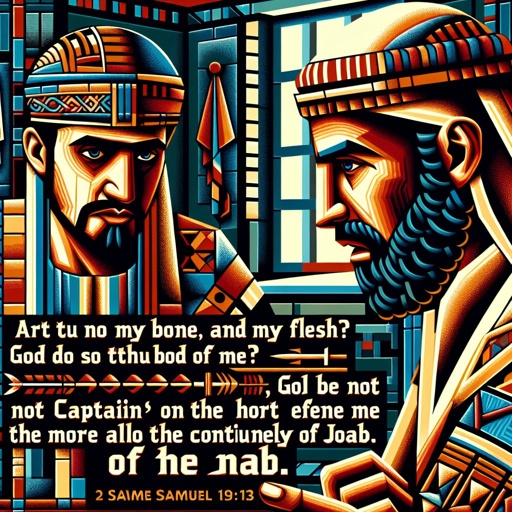
2 Samuel 19:13 - "And say ye to Amasa, Art thou not of my bone, and of my flesh? God do so to me, and more also, if thou be not captain of the host before me continually in the room of Joab."

2 Samuel 19:8

2 Samuel 19:8

2 Samuel 19:8

2 Samuel 19:8

2 Samuel 19:24

1 Samuel 19:13 - "And Michal took an image, and laid it in the bed, and put a pillow of goats' hair for his bolster, and covered it with a cloth."

2 Samuel 19:1 - "And it was told Joab, Behold, the king weepeth and mourneth for Absalom."

1 Samuel 13:19 - "¶ Now there was no smith found throughout all the land of Israel: for the Philistines said, Lest the Hebrews make them swords or spears:"

2 Samuel 22:19 - "They prevented me in the day of my calamity: but the LORD was my stay."

2 Samuel 24:19 - "And David, according to the saying of Gad, went up as the LORD commanded."

2 Samuel 13:38 - "So Absalom fled, and went to Geshur, and was there three years."

2 Samuel 2:19 - "And Asahel pursued after Abner; and in going he turned not to the right hand nor to the left from following Abner."

2 Samuel 1:19 - "The beauty of Israel is slain upon thy high places: how are the mighty fallen!"

2 Samuel 22:13 - "Through the brightness before him were coals of fire kindled."

2 Samuel 19:2 - "And the victory that day was turned into mourning unto all the people: for the people heard say that day how the king was grieved for his son."

2 Samuel 15:13 - "¶ And there came a messenger to David, saying, The hearts of the men of Israel are after Absalom."

2 Samuel 13:21 - "¶ But when king David heard of all these things, he was very wroth."

2 Samuel 19:23 - "Therefore the king said unto Shimei, Thou shalt not die. And the king sware unto him."

2 Samuel 11:19 - "And charged the messenger, saying, When thou hast made an end of telling the matters of the war unto the king,"

2 Samuel 23:19 - "Was he not most honourable of three? therefore he was their captain: howbeit he attained not unto the first three."

2 Samuel 17:19 - "And the woman took and spread a covering over the well's mouth, and spread ground corn thereon; and the thing was not known."

2 Samuel 19:33 - "And the king said unto Barzillai, Come thou over with me, and I will feed thee with me in Jerusalem."

2 Kings 19:13 - "Where is the king of Hamath, and the king of Arpad, and the king of the city of Sepharvaim, of Hena, and Ivah?"

2 Samuel 13:27 - "But Absalom pressed him, that he let Amnon and all the king's sons go with him."

2 Samuel 19:36 - "Thy servant will go a little way over Jordan with the king: and why should the king recompense it me with such a reward?"

2 Samuel 19:16 - "¶ And Shimei the son of Gera, a Benjamite, which was of Bahurim, hasted and came down with the men of Judah to meet king David."

2 Samuel 19:21 - "But Abishai the son of Zeruiah answered and said, Shall not Shimei be put to death for this, because he cursed the LORD'S anointed?"