What does 2 Samuel 14:10 mean?
“And the king said, Whosoever saith ought unto thee, bring him to me, and he shall not touch thee any more.” — 2 Samuel 14:10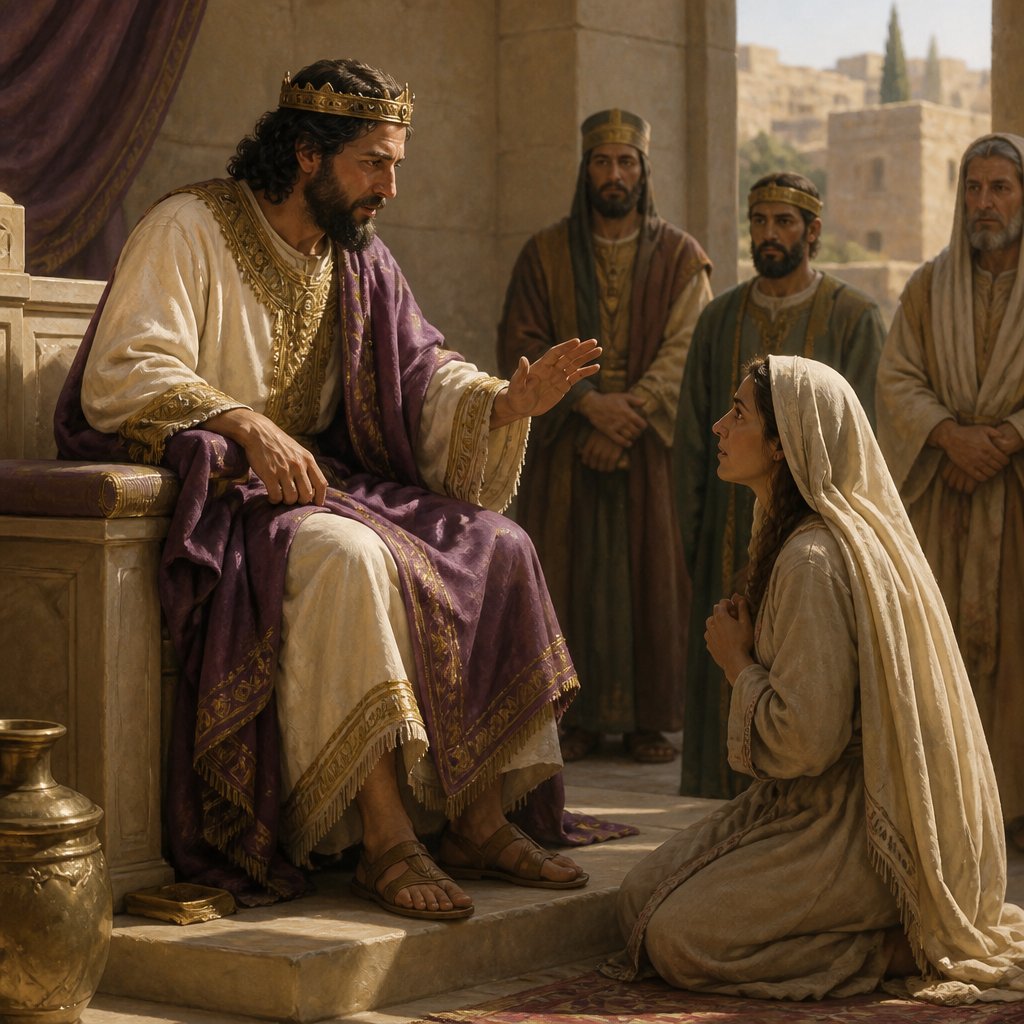
2 Samuel 14:10 (KJV) states, “And the king said, Whosoever saith ought unto thee, bring him to me, and he shall not touch thee any more.” This verse takes place in the context of a conversation between Joab and a wise woman of Tekoah, who has been enlisted by Joab to convince King David to reconcile with his son Absalom, who had been banished for killing his brother Amnon.
In this verse, King David is expressing his willingness to forgive and reconcile with anyone who has wronged the wise woman of Tekoah. The verse reveals David’s capacity for mercy and forgiveness, as well as his desire to restore relationships that have been broken by conflict or wrongdoing.
The themes present in this verse include mercy, forgiveness, and the restorative power of reconciliation. David’s statement reflects the biblical value of forgiveness, as well as the belief in the possibility of redemption and healing within interpersonal relationships.
The context of this verse is significant for understanding its meaning and implications. Absalom had killed his brother Amnon as an act of revenge for Amnon’s rape of their sister Tamar. Absalom then fled to Geshur, where he remained in exile for three years until Joab orchestrated a plan to bring him back to Jerusalem. The wise woman of Tekoah convinced David to allow Absalom to return, and David ultimately agreed to reconcile with his son. This context underscores the importance of forgiveness and reconciliation in the face of grave offenses and family discord.
Symbolism can be found in this verse through the figure of King David. As a renowned biblical figure, David represents God’s capacity for forgiveness and mercy. His willingness to forgive those who have wronged others aligns with the Christian belief in God’s grace and the transformative power of forgiveness. Additionally, David’s actions in this verse serve as a model for human behavior and the ideal of reconciliation.
Furthermore, the wise woman of Tekoah can be interpreted as a symbol of wisdom and diplomacy. Her role in convincing David to reconcile with Absalom demonstrates the ability of wisdom and strategic communication to mend broken relationships and promote healing.
This verse carries relevance for contemporary readers, as it highlights the ongoing human need for forgiveness and reconciliation. The biblical principles of mercy and forgiveness remain significant in the modern world, offering guidance for navigating interpersonal conflicts and working towards restoration.
In conclusion, 2 Samuel 14:10 (KJV) portrays the character of King David as a model of forgiveness and reconciliation. The verse reflects biblical themes of mercy and restoration, emphasizing the potential for healing and redemption within broken relationships. The context of the verse provides further depth to its meaning, illustrating the significance of forgiveness in the face of serious wrongdoing. Through its symbolism and implications, this verse serves as a reminder of the enduring relevance of forgiveness and reconciliation in the Christian tradition and in human relationships more broadly.
Get our apps


Artwork for 2 Samuel 14:10

2 Samuel 14:10 - "And the king said, Whosoever saith ought unto thee, bring him to me, and he shall not touch thee any more."
"And the king said, Whosoever saith ought unto thee, bring him to me, and he shall not touch thee any more." - 2 Samuel 14:10
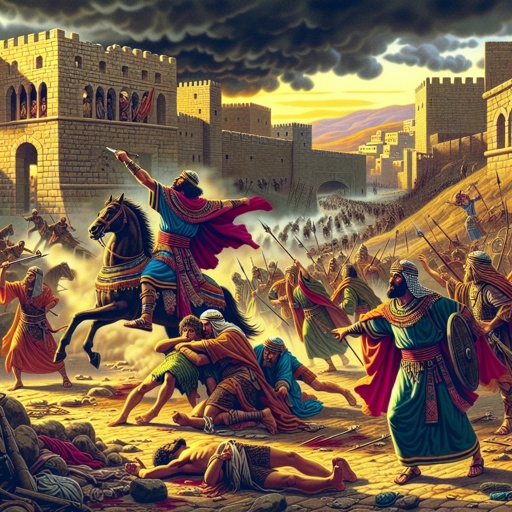
2 Samuel 10:14 - "And when the children of Ammon saw that the Syrians were fled, then fled they also before Abishai, and entered into the city. So Joab returned from the children of Ammon, and came to Jerusalem."

2 Samuel 6:14

2 Samuel 10:4

2 Samuel 10:4

2 Samuel 6:14–22

1 Samuel 10:14 - "¶ And Saul's uncle said unto him and to his servant, Whither went ye? And he said, To seek the asses: and when we saw that they were no where, we came to Samuel."

2 Samuel 23:14 - "And David was then in an hold, and the garrison of the Philistines was then in Beth-lehem."

2 Samuel 14:23 - "So Joab arose and went to Geshur, and brought Absalom to Jerusalem."

2 Samuel 22:14 - "The LORD thundered from heaven, and the most High uttered his voice."

2 Samuel 16:14 - "And the king, and all the people that were with him, came weary, and refreshed themselves there."

2 Samuel 14:1 - "Now Joab the son of Zeruiah perceived that the king's heart was toward Absalom."

2 Samuel 5:10 - "And David went on, and grew great, and the LORD God of hosts was with him."

2 Samuel 10:10 - "And the rest of the people he delivered into the hand of Abishai his brother, that he might put them in array against the children of Ammon."

2 Samuel 14:28 - "¶ So Absalom dwelt two full years in Jerusalem, and saw not the king's face."

2 Samuel 11:14 - "¶ And it came to pass in the morning, that David wrote a letter to Joab, and sent it by the hand of Uriah."

2 Samuel 2:14 - "And Abner said to Joab, Let the young men now arise, and play before us. And Joab said, Let them arise."

2 Samuel 5:14 - "And these be the names of those that were born unto him in Jerusalem; Shammua, and Shobab, and Nathan, and Solomon,"

2 Samuel 6:14 - "And David danced before the LORD with all his might; and David was girded with a linen ephod."

1 Samuel 14:10 - "But if they say thus, Come up unto us; then we will go up: for the LORD hath delivered them into our hand: and this shall be a sign unto us."

2 Samuel 22:10 - "He bowed the heavens also, and came down; and darkness was under his feet."

2 Samuel 10:15 - "¶ And when the Syrians saw that they were smitten before Israel, they gathered themselves together."

2 Samuel 10:7 - "And when David heard of it, he sent Joab, and all the host of the mighty men."

2 Samuel 14:8 - "And the king said unto the woman, Go to thine house, and I will give charge concerning thee."

2 Samuel 14:3 - "And come to the king, and speak on this manner unto him. So Joab put the words in her mouth."

2 Samuel 18:10 - "And a certain man saw it, and told Joab, and said, Behold, I saw Absalom hanged in an oak."

2 Samuel 10:13 - "And Joab drew nigh, and the people that were with him, unto the battle against the Syrians: and they fled before him."

2 Samuel 10:1 - "And it came to pass after this, that the king of the children of Ammon died, and Hanun his son reigned in his stead."

2 Samuel 1:14 - "And David said unto him, How wast thou not afraid to stretch forth thine hand to destroy the LORD'S anointed?"