What does 2 Samuel 15:30 mean?
“And David went up by the ascent of mount Olivet, and wept as he went up, and had his head covered, and he went barefoot: and all the people that was with him covered every man his head, and they went up, weeping as they went up.” — 2 Samuel 15:30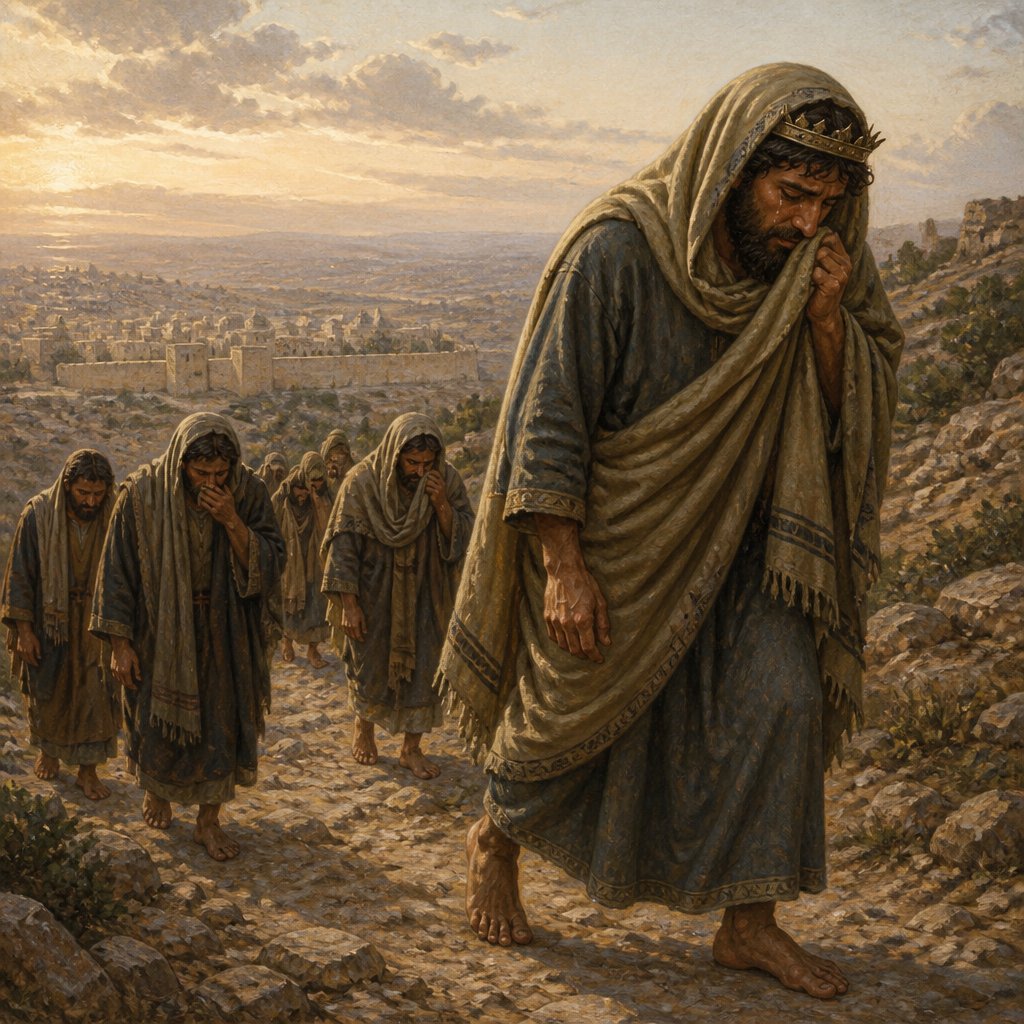
2 Samuel 15:30 (KJV) reads, "And David went up by the ascent of mount Olivet, and wept as he went up, and had his head covered, and he went barefoot: and all the people that was with him covered every man his head, and they went up, weeping as they went up."
This verse occurs in the context of Absalom's rebellion against his father, King David. Absalom had won the favor of the people and conspired to overthrow his father and take the throne for himself. As David learned of this rebellion, he fled from Jerusalem, leaving the city in the hands of Absalom. As David and his followers journeyed toward safety, they encountered the Mount of Olives, a place that would hold deep significance for future generations as the site of Jesus Christ's agony and arrest.
This verse is filled with poignant symbolism and themes that have deep spiritual and emotional significance. One of the central themes in this verse is the concept of suffering and sorrow. David's weeping as he ascends the Mount of Olives represents his deep emotional pain and anguish at being betrayed by his own son and having to flee from his own kingdom. This act of weeping and mourning reflects the human experience of suffering and shows the vulnerable side of a powerful and respected king. David's humility and raw emotion in this verse serve as a reminder that even the most powerful and revered figures experience pain and adversity.
The imagery in this verse is also rich with symbolism. David's act of covering his head and going barefoot was a traditional sign of mourning and humility in ancient Jewish culture. By doing so, David was expressing his deep grief and humility before God. The people who accompanied David also covered their heads and wept, mirroring his grief and demonstrating solidarity with their king in his time of distress. This imagery reinforces the idea of community and companionship in times of sorrow, highlighting the importance of empathy and support in the face of adversity.
Furthermore, the mention of the Mount of Olives carries spiritual significance. In biblical tradition, the Mount of Olives is associated with divine presence and spiritual significance. It was a place of prayer and reflection for Jesus Christ, and it is also the site from which he ascended to heaven after his resurrection. The fact that David weeps and mourns as he ascends this sacred mount underscores the depth of his emotional turmoil and points to the broader spiritual themes of redemption and divine intervention. David's actions on the Mount of Olives can be seen as a plea for God's mercy and guidance as he faces this catastrophic turn of events.
In addition, this verse provides insight into the human condition and the complex dynamics of relationships and power. It is a reminder that even mighty rulers like David are subject to the frailties and pains of human existence. It also serves as a cautionary tale about the impact of fragmented family relationships and the consequences of pride and ambition. The rebellion of Absalom and the subsequent suffering of David highlight the devastating effects of familial discord and the damage that can be wrought by unchecked ambition and pride.
In conclusion, 2 Samuel 15:30 is a poignant and powerful verse that conveys deep themes of suffering, humility, and spiritual significance. It offers a window into the emotional and spiritual turmoil of a revered biblical figure and serves as a reminder of the universal experience of sorrow and the need for companionship and support in times of distress. The symbolism and imagery in this verse add layers of meaning and provide valuable insights into the human condition and the dynamics of power and relationships.
Get our apps


Artwork for 2 Samuel 15:30

2 Samuel 15:30 - "¶ And David went up by the ascent of mount Olivet, and wept as he went up, and had his head covered, and he went barefoot: and all the people that was with him covered every man his head, and they went up, weeping as they went up."
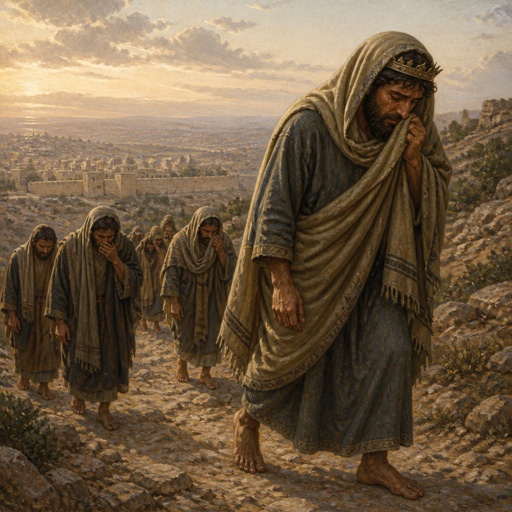
"¶ And David went up by the ascent of mount Olivet, and wept as he went up, and had his head covered, and he went barefoot: and all the people that was with him covered every man his head, and they went up, weeping as they went up." - 2 Samuel 15:30

1.samuel 15:30

1.samuel 15:30

2 Samuel 23:30 - "Benaiah the Pirathonite, Hiddai of the brooks of Gaash,"

2 Samuel 5:15 - "Ibhar also, and Elishua, and Nepheg, and Japhia,"

2 Samuel 2:30 - "And Joab returned from following Abner: and when he had gathered all the people together, there lacked of David's servants nineteen men and Asahel."

"Benaiah the Pirathonite, Hiddai of the brooks of Gaash," - 2 Samuel 23:30

2 Samuel 18:30 - "And the king said unto him, Turn aside, and stand here. And he turned aside, and stood still."

2 Samuel 22:30 - "For by thee I have run through a troop: by my God have I leaped over a wall."

2 Samuel 3:30 - "So Joab and Abishai his brother slew Abner, because he had slain their brother Asahel at Gibeon in the battle."

1 Samuel 30:2 - "And had taken the women captives, that were therein: they slew not any, either great or small, but carried them away, and went on their way."

2 Samuel 15:15 - "And the king's servants said unto the king, Behold, thy servants are ready to do whatsoever my lord the king shall appoint."

2 Samuel 2:15 - "Then there arose and went over by number twelve of Benjamin, which pertained to Ish-bosheth the son of Saul, and twelve of the servants of David."

2 Samuel 16:15 - "¶ And Absalom, and all the people the men of Israel, came to Jerusalem, and Ahithophel with him."

2 Samuel 15:13 - "¶ And there came a messenger to David, saying, The hearts of the men of Israel are after Absalom."

2 Samuel 15:37 - "So Hushai David's friend came into the city, and Absalom came into Jerusalem."

2 Samuel 15:29 - "Zadok therefore and Abiathar carried the ark of God again to Jerusalem: and they tarried there."

2 Samuel 22:15 - "And he sent out arrows, and scattered them; lightning, and discomfited them."

1 Samuel 15:30 - "Then he said, I have sinned: yet honour me now, I pray thee, before the elders of my people, and before Israel, and turn again with me, that I may worship the LORD thy God."

2 Samuel 13:30 - "¶ And it came to pass, while they were in the way, that tidings came to David, saying, Absalom hath slain all the king's sons, and there is not one of them left."

2 Samuel 10:15 - "¶ And when the Syrians saw that they were smitten before Israel, they gathered themselves together."

2 Samuel 15:17 - "And the king went forth, and all the people after him, and tarried in a place that was far off."

2 Samuel 15:9 - "And the king said unto him, Go in peace. So he arose, and went to Hebron."

2 Chronicles 30:15 - "Then they killed the passover on the fourteenth day of the second month: and the priests and the Levites were ashamed, and sanctified themselves, and brought in the burnt offerings into the house of the LORD."

2 Samuel 18:15 - "And ten young men that bare Joab's armour compassed about and smote Absalom, and slew him."

2 Samuel 6:15 - "So David and all the house of Israel brought up the ark of the LORD with shouting, and with the sound of the trumpet."

2 Samuel 19:30 - "And Mephibosheth said unto the king, Yea, let him take all, forasmuch as my lord the king is come again in peace unto his own house."

2 Samuel 15:33 - "Unto whom David said, If thou passest on with me, then thou shalt be a burden unto me:"

2 Samuel 15:28 - "See, I will tarry in the plain of the wilderness, until there come word from you to certify me."