What does 2 Samuel 15:34 mean?
“But if thou return to the city, and say unto Absalom, I will be thy servant, O king; as I have been thy father’s servant hitherto, so will I now also be thy servant: then mayest thou for me defeat the counsel of Ahithophel.” — 2 Samuel 15:34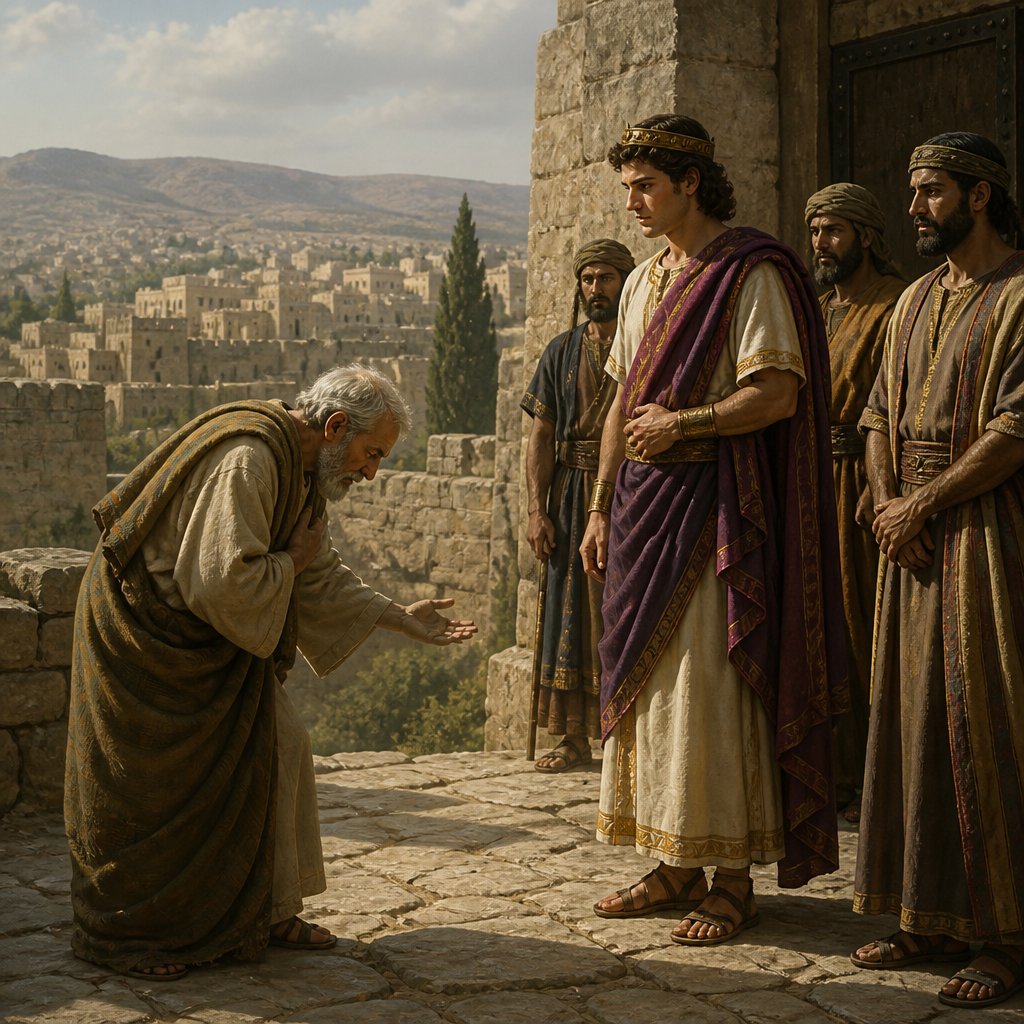
The Bible verse 2 Samuel 15:34 in the King James Version (KJV) states, "But if thou return to the city, and say unto Absalom, I will be thy servant, O king; as I have been thy father's servant hitherto, so will I now also be thy servant: then mayest thou for me defeat the counsel of Ahithophel." This verse is part of the story of Absalom's rebellion against his father, King David, and the betrayal of his close advisor, Ahithophel.
The verse can be understood in the context of the broader story of Absalom's rebellion. Absalom was the third son of King David, and he was known for his good looks and charisma. However, he grew resentful of his father and sought to take the throne for himself. He won over the hearts of the people and gathered a following, eventually declaring himself king in Hebron. David, in fear of Absalom's violence, fled Jerusalem with his loyal followers, including the people mentioned in this verse, Hushai.
In this verse, Hushai is advising David on how to defeat the counsel of Ahithophel, who has betrayed David and sided with Absalom. Hushai suggests that if David were to return to the city and present himself as a servant to Absalom, he could undermine Ahithophel's influence and possibly gain an advantage over the rebellion. This advice ultimately serves as part of Hushai's plan to provide misleading counsel to Absalom, in order to buy time for David to regroup and gather his forces.
The themes present in this verse include loyalty, betrayal, and strategic thinking. Hushai's willingness to serve David even in the midst of a rebellion demonstrates the depth of his loyalty and his commitment to serving his king. On the other hand, Ahithophel's betrayal and his support for Absalom reveal the devastating impact of disloyalty and the complexities of political allegiances.
The context of this verse is also significant. The story of Absalom's rebellion highlights the consequences of David's sin with Bathsheba and the subsequent troubles that plagued his family. The rebellion serves as a reminder of the far-reaching effects of sin, showing how one man's transgressions can lead to division and strife within his own household.
Symbolism can be found in the verse as well. Hushai's suggestion to present himself as a servant to Absalom can be seen as a symbolic gesture of humility and sacrifice. By offering himself as a servant, Hushai is willing to put himself in a vulnerable position in order to serve his king and undermine the plans of the enemy. This act of humility and selflessness reflects the character of Hushai and his unwavering devotion to David.
In conclusion, 2 Samuel 15:34 presents a pivotal moment in the story of Absalom's rebellion, showcasing the themes of loyalty, betrayal, and strategic thinking. The verse also serves as a reminder of the far-reaching consequences of sin and the importance of remaining steadfast in the face of adversity. Hushai's advice to David carries symbolic weight, portraying the virtues of humility and sacrifice in the service of a higher cause. Ultimately, this verse speaks to the enduring principles of faithfulness and righteousness, even in the midst of turmoil and conflict.
Get our apps


Artwork for 2 Samuel 15:34

2 Samuel 15:34 - "But if thou return to the city, and say unto Absalom, I will be thy servant, O king; as I have been thy father's servant hitherto, so will I now also be thy servant: then mayest thou for me defeat the counsel of Ahithophel."
"But if thou return to the city, and say unto Absalom, I will be thy servant, O king; as I have been thy father's servant hitherto, so will I now also be thy servant: then mayest thou for me defeat the counsel of Ahithophel." - 2 Samuel 15:34

1 Samuel 15:34 - "¶ Then Samuel went to Ramah; and Saul went up to his house to Gibeah of Saul."

"¶ Then Samuel went to Ramah; and Saul went up to his house to Gibeah of Saul." - 1 Samuel 15:34

2 Samuel 23:34 - "Eliphelet the son of Ahasbai, the son of the Maachathite, Eliam the son of Ahithophel the Gilonite,"

2 Samuel 22:34 - "He maketh my feet like hinds' feet: and setteth me upon my high places."

2 Samuel 5:15 - "Ibhar also, and Elishua, and Nepheg, and Japhia,"

2 Samuel 19:34 - "And Barzillai said unto the king, How long have I to live, that I should go up with the king unto Jerusalem?"

2 Kings 15:34 - "And he did that which was right in the sight of the LORD: he did according to all that his father Uzziah had done."

1 Samuel 2:34 - "And this shall be a sign unto thee, that shall come upon thy two sons, on Hophni and Phinehas; in one day they shall die both of them."

2 Chronicles 34:15 - "And Hilkiah answered and said to Shaphan the scribe, I have found the book of the law in the house of the LORD. And Hilkiah delivered the book to Shaphan."

2 Samuel 2:15 - "Then there arose and went over by number twelve of Benjamin, which pertained to Ish-bosheth the son of Saul, and twelve of the servants of David."

2 Samuel 15:15 - "And the king's servants said unto the king, Behold, thy servants are ready to do whatsoever my lord the king shall appoint."

2 Samuel 13:34 - "But Absalom fled. And the young man that kept the watch lifted up his eyes, and looked, and, behold, there came much people by the way of the hill side behind him."

2 Samuel 16:15 - "¶ And Absalom, and all the people the men of Israel, came to Jerusalem, and Ahithophel with him."

2 Samuel 15:13 - "¶ And there came a messenger to David, saying, The hearts of the men of Israel are after Absalom."

2 Samuel 15:37 - "So Hushai David's friend came into the city, and Absalom came into Jerusalem."

2 Samuel 15:29 - "Zadok therefore and Abiathar carried the ark of God again to Jerusalem: and they tarried there."

2 Samuel 22:15 - "And he sent out arrows, and scattered them; lightning, and discomfited them."

"Eliphelet the son of Ahasbai, the son of the Maachathite, Eliam the son of Ahithophel the Gilonite," - 2 Samuel 23:34

2 Samuel 10:15 - "¶ And when the Syrians saw that they were smitten before Israel, they gathered themselves together."

2 Samuel 15:17 - "And the king went forth, and all the people after him, and tarried in a place that was far off."

2 Samuel 15:9 - "And the king said unto him, Go in peace. So he arose, and went to Hebron."

1 Samuel 17:34-35

2 Samuel 3:34 - "Thy hands were not bound, nor thy feet put into fetters: as a man falleth before wicked men, so fellest thou. And all the people wept again over him."

2 Samuel 18:15 - "And ten young men that bare Joab's armour compassed about and smote Absalom, and slew him."

2 Samuel 6:15 - "So David and all the house of Israel brought up the ark of the LORD with shouting, and with the sound of the trumpet."

2 Samuel 15:33 - "Unto whom David said, If thou passest on with me, then thou shalt be a burden unto me:"

2 Samuel 15:28 - "See, I will tarry in the plain of the wilderness, until there come word from you to certify me."

2 Samuel 3:15 - "And Ish-bosheth sent, and took her from her husband, even from Phaltiel the son of Laish."