What does 2 Samuel 18:11 mean?
“And Joab said unto the man that told him, And, behold, thou sawest him, and why didst thou not smite him there to the ground? and I would have given thee ten shekels of silver, and a girdle.” — 2 Samuel 18:11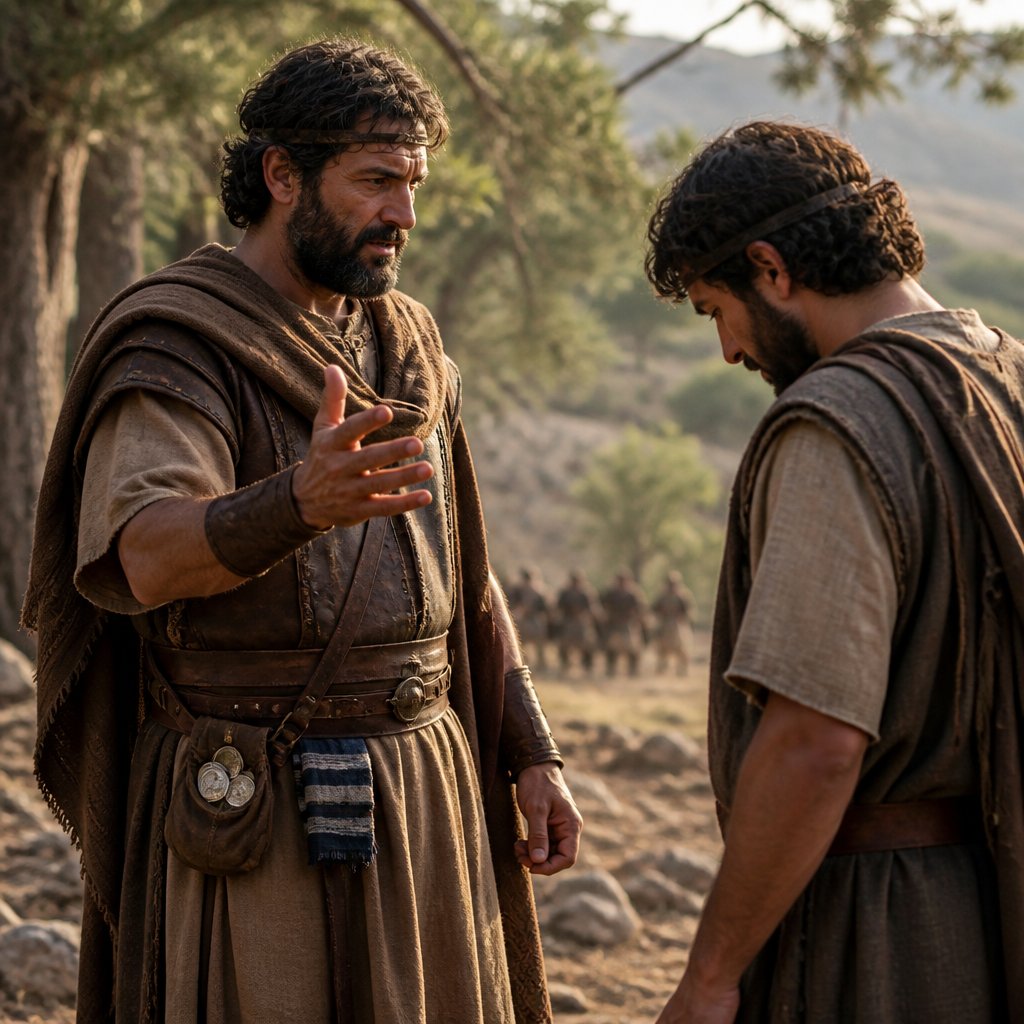
2 Samuel 18:11 (KJV) - "And Joab said unto the man that told him, And, behold, thou sawest him, and why didst thou not smite him there to the ground? and I would have given thee ten shekels of silver, and a girdle."
This verse comes from the second book of Samuel, which is part of the Old Testament of the Bible. The verse is part of a larger narrative that details the tragic and tumultuous events that occur in the aftermath of King David’s relationship with Bathsheba and the death of their first child. This particular verse takes place during a battle between David’s forces and those of his son Absalom, who seeks to overthrow his father and take the throne for himself.
The context of this verse is important to understanding its meaning and significance. Absalom, as the rebellious son of David, sought to overthrow his father and take the kingdom by force. David, in his grief, ordered his men to deal gently with Absalom, despite the fact that he was leading a rebellion against him. This directive was in direct defiance of the advice given by his military commanders, including Joab.
This verse specifically depicts Joab’s response to a soldier who had allowed Absalom to escape during the battle. Joab is frustrated and incredulous at the soldier’s failure to act, asking him why he did not take the opportunity to strike Absalom down when he had the chance. Joab’s rage is evident in his questioning, as he believes that the soldier’s inaction directly led to the escape of their enemy. Additionally, Joab offers a monetary reward to the soldier had he acted as instructed, which illustrates the seriousness of the situation and the high stakes involved.
The verse carries several important themes and lessons, chief among them being the consequences of disobedience and the cost of leniency in times of war. Joab’s reaction to the soldier’s failure to act highlights the severity of the situation, as well as the expectation for unwavering loyalty and obedience in the midst of conflict. This serves as a reminder of the high stakes and potential dire outcomes that arise from allowing personal emotions and attachments to overshadow one’s duty and responsibilities in times of war and crisis.
Another important theme in this verse is the weight of leadership and the sacrifices that come with making difficult decisions. David’s internal struggle and grief over his son’s betrayal and subsequent death reflect the complex and often painful choices that leaders must make in the midst of conflict and turmoil. David’s desire to show mercy and forgiveness to his son clashes with the reality of the threat that Absalom posed to the stability and security of the kingdom. The verse ultimately illustrates the heavy toll that leadership takes on individuals, as well as the moral and ethical dilemmas that accompany wielding power and authority.
Additionally, this verse can be seen as a larger commentary on the consequences of disobedience and the dangers of letting personal feelings cloud one’s judgment. Joab’s frustration with the soldier’s lack of action serves as a cautionary tale against allowing personal emotions and attachments to interfere with one’s duties and responsibilities. This principle can be applied to leadership, as well as to individual actions and decisions, emphasizing the importance of maintaining focus and discipline in the face of difficult and trying circumstances.
Symbolically, the verse can be interpreted as a representation of the harsh reality of war and the uncompromising nature of conflict. Joab’s response to the soldier’s failure to act underscores the unforgiving and unrelenting nature of battle, where hesitation and leniency can have devastating consequences. The offer of a reward for the soldier’s actions further emphasizes the high stakes and immediate repercussions of not following orders and acting decisively in the midst of war.
In conclusion, 2 Samuel 18:11 delivers a sobering and cautionary message about the weight of leadership, the consequences of disobedience, and the harsh reality of conflict. The verse serves as a reminder of the difficult decisions and sacrifices that come with wielding power and authority, as well as the imperative of remaining focused and resolute in the face of adversity. It offers valuable lessons about the dangers of allowing personal emotions to cloud judgment and the critical importance of unwavering loyalty and obedience in times of crisis.
Get our apps


Artwork for 2 Samuel 18:11
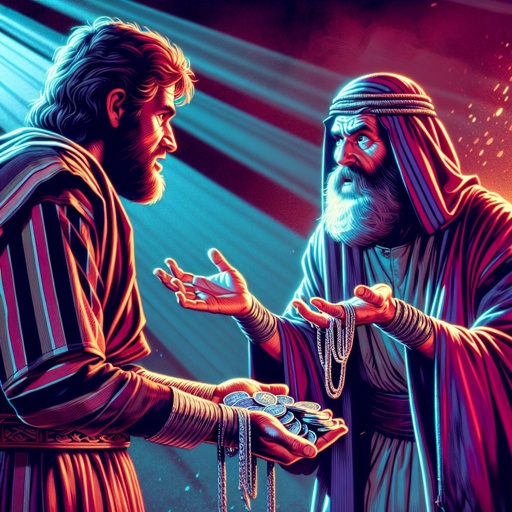
2 Samuel 18:11 - "And Joab said unto the man that told him, And, behold, thou sawest him, and why didst thou not smite him there to the ground? and I would have given thee ten shekels of silver, and a girdle."
"And Joab said unto the man that told him, And, behold, thou sawest him, and why didst thou not smite him there to the ground? and I would have given thee ten shekels of silver, and a girdle." - 2 Samuel 18:11

2 Samuel 11:18 - "¶ Then Joab sent and told David all the things concerning the war;"
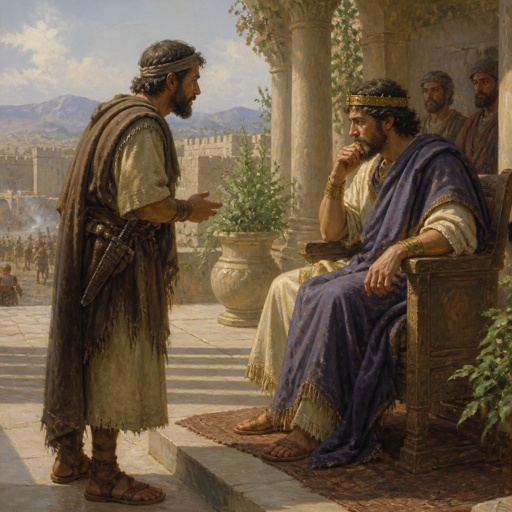
"¶ Then Joab sent and told David all the things concerning the war;" - 2 Samuel 11:18

2 Samuel 11:11
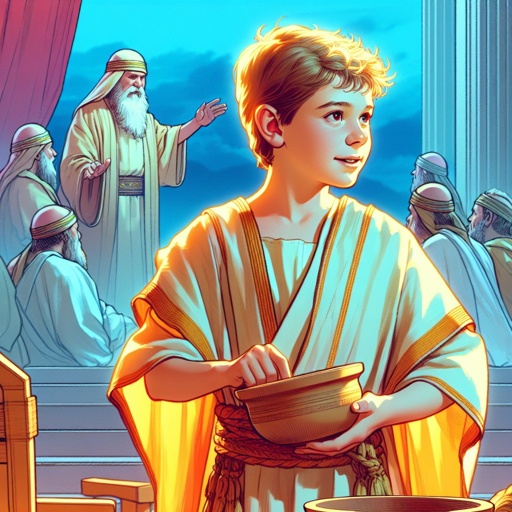
1 Samuel 2:18 - "¶ But Samuel ministered before the LORD, being a child, girded with a linen ephod."

2 Samuel 11

2 samuel 11

2 Samuel 11:9

1 Samuel 18:11 - "And Saul cast the javelin; for he said, I will smite David even to the wall with it. And David avoided out of his presence twice."

2 Samuel 5:18 - "The Philistines also came and spread themselves in the valley of Rephaim."

2 Samuel 2:18 - "¶ And there were three sons of Zeruiah there, Joab, and Abishai, and Asahel: and Asahel was as light of foot as a wild roe."

2 Samuel 2:11 - "And the time that David was king in Hebron over the house of Judah was seven years and six months."

2 Samuel 18:6 - "¶ So the people went out into the field against Israel: and the battle was in the wood of Ephraim;"

2 Samuel 21:11 - "And it was told David what Rizpah the daughter of Aiah, the concubine of Saul, had done."

1 Samuel 18:2 - "And Saul took him that day, and would let him go no more home to his father's house."

2 Samuel 11:5 - "And the woman conceived, and sent and told David, and said, I am with child."

2 Samuel 18:10 - "And a certain man saw it, and told Joab, and said, Behold, I saw Absalom hanged in an oak."

2 Samuel 8:18 - "And Benaiah the son of Jehoiada was over both the Cherethites and the Pelethites; and David's sons were chief rulers."

2 Samuel 18:1 - "And David numbered the people that were with him, and set captains of thousands and captains of hundreds over them."

2 Samuel 18:15 - "And ten young men that bare Joab's armour compassed about and smote Absalom, and slew him."

2 Samuel 3:11 - "And he could not answer Abner a word again, because he feared him."

"¶ But Samuel ministered before the LORD, being a child, girded with a linen ephod." - 1 Samuel 2:18

2 Samuel 11:14 - "¶ And it came to pass in the morning, that David wrote a letter to Joab, and sent it by the hand of Uriah."

2 Samuel 1:18 - "(Also he bade them teach the children of Judah the use of the bow: behold, it is written in the book of Jasher.)"

2 Samuel 18:30 - "And the king said unto him, Turn aside, and stand here. And he turned aside, and stood still."

2 Samuel 18:16 - "And Joab blew the trumpet, and the people returned from pursuing after Israel: for Joab held back the people."

2 Samuel 22:11 - "And he rode upon a cherub, and did fly: and he was seen upon the wings of the wind."

2 Samuel 11:22 - "¶ So the messenger went, and came and shewed David all that Joab had sent him for."

2 Samuel 18:7 - "Where the people of Israel were slain before the servants of David, and there was there a great slaughter that day of twenty thousand men."