What does 2 Samuel 19:7 mean?
"Now therefore arise, go forth, and speak comfortably unto thy servants: for I swear by the LORD, if thou go not forth, there will not tarry one with thee this night: and that will be worse unto thee than all the evil that befell thee from thy youth until now." - 2 Samuel 19:7
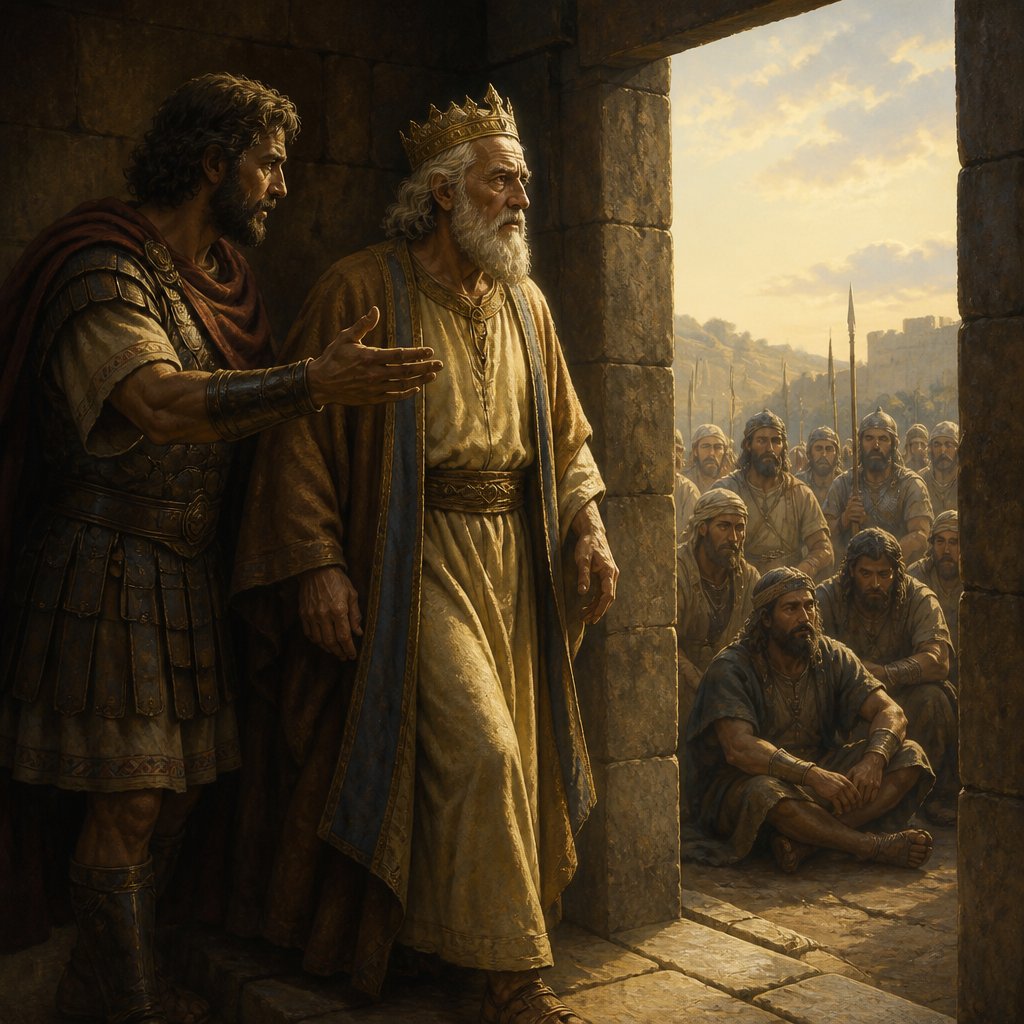
In 2 Samuel 19:7, the King James Version of the Bible says, "Now therefore arise, go forth, and speak comfortably unto thy servants: for I swear by the Lord, if thou go not forth, there will not tarry one with thee this night: and that will be worse unto thee than all the evil that befell thee from thy youth until now."
This verse comes at a crucial moment in the narrative of King David's return to his throne after being driven away by his son Absalom. The verse is part of the conversation between Joab, the commander of David's army, and the king himself. It carries a significant meaning as it speaks to the themes of reconciliation, leadership, and the consequences of inaction.
Throughout the book of 2 Samuel, King David is portrayed as a flawed yet deeply religious and passionate leader. He becomes entangled in a complicated web of family and political drama, leading to his exile from the throne. However, despite the turmoil, David's followers remain loyal to him, and as he prepares to return to power, Joab reminds him of the urgency of the situation. He urges David to take action and comfort his supporters, as their loyalty is contingent upon his decisive leadership.
The verse begins with the command "arise, go forth," which serves as a call to action for David. It is a reminder that in times of crisis and uncertainty, a leader must be proactive and present, providing comfort and guidance to those who rely on him. The language used here is imperative and urgent, highlighting the critical nature of the situation. Joab insists that if David does not take action, he will be left alone, facing an even worse fate than the trials he has already endured.
The phrase "speak comfortably unto thy servants" is significant as it underscores the importance of communication and empathy in leadership. David is called not just to address his followers but to do so in a way that brings them comfort and reassurance. This highlights the role of a leader in providing emotional support and understanding to those under his authority, especially during times of upheaval and uncertainty.
The verse also introduces the element of divine intervention, as Joab swears by the Lord to emphasize the urgency and seriousness of the situation. This serves as a reminder of David's own faith and the divine mandate for his leadership. It also underscores the consequences of inaction, suggesting that David's failure to act decisively will result in dire outcomes.
In a broader context, this verse can also be interpreted as a reflection of the human condition and the need for strong and compassionate leadership. It speaks to the universal struggle of individuals facing adversity and the importance of finding solace and guidance through leaders who are willing to take action.
Symbolically, the verse can be seen as a representation of the challenges and responsibilities that come with positions of power. It emphasizes the need for leaders to remain engaged and connected with their followers, providing them with comfort and support. It also underscores the consequences of complacency and the importance of taking decisive action in times of crisis.
In conclusion, 2 Samuel 19:7 captures the essence of the challenges and responsibilities of leadership, highlighting the need for proactive and empathetic action in times of turmoil. It serves as a reminder of the significance of communication, empathy, and faith in guiding others through difficult times. Furthermore, it reflects on the consequences of inaction and the importance of strong and decisive leadership in the face of adversity.
Have questions about 2 Samuel 19:7?
Dive deeper into this scripture with Bible Chat — an AI-powered tool for exploring God's Word through conversation. Ask questions, get context, and grow in your understanding of the Bible.
Get Our Apps


2 Samuel 19:7 Artwork

2 Samuel 19:7 - "Now therefore arise, go forth, and speak comfortably unto thy servants: for I swear by the LORD, if thou go not forth, there will not tarry one with thee this night: and that will be worse unto thee than all the evil that befell thee from thy youth until now."
"Now therefore arise, go forth, and speak comfortably unto thy servants: for I swear by the LORD, if thou go not forth, there will not tarry one with thee this night: and that will be worse unto thee than all the evil that befell thee from thy youth until now." - 2 Samuel 19:7

2 Samuel 7:19 - "And this was yet a small thing in thy sight, O Lord GOD; but thou hast spoken also of thy servant's house for a great while to come. And is this the manner of man, O Lord GOD?"

2 Samuel 19:8

2 Samuel 19:8

2 Samuel 19:8

2 Samuel 19:8

2 Samuel 19:24

2 Samuel 19:1 - "And it was told Joab, Behold, the king weepeth and mourneth for Absalom."

2 Samuel 22:19 - "They prevented me in the day of my calamity: but the LORD was my stay."

2 Samuel 24:19 - "And David, according to the saying of Gad, went up as the LORD commanded."

2 samuel 9:7 fhdhdhdhhd

2 Samuel 7:1–29

1 Samuel 19:7 - "And Jonathan called David, and Jonathan shewed him all those things. And Jonathan brought David to Saul, and he was in his presence, as in times past."

2 Samuel 2:19 - "And Asahel pursued after Abner; and in going he turned not to the right hand nor to the left from following Abner."

2 Samuel 1:19 - "The beauty of Israel is slain upon thy high places: how are the mighty fallen!"

2 Samuel 19:2 - "And the victory that day was turned into mourning unto all the people: for the people heard say that day how the king was grieved for his son."

2 Samuel 5:7 - "Nevertheless David took the strong hold of Zion: the same is the city of David."

2 Samuel 19:23 - "Therefore the king said unto Shimei, Thou shalt not die. And the king sware unto him."

2 Samuel 11:19 - "And charged the messenger, saying, When thou hast made an end of telling the matters of the war unto the king,"

2 Samuel 23:19 - "Was he not most honourable of three? therefore he was their captain: howbeit he attained not unto the first three."

2 Samuel 17:19 - "And the woman took and spread a covering over the well's mouth, and spread ground corn thereon; and the thing was not known."

2 Samuel 19:33 - "And the king said unto Barzillai, Come thou over with me, and I will feed thee with me in Jerusalem."

2 Samuel 7:4 - "¶ And it came to pass that night, that the word of the LORD came unto Nathan, saying,"

2 Samuel 19:36 - "Thy servant will go a little way over Jordan with the king: and why should the king recompense it me with such a reward?"

2 Samuel 19:16 - "¶ And Shimei the son of Gera, a Benjamite, which was of Bahurim, hasted and came down with the men of Judah to meet king David."

2 Samuel 19:31 - "¶ And Barzillai the Gileadite came down from Rogelim, and went over Jordan with the king, to conduct him over Jordan."

2 Samuel 19:3 - "And the people gat them by stealth that day into the city, as people being ashamed steal away when they flee in battle."

2 Samuel 19:21 - "But Abishai the son of Zeruiah answered and said, Shall not Shimei be put to death for this, because he cursed the LORD'S anointed?"

2 Samuel 19:12 - "Ye are my brethren, ye are my bones and my flesh: wherefore then are ye the last to bring back the king?"