What does 2 Samuel 19:36 mean?
“Thy servant will go a little way over Jordan with the king: and why should the king recompense it me with such a reward?” — 2 Samuel 19:36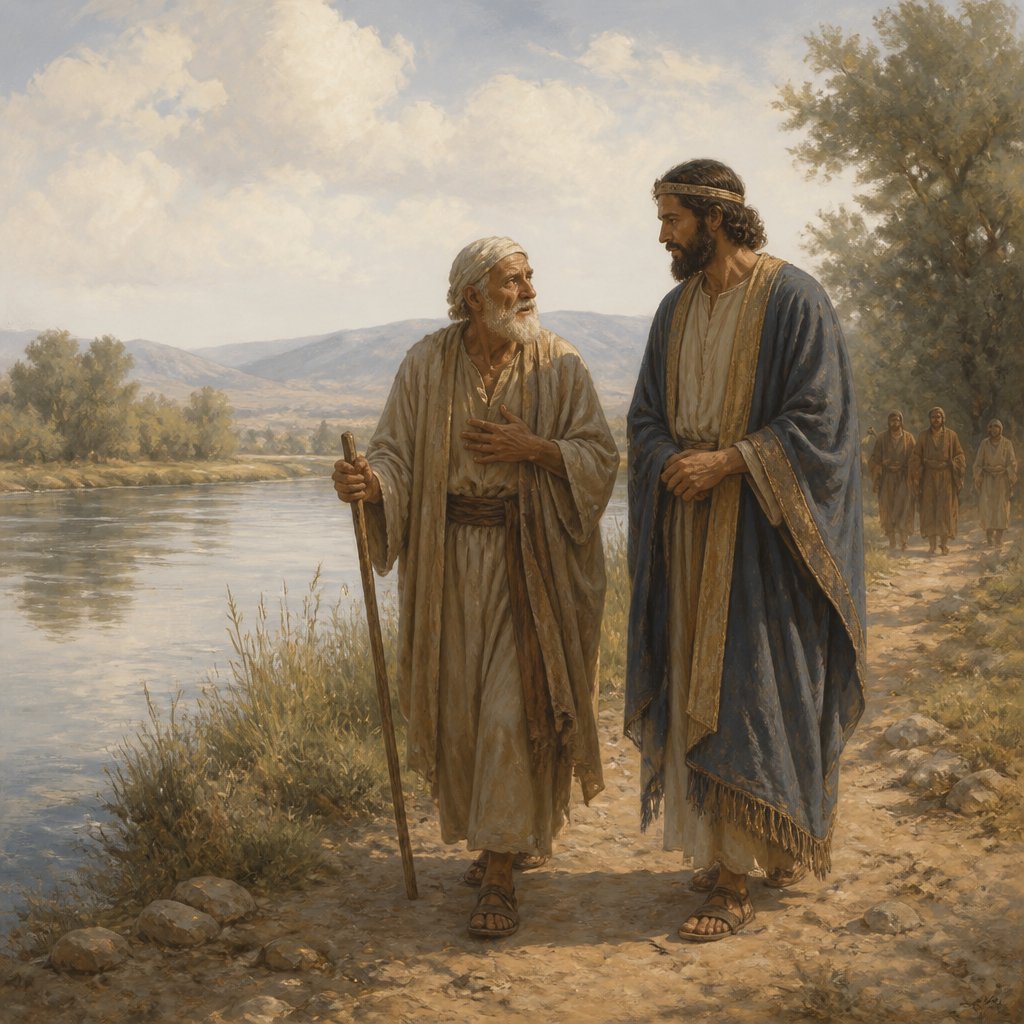
The verse 2 Samuel 19:36 from the King James Version of the Bible reads, "Thy servant will go a little way over Jordan with the king: and why should the king recompense it me with such a reward?" This verse comes at a pivotal moment in the story of King David as he is returning to Jerusalem after being exiled by his son Absalom. The verse is spoken by Barzillai, a wealthy and generous man who had provided food and shelter for David and his men during their time in exile, and now David wishes to repay him for his kindness.
The verse is rich in themes of loyalty, gratitude, and the importance of selfless acts of kindness. It also provides insight into the nature of true leadership and what it means to be a servant to others. Through examining the context and symbolism of this verse, we can gain a deeper understanding of these themes and their implications for our own lives.
First, let's examine the context in which this verse is spoken. David, the king of Israel, had been forced to flee Jerusalem due to the rebellion of his son, Absalom. During this time, Barzillai, a wealthy and influential man from Gilead, had shown unwavering loyalty and kindness to David by providing him and his men with food, shelter, and support. As David returns to reclaim his throne, he offers to reward Barzillai for his generosity by allowing him to accompany him back to Jerusalem and live in the royal court. However, Barzillai humbly declines, saying that he is old and unable to enjoy the luxuries of the king's court, and that he would prefer to return to his own home.
This act of selflessness and humility on the part of Barzillai is a powerful example of true servant leadership. Despite his wealth and influence, Barzillai prioritizes the well-being of others over his own comfort and status. He demonstrates gratitude for the opportunity to serve and shows that true reward comes from selfless acts of kindness, rather than seeking personal gain. In doing so, Barzillai embodies the virtues of loyalty, humility, and generosity, setting an example for all who aspire to be servant leaders.
The symbolism in this verse is also significant in understanding its deeper meaning. The mention of going "a little way over Jordan" with the king carries symbolic weight, as the Jordan River held great significance in the history and faith of the Israelites. It represented a boundary between the wilderness and the Promised Land, and crossing it signified a new beginning and a return to God's favor. In this context, Barzillai's willingness to accompany David over the Jordan represents his steadfast loyalty and commitment to supporting the king, no matter the challenges or obstacles they may face.
Furthermore, the notion of the king offering a reward for Barzillai's kindness speaks to the idea of gratitude and reciprocity. David's desire to repay Barzillai reflects the importance of acknowledging and honoring those who have shown us kindness and support. However, Barzillai's humble refusal of the king's reward highlights the principle that true acts of kindness are done without expecting anything in return. His selflessness serves as a model for how we should approach acts of service and generosity in our own lives.
In conclusion, 2 Samuel 19:36 offers a profound meditation on the themes of loyalty, gratitude, and servant leadership. Through the example of Barzillai, we are reminded of the importance of selfless acts of kindness and the true reward that comes from serving others. We are challenged to emulate his humble and generous spirit, and to prioritize the well-being of others over our own comfort and status. Ultimately, this verse invites us to consider how we can live lives of gratitude and service, embodying the virtues of loyalty, humility, and generosity in all that we do.
Get our apps


Artwork for 2 Samuel 19:36

2 Samuel 19:36 - "Thy servant will go a little way over Jordan with the king: and why should the king recompense it me with such a reward?"

"Thy servant will go a little way over Jordan with the king: and why should the king recompense it me with such a reward?" - 2 Samuel 19:36

2 Samuel 23:36 - "Igal the son of Nathan of Zobah, Bani the Gadite,"

2 Kings 19:36 - "So Sennacherib king of Assyria departed, and went and returned, and dwelt at Nineveh."

2 Samuel 19:8

2 Samuel 3:36 - "And all the people took notice of it, and it pleased them: as whatsoever the king did pleased all the people."

2 Samuel 19:8

2 Samuel 19:8

2 Samuel 19:8

2 Samuel 19:24

2 Samuel 22:36 - "Thou hast also given me the shield of thy salvation: and thy gentleness hath made me great."

"Igal the son of Nathan of Zobah, Bani the Gadite," - 2 Samuel 23:36

2 Samuel 19:1 - "And it was told Joab, Behold, the king weepeth and mourneth for Absalom."

2 Chronicles 36:19 - "And they burnt the house of God, and brake down the wall of Jerusalem, and burnt all the palaces thereof with fire, and destroyed all the goodly vessels thereof."

Genesis 19-36

2 Samuel 22:19 - "They prevented me in the day of my calamity: but the LORD was my stay."

2 Samuel 24:19 - "And David, according to the saying of Gad, went up as the LORD commanded."

2 Samuel 2:19 - "And Asahel pursued after Abner; and in going he turned not to the right hand nor to the left from following Abner."

2 Samuel 1:19 - "The beauty of Israel is slain upon thy high places: how are the mighty fallen!"

Joshua 19:36 - "And Adamah, and Ramah, and Hazor,"

2 Samuel 15:36 - "Behold, they have there with them their two sons, Ahimaaz Zadok's son, and Jonathan Abiathar's son; and by them ye shall send unto me every thing that ye can hear."

2 Samuel 19:2 - "And the victory that day was turned into mourning unto all the people: for the people heard say that day how the king was grieved for his son."

"So Sennacherib king of Assyria departed, and went and returned, and dwelt at Nineveh." - 2 Kings 19:36

Genesis 36:19 - "These are the sons of Esau, who is Edom, and these are their dukes."

2 Samuel 13:36 - "And it came to pass, as soon as he had made an end of speaking, that, behold, the king's sons came, and lifted up their voice and wept: and the king also and all his servants wept very sore."

2 Samuel 19:23 - "Therefore the king said unto Shimei, Thou shalt not die. And the king sware unto him."

Luke 19:36 - "And as he went, they spread their clothes in the way."

2 Samuel 11:19 - "And charged the messenger, saying, When thou hast made an end of telling the matters of the war unto the king,"

2 Samuel 23:19 - "Was he not most honourable of three? therefore he was their captain: howbeit he attained not unto the first three."

2 Samuel 17:19 - "And the woman took and spread a covering over the well's mouth, and spread ground corn thereon; and the thing was not known."