What does 2 Samuel 1:15 mean?
“And David called one of the young men, and said, Go near, and fall upon him. And he smote him that he died.” — 2 Samuel 1:15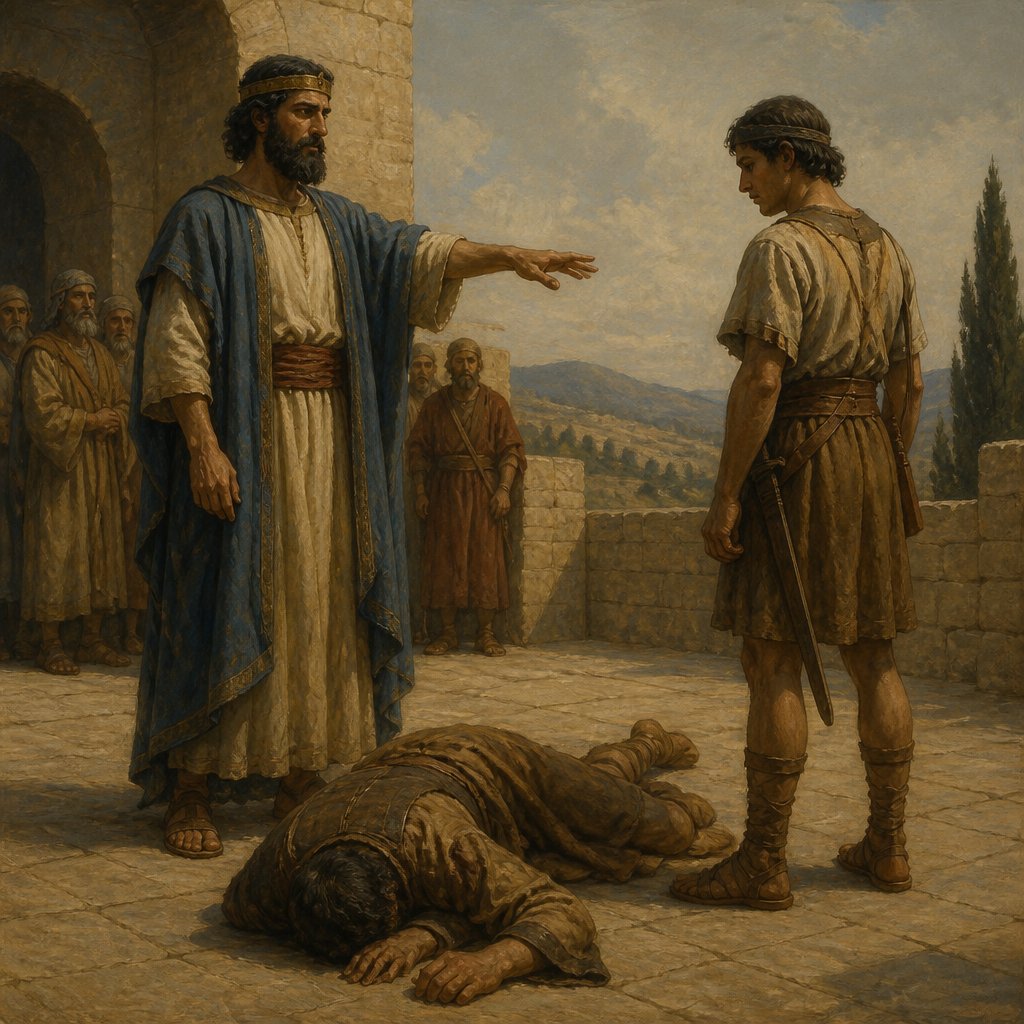
The Bible verse 2 Samuel 1:15 from the King James Version (KJV) reads: "And David called one of the young men, and said, Go near, and fall upon him. And he smote him that he died."
This verse comes from a larger passage in the Old Testament book of 2 Samuel, which tells the story of David's rise to power and the events surrounding the death of King Saul and his son, Jonathan. In this specific verse, David is reacting to the news of Saul's death, and instructs one of his young men to kill the Amalekite who claimed to have killed Saul. This act of vengeance shows David's loyalty to Saul, despite their complicated relationship.
The Book of 2 Samuel is a narrative that recounts the life and reign of King David, who is a central figure in the history of Israel. The passage from which this verse comes is set during a time of political turmoil, as David is navigating his own rise to power in the wake of Saul's death. The verse provides insight into David's character, emotions, and choices during this challenging time.
In this verse, there are several important themes and symbols at play. One of the key themes is the concept of loyalty and honor. Despite the fact that Saul had been David's enemy and had sought to kill him, David still harbored a deep respect and loyalty for the man who had once been the anointed king of Israel. By seeking vengeance for Saul's death, David is demonstrating his commitment to honoring the memory of the fallen king, regardless of their past conflicts.
Another important theme in this verse is the idea of justice and retribution. The act of instructing a young man to kill the Amalekite who claimed to have killed Saul is a form of retribution for the Amalekite's perceived role in the death of the king. This act reflects the ancient Near Eastern concept of "eye for an eye" justice, where the punishment corresponds to the crime. David's actions in this verse demonstrate his belief in the importance of justice and accountability.
There are also deeper symbolic implications in the verse. The fact that David calls for a "young man" to carry out the killing could be symbolic of the passing of the torch from one generation to the next. In this tumultuous period of transition and change, David is asserting his authority and influence as the new leader of Israel.
Furthermore, the act of vengeance in this verse can be seen as a reflection of the larger theme of the consequences of sin. Throughout the Bible, there are numerous examples of individuals facing the repercussions of their actions. The Amalekite's claim to have killed Saul is a sinful act, and David's response to it illustrates the idea of divine justice and the consequences of wrongdoing.
In conclusion, 2 Samuel 1:15 from the King James Version presents a complex and thought-provoking portrayal of David's actions following the death of Saul. The verse touches on themes of loyalty, justice, and the consequences of sin, while also offering insight into the character of King David during a pivotal moment in Israel's history. The verse serves as a powerful example of the moral and ethical dilemmas faced by biblical figures, and it continues to provoke contemplation and discussion among readers and scholars alike.
Get our apps


Artwork for 2 Samuel 1:15

2 Samuel 1:15 - "And David called one of the young men, and said, Go near, and fall upon him. And he smote him that he died."
"And David called one of the young men, and said, Go near, and fall upon him. And he smote him that he died." - 2 Samuel 1:15

2 Samuel 1:5 - "And David said unto the young man that told him, How knowest thou that Saul and Jonathan his son be dead?"

1 Samuel 1:15-17

2 Samuel 15:1 - "And it came to pass after this, that Absalom prepared him chariots and horses, and fifty men to run before him."
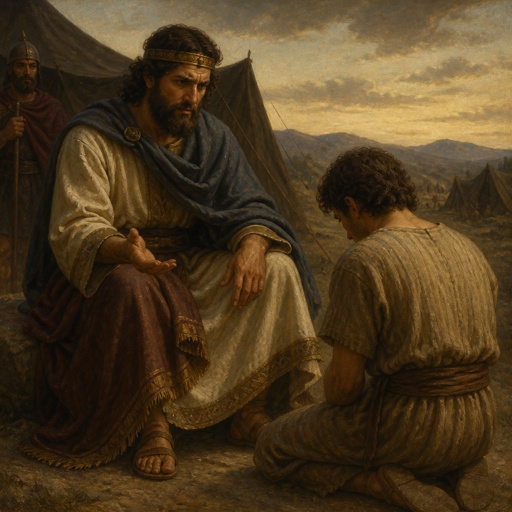
"And David said unto the young man that told him, How knowest thou that Saul and Jonathan his son be dead?" - 2 Samuel 1:5

1 Samuel 15:10 - "¶ Then came the word of the LORD unto Samuel, saying,"

2 Samuel 1. 17-27

1 Samuel 7:15 - "And Samuel judged Israel all the days of his life."
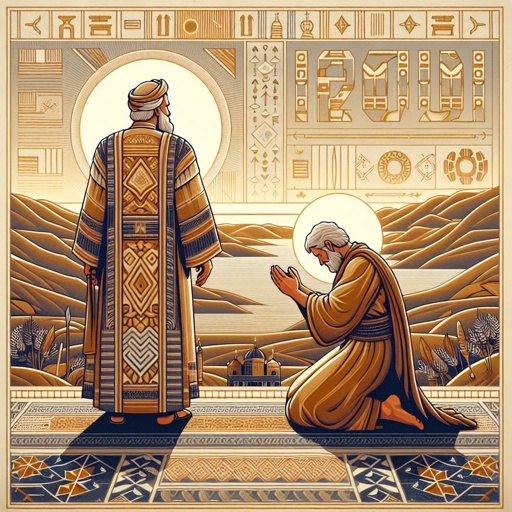
1 Samuel 15:31 - "So Samuel turned again after Saul; and Saul worshipped the LORD."

1 Samuel 15:34 - "¶ Then Samuel went to Ramah; and Saul went up to his house to Gibeah of Saul."

1 Samuel 3:15 - "¶ And Samuel lay until the morning, and opened the doors of the house of the LORD. And Samuel feared to shew Eli the vision."

1.samuel 15:30

1 Samuel 15:22

1 Samuel 15:22

1 Samuel 28:15

1.samuel 15:30

1 Samuel 2:15 - "Also before they burnt the fat, the priest's servant came, and said to the man that sacrificed, Give flesh to roast for the priest; for he will not have sodden flesh of thee, but raw."

1 Samuel 9:15 - "¶ Now the LORD had told Samuel in his ear a day before Saul came, saying,"

2 Samuel 5:15 - "Ibhar also, and Elishua, and Nepheg, and Japhia,"

1 Samuel 28:15-20

1 Samuel 15:2 - "Thus saith the LORD of hosts, I remember that which Amalek did to Israel, how he laid wait for him in the way, when he came up from Egypt."

1 Samuel 21:10-15

1 Samuel 28:15-19

1 Samuel 15:27 - "And as Samuel turned about to go away, he laid hold upon the skirt of his mantle, and it rent."

1 Samuel 15:13 - "And Samuel came to Saul: and Saul said unto him, Blessed be thou of the LORD: I have performed the commandment of the LORD."

1 Samuel 10:15 - "And Saul's uncle said, Tell me, I pray thee, what Samuel said unto you."

1 Samuel 15:14 - "And Samuel said, What meaneth then this bleating of the sheep in mine ears, and the lowing of the oxen which I hear?"

1 Samuel 28:15 Saul is desperate

1 Samuel 15:1 - "Samuel also said unto Saul, The LORD sent me to anoint thee to be king over his people, over Israel: now therefore hearken thou unto the voice of the words of the LORD."