What does 2 Samuel 20:6 mean?
"And David said to Abishai, Now shall Sheba the son of Bichri do us more harm than did Absalom: take thou thy lord’s servants, and pursue after him, lest he get him fenced cities, and escape us." - 2 Samuel 20:6
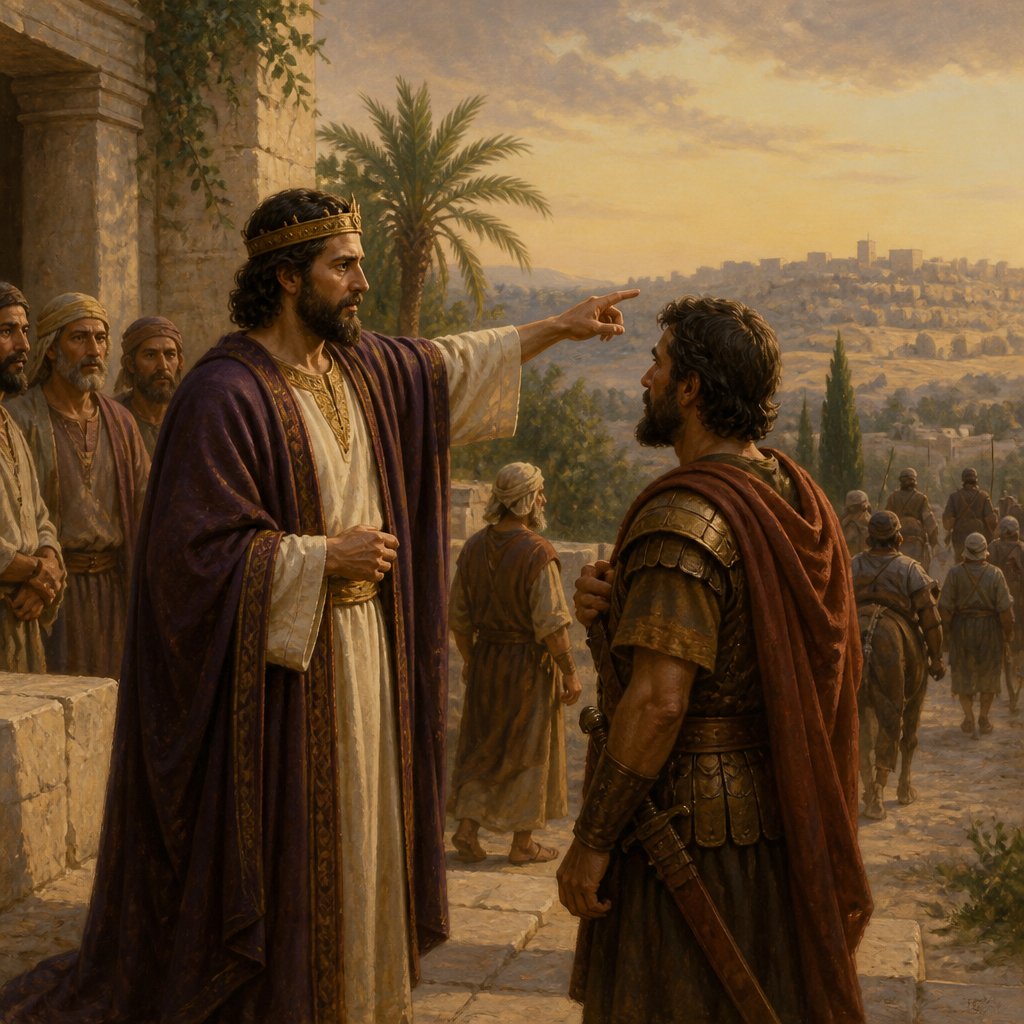
The Bible verse 2 Samuel 20:6 in the King James Version (KJV) states, "And David said to Abishai, Now shall Sheba the son of Bichri do us more harm than did Absalom: take thou thy lord's servants, and pursue after him, lest he get him fenced cities, and escape us."
This verse comes from the book of 2 Samuel, which is part of the historical books in the Old Testament. It is a continuation of the story of King David, the second king of Israel. In this particular verse, David is speaking to one of his military commanders, Abishai, about a new threat to his kingdom. The context of this verse is the aftermath of Absalom's rebellion against David and his subsequent death. Sheba, the son of Bichri, has now risen up against David, posing a new challenge and threat to his reign.
The theme of power and leadership is central to this verse. Throughout the book of 2 Samuel, David grapples with the responsibilities and challenges of being a king. The verse reflects David's strategic thinking and his decisiveness in addressing the threat posed by Sheba. It also demonstrates his reliance on his commanders and military leaders to carry out his orders.
The verse also touches on the theme of consequences and the ripple effects of rebellion. Absalom's rebellion had already caused great turmoil and division within Israel, and now Sheba's actions threaten to further destabilize the kingdom. David's urgency in dealing with the threat reflects an awareness of the potential consequences of allowing the rebellion to continue unchecked.
Symbolism plays a significant role in this verse as well. Sheba, the son of Bichri, can be seen as a symbol of continued resistance and opposition to David's reign. His actions represent the ongoing challenges that David faces as a leader, both internally within his kingdom and externally from neighboring nations. The pursuit of Sheba by David's forces symbolizes the constant vigilance and determination required to maintain power and stability.
Furthermore, the mention of "fenced cities" in the verse alludes to the strategic significance of fortified cities in ancient warfare. It highlights the tactical challenges of pursuing an enemy who seeks refuge within such strongholds. This symbolizes the complexities and difficulties of leadership, as David must consider how to effectively overcome these obstacles in order to maintain control over his kingdom.
In conclusion, 2 Samuel 20:6 is a verse that captures the ongoing struggles and challenges faced by King David as he seeks to maintain his authority and leadership. It highlights the themes of power, consequences, and the complexities of leadership, while also using symbolism to convey the broader significance of David's actions in the context of biblical history. This verse serves as a reminder of the enduring relevance and timeless wisdom found within the pages of the Old Testament.
Have questions about 2 Samuel 20:6?
Dive deeper into this scripture with Bible Chat — an AI-powered tool for exploring God's Word through conversation. Ask questions, get context, and grow in your understanding of the Bible.
Get Our Apps


2 Samuel 20:6 Artwork

2 Samuel 20:6 - "And David said to Abishai, Now shall Sheba the son of Bichri do us more harm than did Absalom: take thou thy lord's servants, and pursue after him, lest he get him fenced cities, and escape us."
"And David said to Abishai, Now shall Sheba the son of Bichri do us more harm than did Absalom: take thou thy lord's servants, and pursue after him, lest he get him fenced cities, and escape us." - 2 Samuel 20:6

2 Samuel 22:17-20

2 Samuel 20:20 - "And Joab answered and said, Far be it, far be it from me, that I should swallow up or destroy."

2 Samuel 20:25 - "And Sheva was scribe: and Zadok and Abiathar were the priests:"

2 Samuel 6:14

2 Samuel 6:20 - "¶ Then David returned to bless his household. And Michal the daughter of Saul came out to meet David, and said, How glorious was the king of Israel to day, who uncovered himself to day in the eyes of the handmaids of his servants, as one of the vain fellows shamelessly uncovereth himself!"

2 Samuel 20:24 - "And Adoram was over the tribute: and Jehoshaphat the son of Ahilud was recorder:"

2 Samuel 20:26 - "And Ira also the Jairite was a chief ruler about David."

2 Samuel 2:20 - "Then Abner looked behind him, and said, Art thou Asahel? And he answered, I am."

2 Samuel 6:14–22
1 Samuel 20:6 - "If thy father at all miss me, then say, David earnestly asked leave of me that he might run to Beth-lehem his city: for there is a yearly sacrifice there for all the family."

2 Samuel 16:20 - "¶ Then said Absalom to Ahithophel, Give counsel among you what we shall do."

1 Samuel 6:20 - "And the men of Beth-shemesh said, Who is able to stand before this holy LORD God? and to whom shall he go up from us?"

2 Samuel 6:6 - "¶ And when they came to Nachon's threshingfloor, Uzzah put forth his hand to the ark of God, and took hold of it; for the oxen shook it."

2 Samuel 1:20 - "Tell it not in Gath, publish it not in the streets of Askelon; lest the daughters of the Philistines rejoice, lest the daughters of the uncircumcised triumph."

2 Samuel 20:4 - "¶ Then said the king to Amasa, Assemble me the men of Judah within three days, and be thou here present."

2 Samuel 6:23 - "Therefore Michal the daughter of Saul had no child unto the day of her death."

2 Samuel 7:20 - "And what can David say more unto thee? for thou, Lord GOD, knowest thy servant."

2 Samuel 20:23 - "¶ Now Joab was over all the host of Israel: and Benaiah the son of Jehoiada was over the Cherethites and over the Pelethites:"

2 Samuel 22:6 - "The sorrows of hell compassed me about; the snares of death prevented me;"

2 Samuel 22:20 - "He brought me forth also into a large place: he delivered me, because he delighted in me."

1 Samuel 2:6 - "The LORD killeth, and maketh alive: he bringeth down to the grave, and bringeth up."

2 Samuel 24:6 - "Then they came to Gilead, and to the land of Tahtim-hodshi; and they came to Dan-jaan, and about to Zidon,"

2 Samuel 6:1 - "Again, David gathered together all the chosen men of Israel, thirty thousand."

2 Samuel 18:6 - "¶ So the people went out into the field against Israel: and the battle was in the wood of Ephraim;"

2 Samuel 20:13 - "When he was removed out of the highway, all the people went on after Joab, to pursue after Sheba the son of Bichri."

2 Samuel 3:20 - "So Abner came to David to Hebron, and twenty men with him. And David made Abner and the men that were with him a feast."

"And Sheva was scribe: and Zadok and Abiathar were the priests:" - 2 Samuel 20:25

2 Samuel 6:9 - "And David was afraid of the LORD that day, and said, How shall the ark of the LORD come to me?"