What does 2 Samuel 20:8 mean?
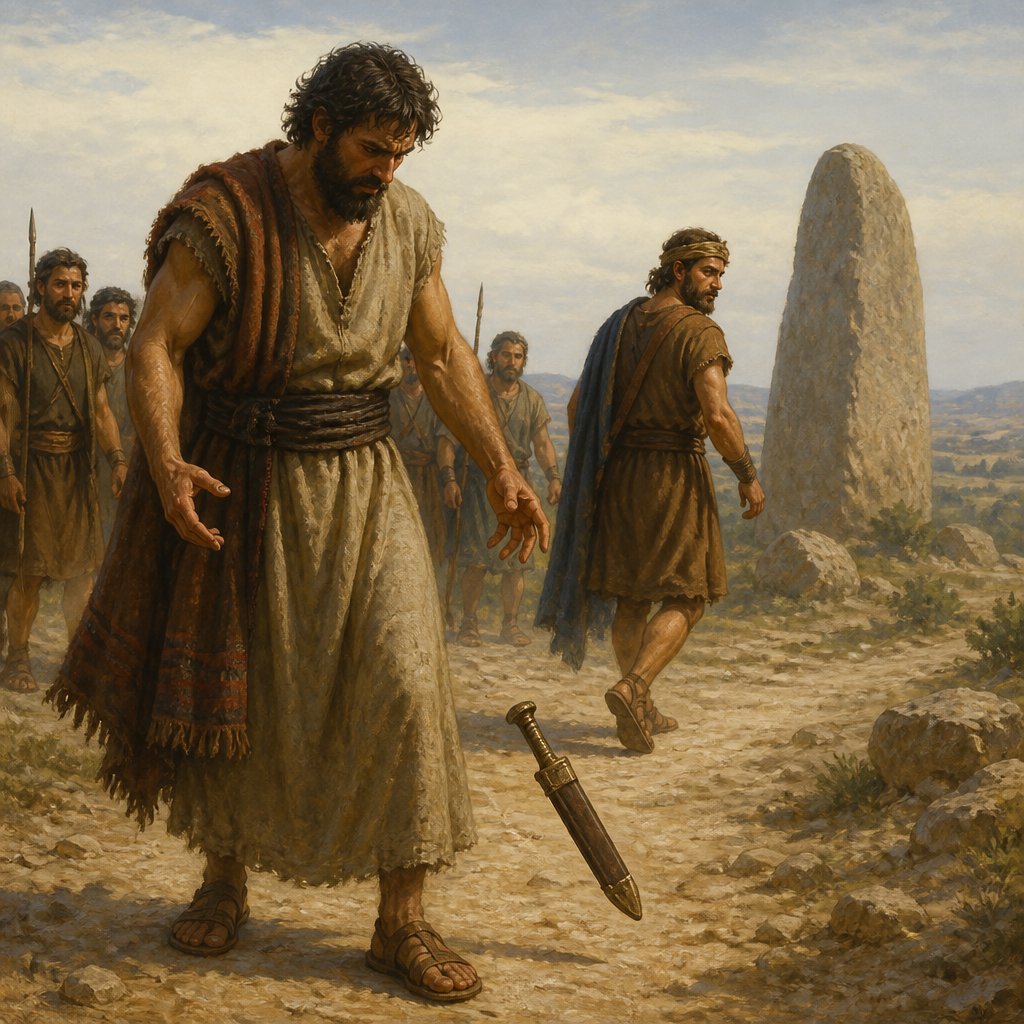
"When they were at the great stone which is in Gibeon, Amasa went before them. And Joab’s garment that he had put on was girded unto him, and upon it a girdle with a sword fastened upon his loins in the sheath thereof; and as he went forth it fell out." - 2 Samuel 20:8
The verse 2 Samuel 20:8 in the King James Version (KJV) reads:
"When they were at the great stone which is in Gibeon, Amasa went before them. And Joab's garment that he had put on was girded unto him, and upon it a girdle with a sword fastened upon his loins in the sheath thereof; and as he went forth it fell."
This verse comes from the historical books of the Bible, specifically the book of 2 Samuel. This particular passage recounts the events that occurred after David returned to Jerusalem following the rebellion of his son Absalom. Joab, the commander of David's army, encounters Amasa, who was appointed as commander of Absalom's army. This meeting leads to the murder of Amasa by Joab, as described in the subsequent verses.
The verse itself is both descriptive and symbolic, providing insight into the characters and the larger theme of power struggles and political intrigue in the biblical narrative. The setting of the great stone in Gibeon and the details of Joab's attire give the passage a sense of historical and cultural authenticity, while the actions of the characters reveal the complexities of human relationships and the pursuit of power.
One of the key themes in this verse is the struggle for leadership and the use of violence to maintain or seize power. Joab's actions in this passage demonstrate his ruthless and cunning nature, as he takes advantage of the situation to eliminate a potential rival. His disregard for the sanctity of life and his willingness to resort to violence to achieve his goals reflect the darker aspects of human ambition and the corrupting influence of power.
Furthermore, the mention of the great stone in Gibeon carries symbolic significance. In biblical times, stones often served as markers or memorials for important events or covenants. The use of this specific location adds a layer of historical and cultural depth to the narrative, emphasizing the weight of the events that transpire there. It suggests that the encounter between Joab and Amasa holds broader significance within the larger narrative of David's reign and the political upheaval that characterized this period in Israel's history.
The imagery of Joab's garment and the sword girded to his loins also carries symbolic meaning. In ancient cultures, the girdle and the sword were symbols of authority and strength, worn by warriors and leaders. Joab's attire not only conveys his readiness for battle but also serves as a visual representation of his position and his willingness to use force to achieve his aims. The mention of the sword falling as he went forth may also symbolize the unpredictable and dangerous nature of his character, as well as the inevitability of conflict and bloodshed in the pursuit of power.
In a broader context, this passage reflects the complexities and moral ambiguities of leadership and human ambition. The characters of Joab and Amasa embody different aspects of the struggle for power, with Joab representing the ruthless and manipulative side of leadership, and Amasa standing as a potential threat who ultimately falls victim to his ambition. This theme of political intrigue and the darker aspects of human nature permeates the narrative of 2 Samuel, shedding light on the inherent tensions and conflicts that accompany the exercise of power and authority.
Overall, 2 Samuel 20:8 offers a rich and complex portrait of the dynamics of power and ambition, as well as the moral and ethical implications of leadership in the biblical narrative. Through its descriptive language and symbolic imagery, the verse invites readers to grapple with the complexities of human nature and the pursuit of power, while also underscoring the broader historical and cultural context in which these events unfold.
Have questions about 2 Samuel 20:8?
Dive deeper into this scripture with Bible Chat — an AI-powered tool for exploring God's Word through conversation. Ask questions, get context, and grow in your understanding of the Bible.
Get Our Apps


2 Samuel 20:8 Artwork
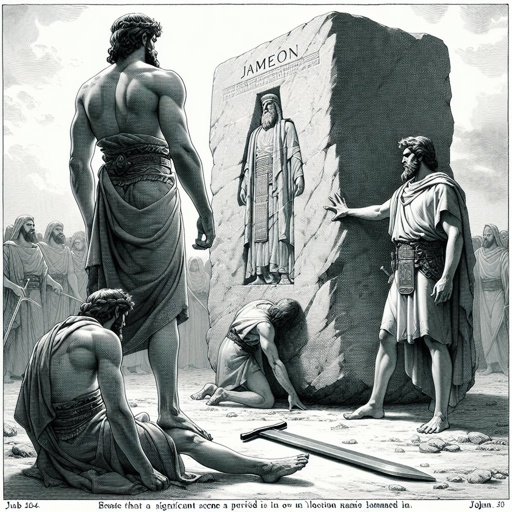
2 Samuel 20:8 - "When they were at the great stone which is in Gibeon, Amasa went before them. And Joab's garment that he had put on was girded unto him, and upon it a girdle with a sword fastened upon his loins in the sheath thereof; and as he went forth it fell out."
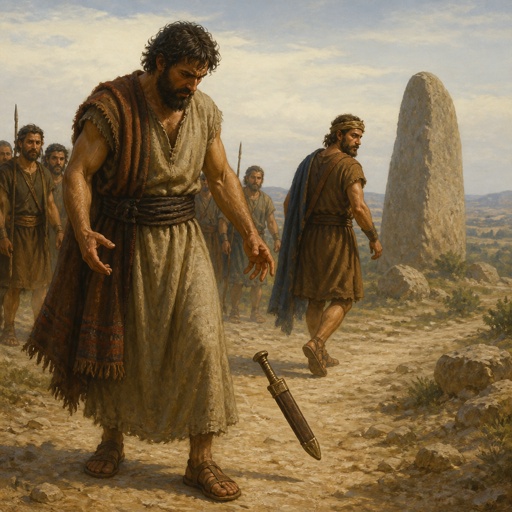
"When they were at the great stone which is in Gibeon, Amasa went before them. And Joab's garment that he had put on was girded unto him, and upon it a girdle with a sword fastened upon his loins in the sheath thereof; and as he went forth it fell out." - 2 Samuel 20:8

2 Samuel 22:17-20

2 Samuel 20:20 - "And Joab answered and said, Far be it, far be it from me, that I should swallow up or destroy."

2 Samuel 19:8

2 Samuel 19:8

2 Samuel 19:8

2 Samuel 20:25 - "And Sheva was scribe: and Zadok and Abiathar were the priests:"

2 Samuel 19:8

2 Samuel 20:24 - "And Adoram was over the tribute: and Jehoshaphat the son of Ahilud was recorder:"

2 Samuel 20:26 - "And Ira also the Jairite was a chief ruler about David."

2 Samuel 2:20 - "Then Abner looked behind him, and said, Art thou Asahel? And he answered, I am."

2 samuel 23:8-21

2 Samuel 8:8 - "And from Betah, and from Berothai, cities of Hadadezer, king David took exceeding much brass."

1 Samuel 8:20 - "That we also may be like all the nations; and that our king may judge us, and go out before us, and fight our battles."

2 Samuel 16:20 - "¶ Then said Absalom to Ahithophel, Give counsel among you what we shall do."

2 Samuel 2:8 - "¶ But Abner the son of Ner, captain of Saul's host, took Ish-bosheth the son of Saul, and brought him over to Mahanaim;"

2 Samuel 1:20 - "Tell it not in Gath, publish it not in the streets of Askelon; lest the daughters of the Philistines rejoice, lest the daughters of the uncircumcised triumph."

2 Samuel 20:4 - "¶ Then said the king to Amasa, Assemble me the men of Judah within three days, and be thou here present."

2 Samuel 8:16 - "And Joab the son of Zeruiah was over the host; and Jehoshaphat the son of Ahilud was recorder;"

2 Samuel 7:20 - "And what can David say more unto thee? for thou, Lord GOD, knowest thy servant."

2 Samuel 20:23 - "¶ Now Joab was over all the host of Israel: and Benaiah the son of Jehoiada was over the Cherethites and over the Pelethites:"

2 Samuel 22:8 - "Then the earth shook and trembled; the foundations of heaven moved and shook, because he was wroth."

2 Samuel 22:20 - "He brought me forth also into a large place: he delivered me, because he delighted in me."

2 Samuel 8:17 - "And Zadok the son of Ahitub, and Ahimelech the son of Abiathar, were the priests; and Seraiah was the scribe;"

2 Samuel 8:7 - "And David took the shields of gold that were on the servants of Hadadezer, and brought them to Jerusalem."

2 Corinthians 8:20 - "Avoiding this, that no man should blame us in this abundance which is administered by us:"

2 Samuel 8:9 - "¶ When Toi king of Hamath heard that David had smitten all the host of Hadadezer,"

2 Samuel 20:13 - "When he was removed out of the highway, all the people went on after Joab, to pursue after Sheba the son of Bichri."

2 Samuel 3:20 - "So Abner came to David to Hebron, and twenty men with him. And David made Abner and the men that were with him a feast."