What does 2 Samuel 2:20 mean?
“Then Abner looked behind him, and said, Art thou Asahel? And he answered, I am.” — 2 Samuel 2:20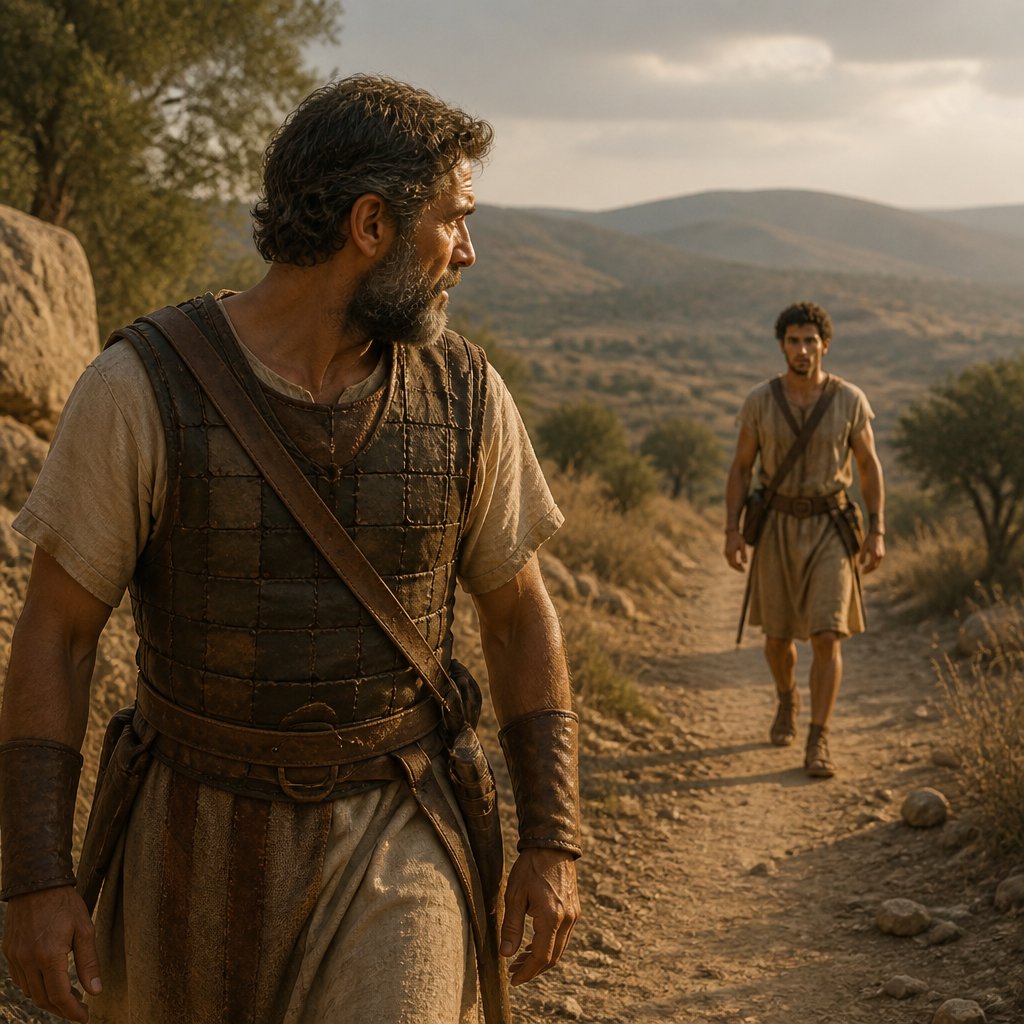
2 Samuel 2:20 (KJV) states, “Then Abner looked behind him, and said, Art thou Asahel? And he answered, I am.”
This verse comes from the book of 2 Samuel in the Old Testament of the Bible. It is part of a larger narrative that recounts the aftermath of the death of King Saul and his sons in battle, and the subsequent rise of David as the king of Judah. The verse focuses on a moment of confrontation between two men, Abner and Asahel, representing the larger themes of power, identity, and the consequences of war.
The verse begins with Abner, the commander of Saul’s army, looking behind him. This action can be seen as a metaphor for the past, as Abner is confronted with the legacy and consequences of his actions. It is a moment of reflection and possibly regret, as he is forced to confront the repercussions of the battles he has fought. This moment of introspection is a key theme throughout the book of 2 Samuel, as characters grapple with their past decisions and the impact they have had on their own lives and the lives of others.
Abner’s question, “Art thou Asahel?” is significant as it highlights the theme of identity. Asahel is the brother of Joab, the commander of David’s army, and the son of Zeruiah, David’s sister. The identification of Asahel is important on multiple levels. It reinforces the familial connections and loyalties that are central to the larger narrative of 2 Samuel. It also serves as a reminder of the personal vendettas and rivalries that often drive the conflicts and power struggles depicted in the book. Furthermore, Abner’s recognition of Asahel’s identity provides a moment of reckoning, as it sets the stage for the confrontation between these two men.
Asahel’s response, “I am,” is a declaration of his own identity and agency. It signifies his willingness to confront Abner and his commitment to his role within David’s army. Asahel’s response can be seen as a manifestation of the larger theme of honor and duty, as he is prepared to fulfill his responsibilities as a soldier despite the potential dangers and conflicts that may arise.
The verse encapsulates the larger context of 2 Samuel, which is a time of transition and turmoil in ancient Israel. The death of King Saul and the subsequent struggle for power create a climate of uncertainty and upheaval. The verse illustrates the intensity of the rivalry between the remnants of Saul’s forces, led by Abner, and the emerging leadership of David. It also sets the stage for the series of violent confrontations and political maneuvers that dominate the narrative, ultimately leading to David’s ascension to the throne.
Symbolically, the verse can be interpreted as a representation of the larger themes of conflict and confrontation. It serves as a potent symbol of the personal and political battles that define the world of 2 Samuel. The tension between Abner and Asahel reflects the broader struggles for power and authority, as well as the personal vendettas and ambitions that drive the characters’ actions.
In conclusion, 2 Samuel 2:20 is a pivotal verse that encapsulates the themes of power, identity, and conflict that define the larger narrative of the book. It portrays a moment of reckoning and confrontation between two men, Abner and Asahel, and serves as a potent symbol of the larger struggles and rivalries that shape the world of ancient Israel. The verse is an integral part of the complex and multi-faceted story of 2 Samuel, and it invites readers to contemplate the consequences of war, the complexities of human relationships, and the enduring themes of honor and duty.
Get our apps


Artwork for 2 Samuel 2:20

2 Samuel 2:20 - "Then Abner looked behind him, and said, Art thou Asahel? And he answered, I am."
"Then Abner looked behind him, and said, Art thou Asahel? And he answered, I am." - 2 Samuel 2:20

2 Samuel 22:17-20

2 Samuel 20:25 - "And Sheva was scribe: and Zadok and Abiathar were the priests:"

2 Samuel 20:20 - "And Joab answered and said, Far be it, far be it from me, that I should swallow up or destroy."

2 Samuel 20:24 - "And Adoram was over the tribute: and Jehoshaphat the son of Ahilud was recorder:"

2 Samuel 20:26 - "And Ira also the Jairite was a chief ruler about David."

2 Samuel 16:20 - "¶ Then said Absalom to Ahithophel, Give counsel among you what we shall do."

2 Samuel 20:2 - "So every man of Israel went up from after David, and followed Sheba the son of Bichri: but the men of Judah clave unto their king, from Jordan even to Jerusalem."

2 Samuel 1:20 - "Tell it not in Gath, publish it not in the streets of Askelon; lest the daughters of the Philistines rejoice, lest the daughters of the uncircumcised triumph."

2 Samuel 20:4 - "¶ Then said the king to Amasa, Assemble me the men of Judah within three days, and be thou here present."

2 Samuel 7:20 - "And what can David say more unto thee? for thou, Lord GOD, knowest thy servant."

2 Samuel 20:23 - "¶ Now Joab was over all the host of Israel: and Benaiah the son of Jehoiada was over the Cherethites and over the Pelethites:"

2 Samuel 22:20 - "He brought me forth also into a large place: he delivered me, because he delighted in me."

2 Samuel 20:13 - "When he was removed out of the highway, all the people went on after Joab, to pursue after Sheba the son of Bichri."

2 Samuel 3:20 - "So Abner came to David to Hebron, and twenty men with him. And David made Abner and the men that were with him a feast."

"And Sheva was scribe: and Zadok and Abiathar were the priests:" - 2 Samuel 20:25

2 Samuel 20:11 - "And one of Joab's men stood by him, and said, He that favoureth Joab, and he that is for David, let him go after Joab."

2 Samuel 20:9 - "And Joab said to Amasa, Art thou in health, my brother? And Joab took Amasa by the beard with the right hand to kiss him."

2 Samuel 20:18 - "Then she spake, saying, They were wont to speak in old time, saying, They shall surely ask counsel at Abel: and so they ended the matter."

2 Samuel 20:5 - "So Amasa went to assemble the men of Judah: but he tarried longer than the set time which he had appointed him."

"And Ira also the Jairite was a chief ruler about David." - 2 Samuel 20:26
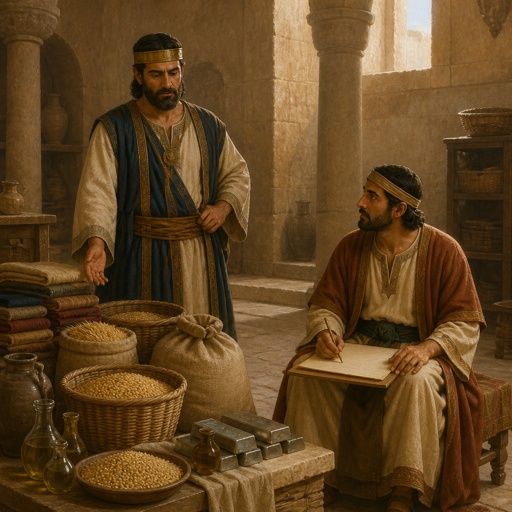
"And Adoram was over the tribute: and Jehoshaphat the son of Ahilud was recorder:" - 2 Samuel 20:24

2 Samuel 20:14 - "¶ And he went through all the tribes of Israel unto Abel, and to Beth-maachah, and all the Berites: and they were gathered together, and went also after him."
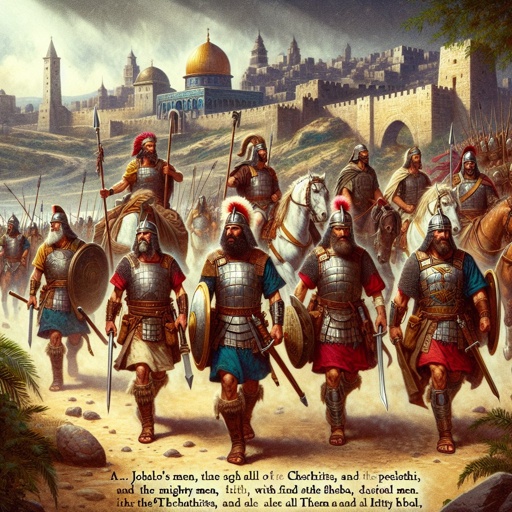
2 Samuel 20:7 - "And there went out after him Joab's men, and the Cherethites, and the Pelethites, and all the mighty men: and they went out of Jerusalem, to pursue after Sheba the son of Bichri."

1 Samuel 2:20 - "¶ And Eli blessed Elkanah and his wife, and said, The LORD give thee seed of this woman for the loan which is lent to the LORD. And they went unto their own home."
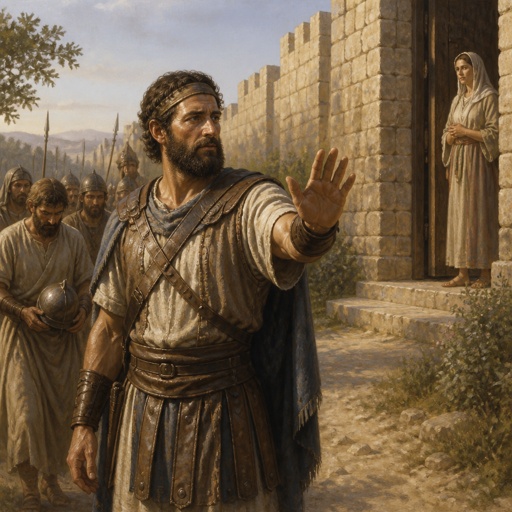
"And Joab answered and said, Far be it, far be it from me, that I should swallow up or destroy." - 2 Samuel 20:20

2 Samuel 20:19 - "I am one of them that are peaceable and faithful in Israel: thou seekest to destroy a city and a mother in Israel: why wilt thou swallow up the inheritance of the LORD?"

2 Samuel 24:20 - "And Araunah looked, and saw the king and his servants coming on toward him: and Araunah went out, and bowed himself before the king on his face upon the ground."

2 Samuel 20:16 - "¶ Then cried a wise woman out of the city, Hear, hear; say, I pray you, unto Joab, Come near hither, that I may speak with thee."