What does 2 Samuel 3:14 mean?
“And David sent messengers to Ish-bosheth Saul’s son, saying, Deliver me my wife Michal, which I espoused to me for an hundred foreskins of the Philistines.” — 2 Samuel 3:14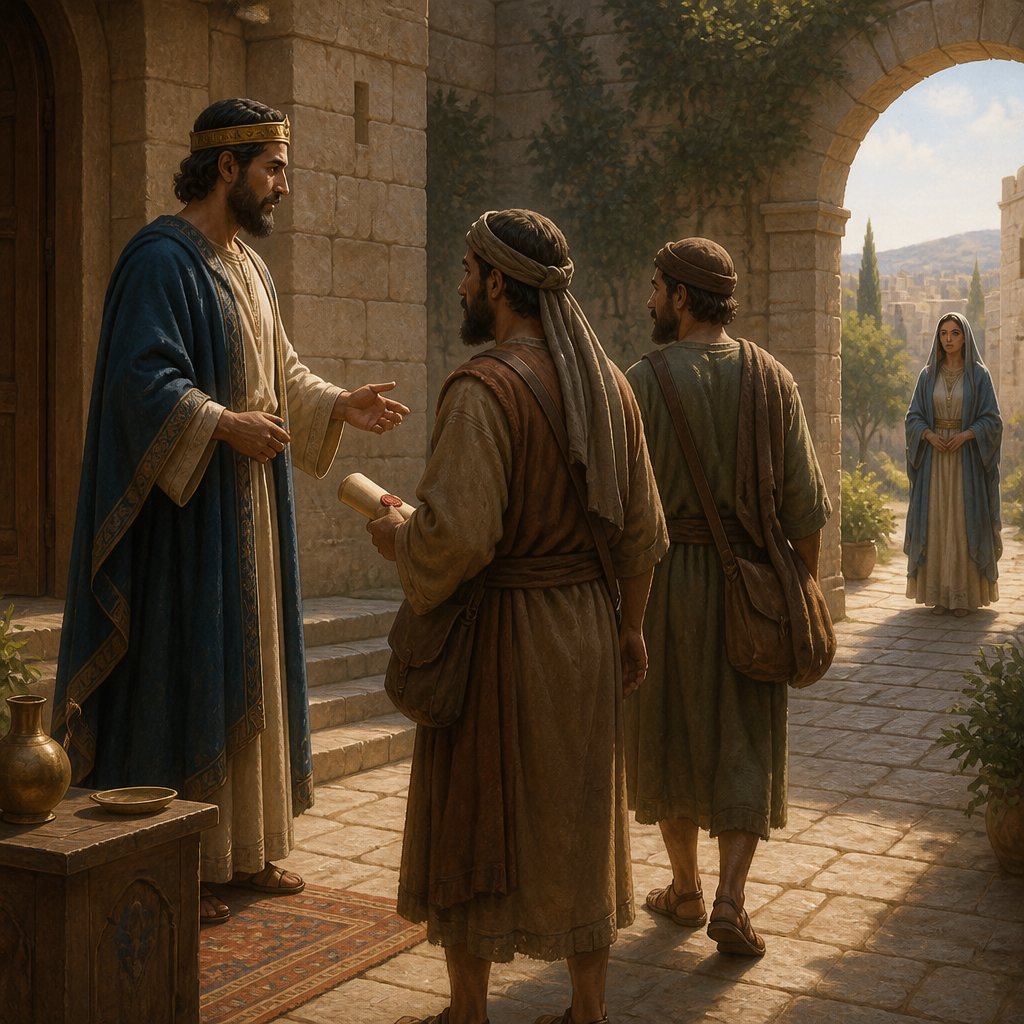
The Bible verse 2 Samuel 3:14 in the King James Version (KJV) reads, "And David sent messengers to Ishbosheth Saul's son, saying, Deliver me my wife Michal, which I espoused to me for an hundred foreskins of the Philistines." This verse comes from the Old Testament and is part of the story of David, who becomes the second king of Israel after Saul.
In order to fully understand the significance of this verse, it is important to understand the context in which it occurs. David was the youngest of Jesse's sons, and he was anointed as the future king of Israel by the prophet Samuel. However, Saul, the current king, became jealous of David's popularity and sought to kill him. David fled from Saul and eventually gained a following of loyal supporters. After Saul's death, David was anointed as the king of Judah, and later, the king of all Israel.
In this particular verse, David is sending messengers to Ishbosheth, who is the son of Saul and the king of Israel at the time. David is asking for the return of his wife Michal, who was the daughter of Saul and was given to David in marriage. This request is significant for several reasons. First, it shows David's desire to restore his rightful position as king and to reunite with his wife. Second, it demonstrates David's respect for the customs and agreements of the time, as he refers to the dowry that he paid for Michal with the foreskins of the Philistines.
One of the themes that can be derived from this verse is the idea of loyalty and the importance of marital relationships. David's request for the return of Michal shows his commitment to his wife and his willingness to uphold the covenant of marriage. Additionally, David's actions also highlight the importance of fulfilling promises and honoring agreements, as seen in his reference to the dowry that he paid for Michal.
The verse also demonstrates David's determination to establish his rightful place as the king of Israel. By asking for the return of Michal, who was the daughter of Saul, David is making a symbolic statement about his legitimacy as the king. This action can be seen as a strategic move by David to solidify his position and to assert his authority over the kingdom.
Symbolism is also present in this verse through the reference to the hundred foreskins of the Philistines. This act was part of the dowry that David paid for Michal, and it reflects the violence and conflicts that were prevalent during this time period. The act of collecting foreskins from the Philistines was a brutal and symbolic gesture of David's dedication to securing Michal as his wife. This symbolism further emphasizes the themes of loyalty, commitment, and the assertion of power.
In conclusion, 2 Samuel 3:14 offers insight into the character of David, his determination to establish his reign as king of Israel, and the importance of honoring marital relationships and agreements. The verse also contains symbolism that highlights the violence and conflicts of the time. Overall, this verse is an integral part of the narrative of David's reign and provides valuable lessons about loyalty, commitment, and the pursuit of rightful authority.
Get our apps


Artwork for 2 Samuel 3:14

2 Samuel 3:14 - "And David sent messengers to Ish-bosheth Saul's son, saying, Deliver me my wife Michal, which I espoused to me for an hundred foreskins of the Philistines."
"And David sent messengers to Ish-bosheth Saul's son, saying, Deliver me my wife Michal, which I espoused to me for an hundred foreskins of the Philistines." - 2 Samuel 3:14

2 Samuel 14:3 - "And come to the king, and speak on this manner unto him. So Joab put the words in her mouth."

2 Samuel 6:14

2 Samuel 6:14–22
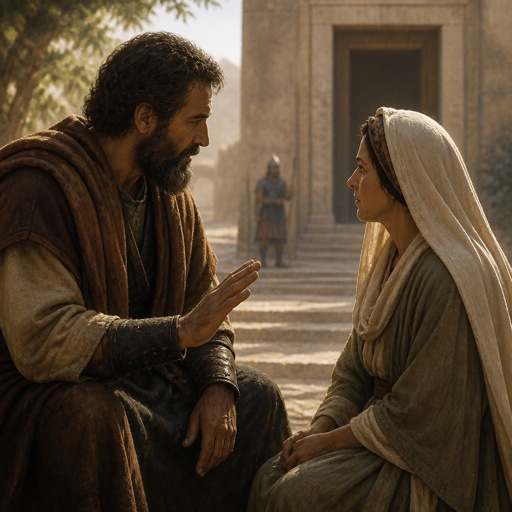
"And come to the king, and speak on this manner unto him. So Joab put the words in her mouth." - 2 Samuel 14:3

2 Samuel 23:14 - "And David was then in an hold, and the garrison of the Philistines was then in Beth-lehem."

1 Samuel 3:14 - "And therefore I have sworn unto the house of Eli, that the iniquity of Eli's house shall not be purged with sacrifice nor offering for ever."

2 Samuel 14:23 - "So Joab arose and went to Geshur, and brought Absalom to Jerusalem."

2 Samuel 22:14 - "The LORD thundered from heaven, and the most High uttered his voice."

2 Samuel 16:14 - "And the king, and all the people that were with him, came weary, and refreshed themselves there."

2 Samuel 14:1 - "Now Joab the son of Zeruiah perceived that the king's heart was toward Absalom."

2 Samuel 3:2 - "¶ And unto David were sons born in Hebron: and his firstborn was Amnon, of Ahinoam the Jezreelitess;"

2 Samuel 14:28 - "¶ So Absalom dwelt two full years in Jerusalem, and saw not the king's face."

2 Samuel 11:14 - "¶ And it came to pass in the morning, that David wrote a letter to Joab, and sent it by the hand of Uriah."

2 Samuel 2:14 - "And Abner said to Joab, Let the young men now arise, and play before us. And Joab said, Let them arise."

2 Samuel 4:3 - "And the Beerothites fled to Gittaim, and were sojourners there until this day.)"

2 Samuel 5:14 - "And these be the names of those that were born unto him in Jerusalem; Shammua, and Shobab, and Nathan, and Solomon,"

2 Samuel 6:14 - "And David danced before the LORD with all his might; and David was girded with a linen ephod."

2 Samuel 3:4 - "And the fourth, Adonijah the son of Haggith; and the fifth, Shephatiah the son of Abital;"

2 Samuel 3:3 - "And his second, Chileab, of Abigail the wife of Nabal the Carmelite; and the third, Absalom the son of Maacah the daughter of Talmai king of Geshur;"

2 Samuel 14:8 - "And the king said unto the woman, Go to thine house, and I will give charge concerning thee."

2 Samuel 3:11 - "And he could not answer Abner a word again, because he feared him."

2 Samuel 3:33 - "And the king lamented over Abner, and said, Died Abner as a fool dieth?"

2 Samuel 3:5 - "And the sixth, Ithream, by Eglah David's wife. These were born to David in Hebron."

1 Samuel 14:3 - "And Ahiah, the son of Ahitub, I-chabod's brother, the son of Phinehas, the son of Eli, the LORD'S priest in Shiloh, wearing an ephod. And the people knew not that Jonathan was gone."

2 Samuel 2:3 - "And his men that were with him did David bring up, every man with his household: and they dwelt in the cities of Hebron."

2 Samuel 7:3 - "And Nathan said to the king, Go, do all that is in thine heart; for the LORD is with thee."

2 Samuel 3:37 - "For all the people and all Israel understood that day that it was not of the king to slay Abner the son of Ner."

2 Samuel 1:14 - "And David said unto him, How wast thou not afraid to stretch forth thine hand to destroy the LORD'S anointed?"