What does 2 Samuel 4:11 mean?
“How much more, when wicked men have slain a righteous person in his own house upon his bed? shall I not therefore now require his blood of your hand, and take you away from the earth?” — 2 Samuel 4:11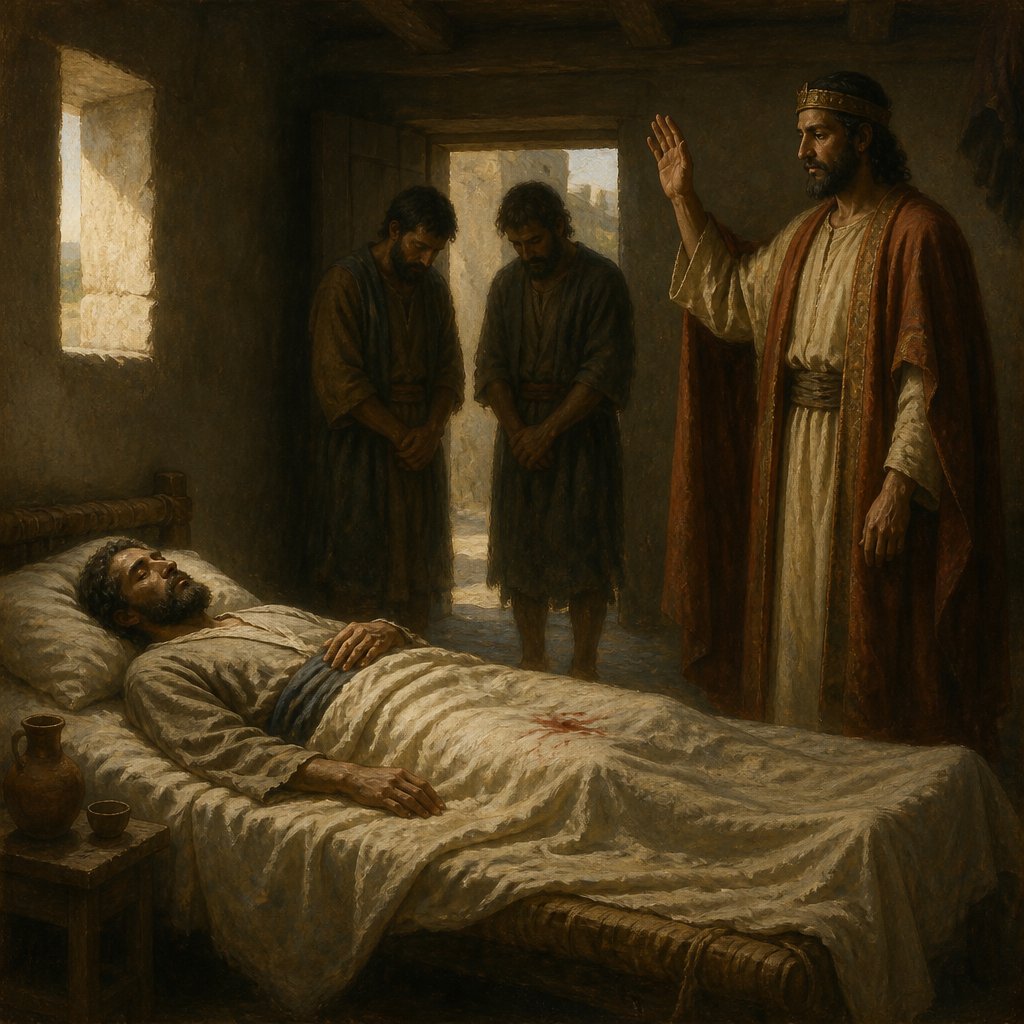
The Bible verse 2 Samuel 4:11 from the King James Version (KJV) states, "How much more, when wicked men have slain a righteous person in his own house upon his bed? shall I not therefore now require his blood of your hand, and take you away from the earth?" This verse occurs in the Old Testament and is a part of the narrative that follows the assassination of Ish-bosheth, the son of Saul, the first king of Israel. The verse is a part of a conversation between David and two men who had killed Ish-bosheth.
The verse highlights a key theme in the Bible, which is the concept of justice and retribution. In this particular context, David is asserting the principle of "an eye for an eye" – stating that those who have committed a wrongful act must face consequences for their actions. The verse is also a reflection of David's commitment to righteousness and his unwillingness to tolerate injustice.
The larger context of this verse is important for understanding its significance. In 2 Samuel 4, we read about the murder of Ish-bosheth by two of his own captains, Rechab and Baanah, who were hoping to gain favor with David, the newly anointed king of Israel. However, rather than being pleased by their act, David condemns and punishes them for their actions. This is because Ish-bosheth was an innocent man who had been killed in his own house, on his bed. This act of treachery and dishonor goes against the principles of justice and morality, which David, as a king appointed by God, is duty-bound to uphold.
The verse also serves as a reminder of the sanctity of human life and the responsibility that comes with taking it. By uttering these words, David is making a profound statement about the value of righteousness and the need for justice to prevail, even in the midst of political upheaval and power struggles.
In addition to its thematic significance, the verse also holds symbolic value. It represents the moral authority and leadership of David as the chosen king of Israel. By condemning the murder of Ish-bosheth, David establishes himself as a ruler who upholds the principles of righteousness and justice, serving as an example for his subjects and for future generations to come.
Furthermore, the verse can also be seen as a foreshadowing of the ultimate justice and judgment that is to come. In the Christian tradition, this verse can be interpreted as a reflection of God's eventual judgment upon all wrongdoers. It serves as a reminder that no act of injustice will go unpunished, and that God will ultimately require retribution for the shedding of innocent blood.
In conclusion, 2 Samuel 4:11 from the King James Version of the Bible holds immense significance within the larger narrative of the Old Testament. It speaks to the themes of justice, righteousness, and the sanctity of human life. It also serves as a symbol of David's moral authority and leadership as the chosen king of Israel. Ultimately, it can be viewed as a profound statement about the importance of upholding principles of justice and morality, both in the eyes of man and in the eyes of God.
Get our apps


Artwork for 2 Samuel 4:11

2 Samuel 4:11 - "How much more, when wicked men have slain a righteous person in his own house upon his bed? shall I not therefore now require his blood of your hand, and take you away from the earth?"
"How much more, when wicked men have slain a righteous person in his own house upon his bed? shall I not therefore now require his blood of your hand, and take you away from the earth?" - 2 Samuel 4:11

1 Samuel 4:11 - "And the ark of God was taken; and the two sons of Eli, Hophni and Phinehas, were slain."

2 Samuel 11:11

2 Samuel 11

2 samuel 11

2 Samuel 11:9
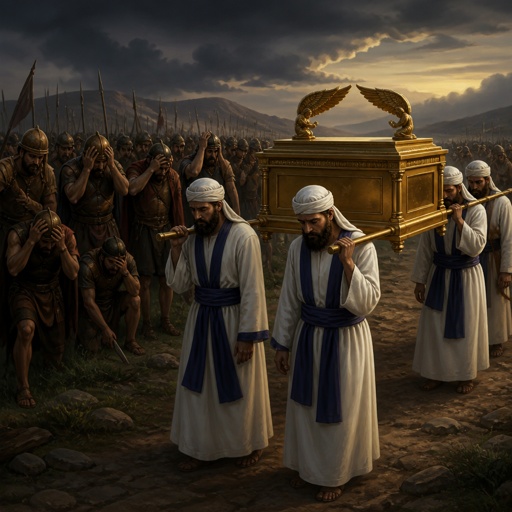
1 Samuel 4:2

2 Samuel 10:4

2 Samuel 10:4

1 Samuel 4:12

2 Samuel 2:11 - "And the time that David was king in Hebron over the house of Judah was seven years and six months."
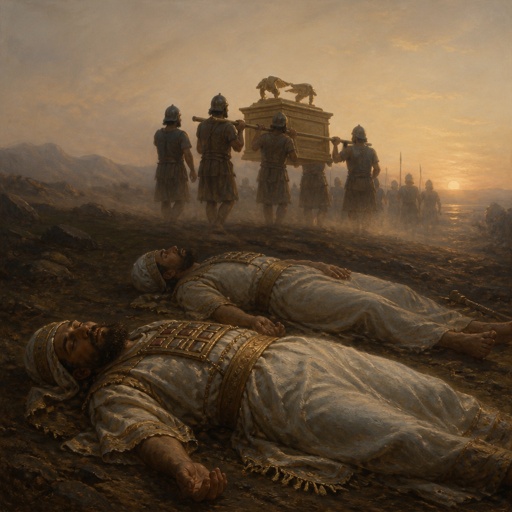
"And the ark of God was taken; and the two sons of Eli, Hophni and Phinehas, were slain." - 1 Samuel 4:11

1 Samuel 11:4 - "¶ Then came the messengers to Gibeah of Saul, and told the tidings in the ears of the people: and all the people lifted up their voices, and wept."

2 Samuel 4:3 - "And the Beerothites fled to Gittaim, and were sojourners there until this day.)"

2 Samuel 11:18 - "¶ Then Joab sent and told David all the things concerning the war;"

2 Samuel 21:11 - "And it was told David what Rizpah the daughter of Aiah, the concubine of Saul, had done."

2 Samuel 11:5 - "And the woman conceived, and sent and told David, and said, I am with child."

1 Samuel 2:4 - "The bows of the mighty men are broken, and they that stumbled are girded with strength."

2 Samuel 17:4 - "And the saying pleased Absalom well, and all the elders of Israel."

2 Samuel 3:11 - "And he could not answer Abner a word again, because he feared him."

2 Samuel 11:14 - "¶ And it came to pass in the morning, that David wrote a letter to Joab, and sent it by the hand of Uriah."

2 Samuel 3:4 - "And the fourth, Adonijah the son of Haggith; and the fifth, Shephatiah the son of Abital;"

2 Samuel 22:11 - "And he rode upon a cherub, and did fly: and he was seen upon the wings of the wind."

2 Samuel 11:22 - "¶ So the messenger went, and came and shewed David all that Joab had sent him for."

2 Samuel 7:4 - "¶ And it came to pass that night, that the word of the LORD came unto Nathan, saying,"

2 Samuel 11:6 - "¶ And David sent to Joab, saying, Send me Uriah the Hittite. And Joab sent Uriah to David."

2 Samuel 11:26 - "¶ And when the wife of Uriah heard that Uriah her husband was dead, she mourned for her husband."

2 Samuel 1:11 - "Then David took hold on his clothes, and rent them; and likewise all the men that were with him:"

1 Samuel 2:11 - "And Elkanah went to Ramah to his house. And the child did minister unto the LORD before Eli the priest."