What does 2 Samuel 4:5 mean?
“And the sons of Rimmon the Beerothite, Rechab and Baanah, went, and came about the heat of the day to the house of Ish-bosheth, who lay on a bed at noon.” — 2 Samuel 4:5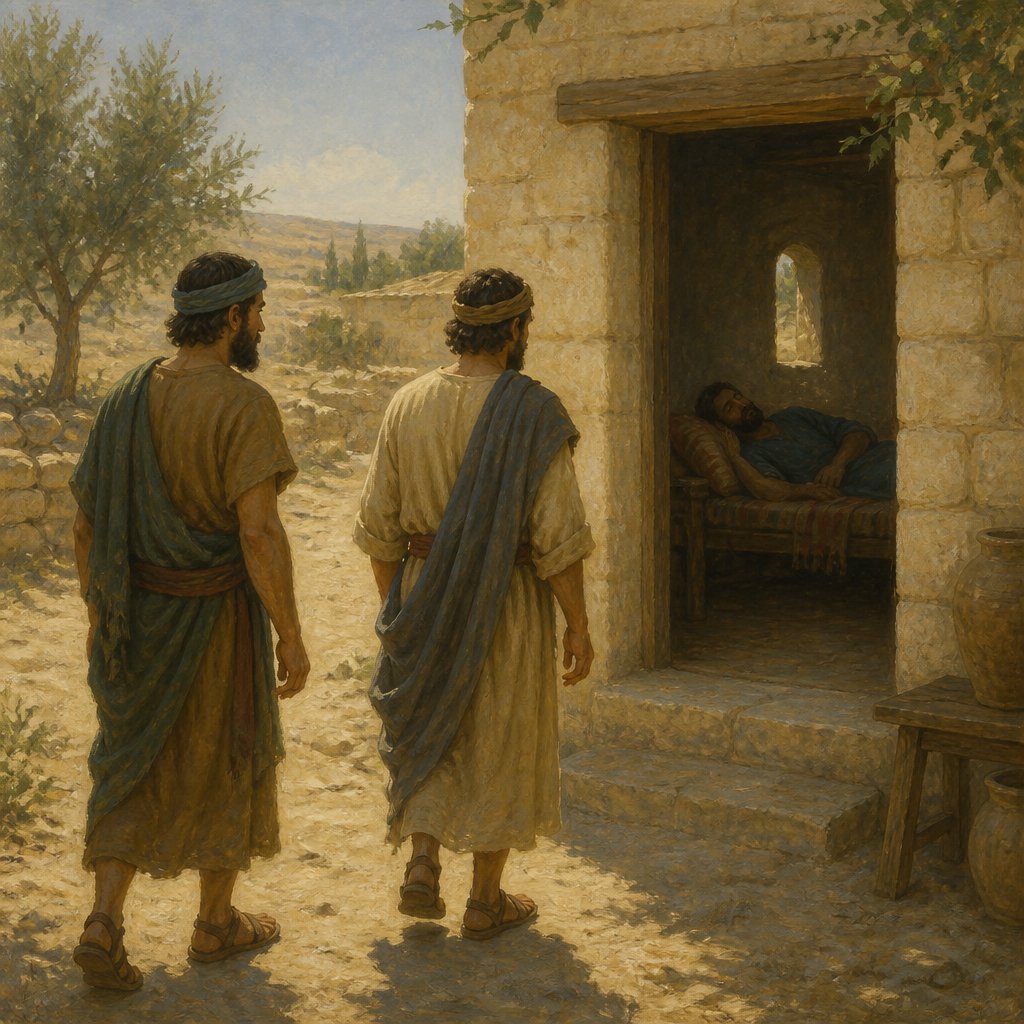
The Bible verse 2 Samuel 4:5 in the King James Version (KJV) reads, "And the sons of Rimmon the Beerothite, Rechab and Baanah, went, and came about the heat of the day to the house of Ishbosheth, who lay on a bed at noon."
This verse is part of the historical narrative found in the second book of Samuel, which describes the events that occurred during the reign of King David. In this particular verse, we are given insight into a specific event involving the assassination of Ishbosheth, the son of Saul and a contender for the throne of Israel.
Contextually, this verse takes place during a time of political turmoil within the nation of Israel. Following the death of Saul, David was anointed as king over Judah, while Ishbosheth, Saul's son, was appointed as king over the remaining tribes of Israel. This division of the kingdom led to conflict and power struggles as different factions vied for control.
The verse specifically mentions two men, Rechab and Baanah, who were the sons of Rimmon the Beerothite. These men were part of Ishbosheth's court and were likely involved in the political and military affairs of the kingdom. Their actions in this verse ultimately lead to the death of Ishbosheth, which has significant implications for the future of the kingdom.
The theme of power and the pursuit of it is central to this passage. Rechab and Baanah's decision to assassinate Ishbosheth reflects the intense desire for political control and authority. The plot to kill Ishbosheth is a manifestation of the corruption and deceit that often accompany the quest for power. The tragic end of Ishbosheth at the hands of his own servants serves as a cautionary tale about the destructive nature of power struggles and the lengths to which some will go in their pursuit of it.
The symbolism in this verse is also worth exploring. The mention of the heat of the day and Ishbosheth lying on a bed at noon may symbolize the vulnerability and complacency of Ishbosheth in the midst of the political turmoil. The betrayal and assassination occurred during a time when Ishbosheth was least expectant, highlighting the unexpected nature of political intrigue and the potential for treachery.
Furthermore, the names of the individuals mentioned in this verse hold symbolic meaning. Rimmon means "pomegranate," a fruit associated with fertility and abundance. Beerothite refers to the city of Beeroth, which was part of the inheritance of the tribe of Benjamin. Rechab means "rider" or "chariot driver," while Baanah means "built" or "son of affliction." These names may signify the conflicting forces at play in the kingdom, with the desire for abundance and prosperity juxtaposed with the destructive tendencies of those seeking power.
In conclusion, 2 Samuel 4:5 reveals a pivotal moment in the political landscape of ancient Israel, demonstrating the destructive consequences of power struggles and the betrayal that often accompanies them. Through its themes of power, betrayal, and vulnerability, this verse offers valuable insight into the complexities of human nature and the consequences of our actions in the pursuit of power.
Get our apps


Artwork for 2 Samuel 4:5

2 Samuel 4:5 - "And the sons of Rimmon the Beerothite, Rechab and Baanah, went, and came about the heat of the day to the house of Ish-bosheth, who lay on a bed at noon."
"And the sons of Rimmon the Beerothite, Rechab and Baanah, went, and came about the heat of the day to the house of Ish-bosheth, who lay on a bed at noon." - 2 Samuel 4:5

2 Samuel 5:4 - "¶ David was thirty years old when he began to reign, and he reigned forty years."

1 Samuel 5: 3-4

2 Samuel 5:12

2 Samuel 5:16 - "And Elishama, and Eliada, and Eliphalet."
1 Samuel 4:2

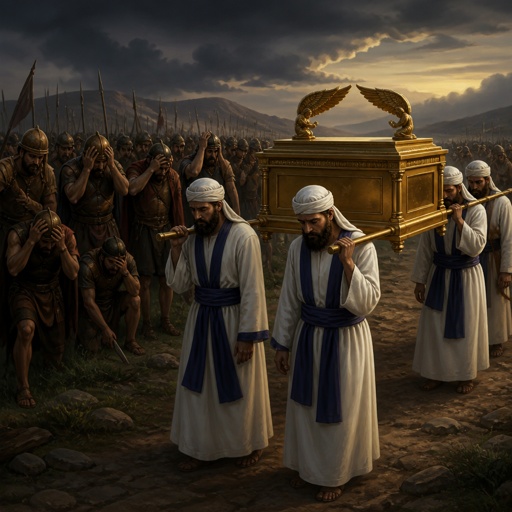
1 Samuel 4:5 - "And when the ark of the covenant of the LORD came into the camp, all Israel shouted with a great shout, so that the earth rang again."

2 Samuel 10:4

2 Samuel 10:4

2 Samuel 5:15 - "Ibhar also, and Elishua, and Nepheg, and Japhia,"
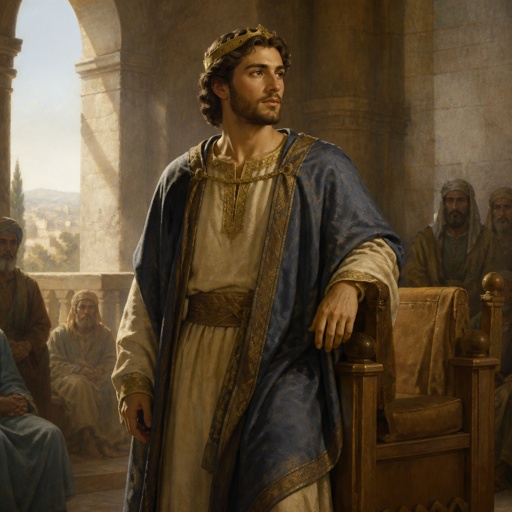
"¶ David was thirty years old when he began to reign, and he reigned forty years." - 2 Samuel 5:4

2 Kings 4:4-5

2 Samuel 4:3 - "And the Beerothites fled to Gittaim, and were sojourners there until this day.)"

2 Samuel 5:18 - "The Philistines also came and spread themselves in the valley of Rephaim."

2 Samuel 5:21 - "And there they left their images, and David and his men burned them."

2 Samuel 5:7 - "Nevertheless David took the strong hold of Zion: the same is the city of David."

2 Samuel 5:10 - "And David went on, and grew great, and the LORD God of hosts was with him."

1 Samuel 2:4 - "The bows of the mighty men are broken, and they that stumbled are girded with strength."

2 Samuel 17:4 - "And the saying pleased Absalom well, and all the elders of Israel."

2 Samuel 11:5 - "And the woman conceived, and sent and told David, and said, I am with child."

2 Samuel 5:22 - "¶ And the Philistines came up yet again, and spread themselves in the valley of Rephaim."

"And Elishama, and Eliada, and Eliphalet." - 2 Samuel 5:16

2 Samuel 3:5 - "And the sixth, Ithream, by Eglah David's wife. These were born to David in Hebron."

2 Timothy 4:5

2 Samuel 3:4 - "And the fourth, Adonijah the son of Haggith; and the fifth, Shephatiah the son of Abital;"

1 Samuel 5:2 - "When the Philistines took the ark of God, they brought it into the house of Dagon, and set it by Dagon."

2 Samuel 7:4 - "¶ And it came to pass that night, that the word of the LORD came unto Nathan, saying,"

2 Samuel 5:5 - "In Hebron he reigned over Judah seven years and six months: and in Jerusalem he reigned thirty and three years over all Israel and Judah."

2 Samuel 22:5 - "When the waves of death compassed me, the floods of ungodly men made me afraid;"