What does Acts 10:35 mean?
“But in every nation he that feareth him, and worketh righteousness, is accepted with him.” — Acts 10:35
The verse Acts 10:35 in the King James Version of the Bible reads, "But in every nation he that feareth him, and worketh righteousness, is accepted with him." This verse is spoken by Peter, an apostle of Jesus Christ, in the context of a revelation he had concerning the inclusion of Gentiles into the Christian faith. The verse is part of a larger speech that Peter delivers to a group of Gentiles, offering them the opportunity to be followers of Jesus Christ and receive the Holy Spirit.
The verse carries significant meaning within its historical and cultural context. At the time this verse was spoken, the Jewish people regarded themselves as the chosen people of God, with salvation being offered exclusively to them. They adhered strictly to religious laws and customs, particularly in regards to associating with Gentiles, who were considered unclean and outside the scope of God's favor. However, Peter's vision and subsequent encounter with Cornelius, a devout Gentile centurion, challenged these long-held beliefs and raised questions about the universal scope of God's grace and acceptance.
The verse Acts 10:35 emphasizes the transformative impact of the gospel, as it challenges the traditional notion of exclusivity in salvation. It points to the fundamental truth that God's acceptance is not limited by nationality, race, or ethnicity. Instead, it is based on an individual's reverence for God and their commitment to living a righteous life. This sentiment is echoed throughout the New Testament, particularly in the teachings of Jesus, who repeatedly emphasized the importance of faith and righteousness over external religious practices or cultural norms.
The verse also speaks to the timeless theme of God’s impartiality and universal love. It affirms that no person or group is inherently favored or excluded from God's grace based on external factors. Rather, it is the condition of a person's heart and their actions that determine their standing before God. This message was radical and transformative in the context of the early church, as it challenged deeply ingrained prejudices and exclusivist tendencies.
Furthermore, Acts 10:35 serves as a powerful symbol of God's desire for inclusivity and diversity within the body of Christ. It challenges the notion of a homogenous faith community and supports the idea of unity amidst diversity. It suggests that the true mark of a follower of God is not adherence to cultural or religious traditions, but rather a humble and obedient heart. The verse thus serves as a cornerstone for the development of a more inclusive and diverse Christian community, transcending the boundaries of race, nationality, and social status.
In a broader theological sense, Acts 10:35 reflects the profound nature of God's unmerited grace and the transformative power of the gospel. It underscores the idea that God's acceptance is based on faith and righteousness, rather than on human accomplishments or privileges. This aligns with the central message of the Christian faith – that salvation is a gift freely offered to all who believe in Jesus Christ and seek to align their lives with God's will.
In conclusion, Acts 10:35 carries deep theological, cultural, and historical significance within the Christian faith. It challenges exclusivist tendencies and embraces the universal scope of God's love and acceptance. Its message of inclusivity and the transformative power of the gospel resonates through the ages, inviting all people to come to God with reverence and to live righteous lives, regardless of their background or identity. This verse serves as a powerful reminder of God’s impartiality and the transformative nature of the gospel, inspiring believers to extend grace and acceptance to all people.
Get our apps


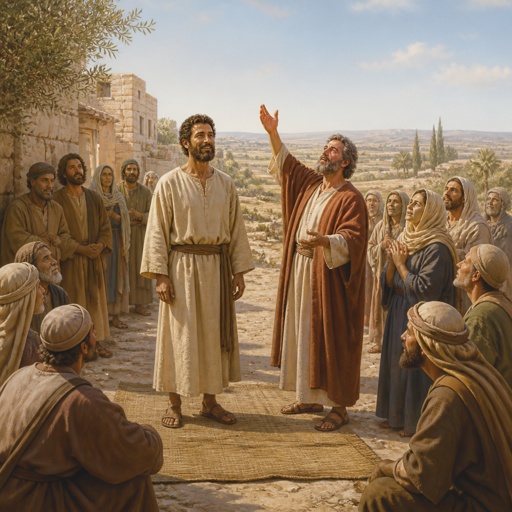
Artwork for Acts 10:35

Acts 10:35 - "But in every nation he that feareth him, and worketh righteousness, is accepted with him."

"But in every nation he that feareth him, and worketh righteousness, is accepted with him." - Acts 10:35

Acts 10:34-35 - "Then Peter began to speak: “I now realize how true it is that God does not show favoritism but accepts from every nation the one who fears him and does what is right."

Acts 2:35 - "Until I make thy foes thy footstool."

Acts 9:35 - "And all that dwelt at Lydda and Saron saw him, and turned to the Lord."

Acts 16:35 - "And when it was day, the magistrates sent the serjeants, saying, Let those men go."

Isaiah 35:8-10

2 Chronicles 35:10

Mark 10:35-45

Mark 10:35-45

Acts 8:35 - "Then Philip opened his mouth, and began at the same scripture, and preached unto him Jesus."

Ezra 10:35 - "Benaiah, Bedeiah, Chelluh,"

Mark 10:35-45

Mark 10:35-45

Acts 21:35 - "And when he came upon the stairs, so it was, that he was borne of the soldiers for the violence of the people."

Acts 15:35 - "Paul also and Barnabas continued in Antioch, teaching and preaching the word of the Lord, with many others also."

2 Chronicles 35:26 - "Now the rest of the acts of Josiah, and his goodness, according to that which was written in the law of the LORD,"

Acts 13:35 - "Wherefore he saith also in another psalm, Thou shalt not suffer thine Holy One to see corruption."

Acts 4:35 - "And laid them down at the apostles' feet: and distribution was made unto every man according as he had need."

Acts 5:35 - "And said unto them, Ye men of Israel, take heed to yourselves what ye intend to do as touching these men."

"Until I make thy foes thy footstool." - Acts 2:35

"Benaiah, Bedeiah, Chelluh," - Ezra 10:35

In the context of acts 10:28, draw a picture of the Apostle Peter, a 35 year old Jewish man, sitting across the table from Cornelius, a roman centurion. The setting is a home in first-century Caesarea, a seaside village. The table has a small scroll sitting on it. Looking past the table, there is a window that looks out toward the sea.

Acts 23:35 - "I will hear thee, said he, when thine accusers are also come. And he commanded him to be kept in Herod's judgment hall."
"And all that dwelt at Lydda and Saron saw him, and turned to the Lord." - Acts 9:35

Job 35:10 - "But none saith, Where is God my maker, who giveth songs in the night;"

Hebrews 10:35 - "Cast not away therefore your confidence, which hath great recompence of reward."

John 10:35 - "If he called them gods, unto whom the word of God came, and the scripture cannot be broken;"

Acts 21:35 When he reached the stairs, he had to be carried by the soldiers because of the violence of the mob.

Acts 7:35 - "This Moses whom they refused, saying, Who made thee a ruler and a judge? the same did God send to be a ruler and a deliverer by the hand of the angel which appeared to him in the bush."