What does Acts 11:30 mean?
"Which also they did, and sent it to the elders by the hands of Barnabas and Saul." - Acts 11:30
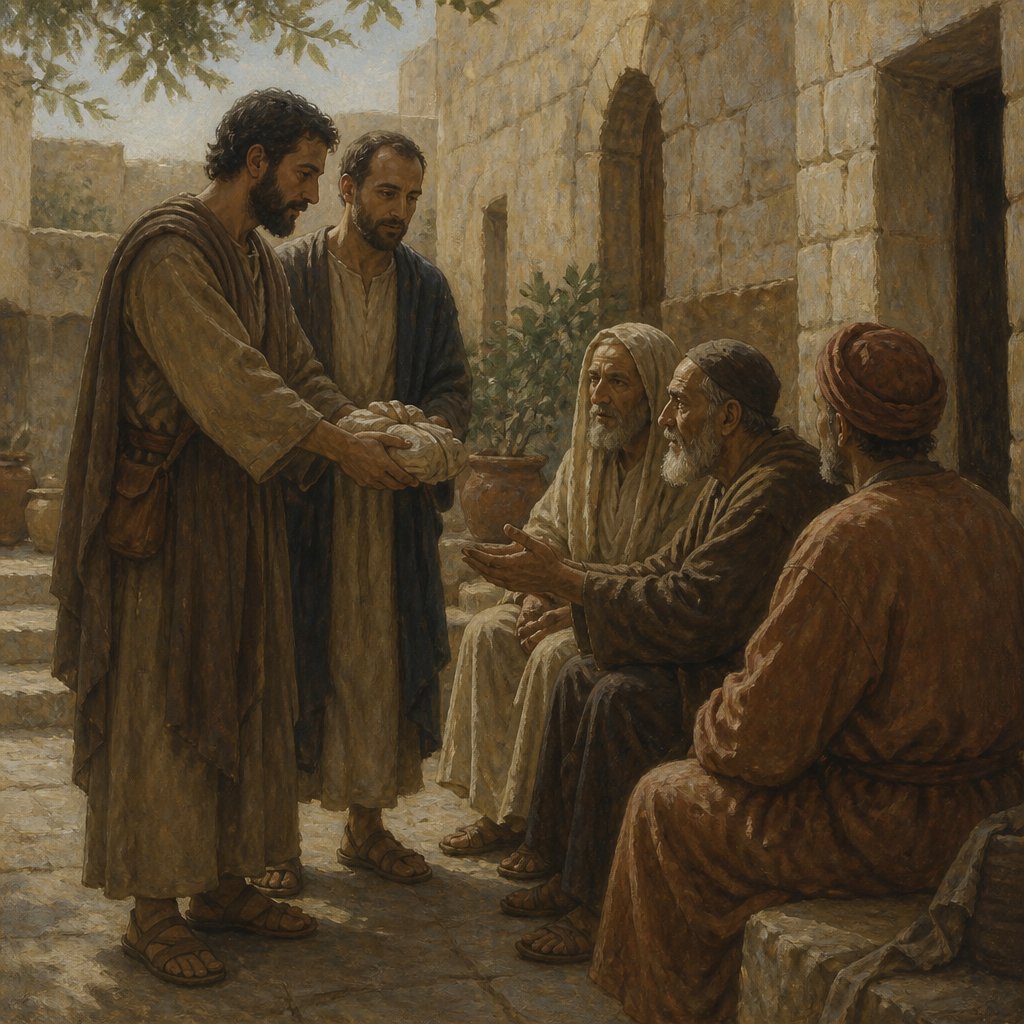
Acts 11:30 from the King James Version of the Bible reads: "Which also they did, and sent it to the elders by the hands of Barnabas and Saul." This verse comes at the conclusion of a narrative in which the disciples in Antioch are moved by the Holy Spirit to provide relief to their brothers and sisters in Judea who were suffering from a famine. The believers in Antioch collectively gather together a financial offering to send to the church in Judea, and they entrust this offering to Barnabas and Saul, who are then sent to deliver it to the elders in Judea. This passage is not only a record of a specific event in the early church, but it also conveys deeper themes and principles for believers to consider.
First and foremost, this verse underscores the importance of giving and generosity within the Christian community. The believers in Antioch demonstrate their commitment to supporting their fellow believers who are in need. This act of giving reflects the biblical principle of stewardship and the command to love and care for one another. In the New Testament, the apostle Paul frequently emphasizes the importance of giving and generosity, reminding believers that "whoever sows sparingly will also reap sparingly, and whoever sows bountifully will also reap bountifully" (2 Corinthians 9:6). The believers in Antioch exemplify this principle by willingly and eagerly contributing to the relief effort for the believers in Judea.
Furthermore, the manner in which the offering is delivered is also significant. Barnabas and Saul are entrusted with the responsibility of delivering the offering to the elders in Judea. This act highlights the organizational structure and accountability within the early church. The elders in Judea are recognized as leaders and stewards of the resources of the church, and they are entrusted with the responsibility of distributing the relief to those in need. This passage serves as a model for how the church should mobilize and coordinate efforts to address the needs of its members.
On a symbolic level, the act of sending Barnabas and Saul to deliver the offering speaks to the broader theme of unity and partnership within the body of Christ. Both Barnabas and Saul are prominent figures in the early church, and their collaboration in this mission reflects the diversity and cooperation that characterized the early Christian community. This partnership also foreshadows the significant role that both Barnabas and Saul (who would later be known as the apostle Paul) would play in spreading the gospel and establishing churches throughout the ancient world.
In its historical and cultural context, this verse also sheds light on the early church's response to the social and economic challenges of its time. Famine was a common occurrence in the ancient world, and the early church's response to this crisis exhibited compassion and a commitment to meeting the practical needs of its members. This passage provides a precedent for the church's role in addressing social and economic issues, emphasizing the importance of compassionate action in response to human suffering.
In conclusion, Acts 11:30 encapsulates a multitude of themes and principles that are relevant for believers today. It speaks to the significance of giving and generosity within the Christian community, the importance of organized and accountable stewardship, the unity and partnership within the body of Christ, and the church's role in addressing social and economic challenges. This verse challenges believers to consider how they can emulate the example of the believers in Antioch and actively seek to care for and support one another in practical and tangible ways.
Have questions about Acts 11:30?
Dive deeper into this scripture with Bible Chat — an AI-powered tool for exploring God's Word through conversation. Ask questions, get context, and grow in your understanding of the Bible.
Get Our Apps


Acts 11:30 Artwork

Acts 11:30 - "Which also they did, and sent it to the elders by the hands of Barnabas and Saul."
"Which also they did, and sent it to the elders by the hands of Barnabas and Saul." - Acts 11:30

Acts 4:30

Acts 4:30

Acts 4:30

Acts 4:30

Acts 13:30 - "But God raised him from the dead:"

ACTS 8:30 Philip and the Ethiopian

Psalm 30:11

Acts 19:30 - "And when Paul would have entered in unto the people, the disciples suffered him not."

Acts 16:30 - "And brought them out, and said, Sirs, what must I do to be saved?"

Acts 17:30 - "And the times of this ignorance God winked at; but now commandeth all men every where to repent:"

Genesis 30:10-11

Acts 5:30 - "The God of our fathers raised up Jesus, whom ye slew and hanged on a tree."

acts 3 11

Acts 11:2

Acts 20:11

Acts 11:2

Acts 11:2

Acts 19: 11

Acts 19:11

Acts 9:30 - "Which when the brethren knew, they brought him down to Caesarea, and sent him forth to Tarsus."

"But God raised him from the dead:" - Acts 13:30

Acts 26:30 - "And when he had thus spoken, the king rose up, and the governor, and Bernice, and they that sat with them:"

Leviticus 11:30 - "And the ferret, and the chameleon, and the lizard, and the snail, and the mole."

Exodus 30:11 - "¶ And the LORD spake unto Moses, saying,"

Genesis 11:30 - "But Sarai was barren; she had no child."

Acts 15:30 - "So when they were dismissed, they came to Antioch: and when they had gathered the multitude together, they delivered the epistle:"

1 Kings 11:30-31

1 Kings 11:30-31