What does Acts 15:16 mean?
“After this I will return, and will build again the tabernacle of David, which is fallen down; and I will build again the ruins thereof, and I will set it up:” — Acts 15:16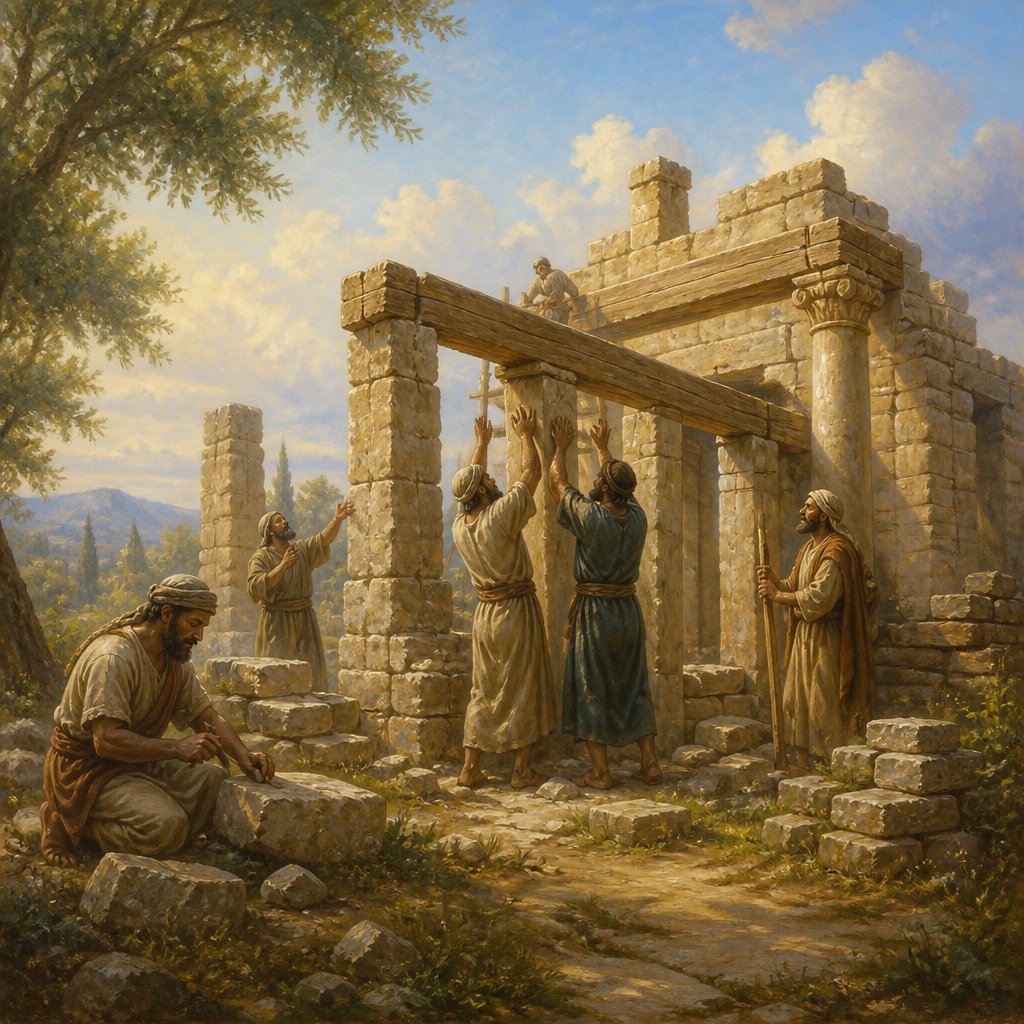
The Bible verse Acts 15:16 from the King James Version (KJV) states: "After this I will return, and will build again the tabernacle of David, which is fallen down; and I will build again the ruins thereof, and I will set it up." This verse is part of a larger passage in the book of Acts, which describes the Council at Jerusalem and the decision of the early church leaders regarding the inclusion of Gentiles in the Christian community.
To understand the full meaning of this verse, it is important to consider its historical and cultural context. The apostle James is speaking at the council, and he is referencing a prophecy from the Old Testament book of Amos. In Amos 9:11-12, God promises to restore the fallen tabernacle of David and rebuild its ruins. This prophecy was originally given to the Israelites in a time of desolation and destruction, offering them hope for a future restoration.
In the context of Acts 15:16, the apostle James is using the prophecy of the restoration of the tabernacle of David to emphasize the inclusion of Gentiles in the Christian community. He is explaining to the Jewish leaders that God's plan of salvation extends beyond the people of Israel to include all nations. By quoting this prophecy, James is highlighting the universal nature of God's salvation and the fulfillment of His promises through the gospel of Jesus Christ.
The themes present in Acts 15:16 are significant and carry deep theological implications. One of the primary themes is the universal scope of God's redemptive plan. The restoration of the tabernacle of David symbolizes God's intention to reconcile all people to Himself through the work of Jesus Christ. This verse emphasizes the inclusive nature of the gospel and the breaking down of barriers between Jews and Gentiles in the early church.
Another important theme that can be derived from Acts 15:16 is the continuity between the Old Testament prophecies and the fulfillment of those prophecies in the New Testament. The apostle James's reference to the prophecy in Amos demonstrates the belief of the early church in the fulfillment of Old Testament promises through Jesus Christ. This continuity serves to validate the Christian message and reinforces the faith of the believers in the divine authority of the scriptures.
The symbolism present in Acts 15:16 is also significant. The tabernacle of David represents the kingdom of God and the reign of Jesus Christ. Its restoration signifies the establishment of God's rule and the fulfillment of His purposes in the world. The rebuilding of the ruins emphasizes the renewal and restoration of all things through the redemptive work of Christ. This imagery conveys a message of hope and transformation, showing God's ability to bring beauty out of brokenness and to restore what has been lost.
In conclusion, Acts 15:16 from the King James Version of the Bible holds deep theological significance within its historical and cultural context. This verse highlights the universal scope of God's redemptive plan, the continuity between the Old and New Testaments, and the symbolism of restoration and renewal through Jesus Christ. It reminds believers of God's faithfulness to fulfill His promises and demonstrates the inclusive nature of the gospel message. Acts 15:16 serves as a powerful declaration of the transformative work of God in the world and the unifying force of His grace.
Get our apps


Artwork for Acts 15:16
Acts 15:16 - "After this I will return, and will build again the tabernacle of David, which is fallen down; and I will build again the ruins thereof, and I will set it up:"
"After this I will return, and will build again the tabernacle of David, which is fallen down; and I will build again the ruins thereof, and I will set it up:" - Acts 15:16
Example (आदर्श) - लुदिया – Act. 16:14-15

Acts 16:15 - "And when she was baptized, and her household, she besought us, saying, If ye have judged me to be faithful to the Lord, come into my house, and abide there. And she constrained us."

Acts 15:15 - "And to this agree the words of the prophets; as it is written,"

Acts 3:16

Acts 3:16

Acts 3:16

Acts 3:16

acts 15

Acts 16 v18

Acts 16 v26

Acts 17:15

Acts 16:17

"And to this agree the words of the prophets; as it is written," - Acts 15:15

Acts 2:16 - "But this is that which was spoken by the prophet Joel;"

Acts 16:8 - "And they passing by Mysia came down to Troas."

Acts 15:34 - "Notwithstanding it pleased Silas to abide there still."

put on a scroll acts 15:29

2 Kings 15:15 - "And the rest of the acts of Shallum, and his conspiracy which he made, behold, they are written in the book of the chronicles of the kings of Israel."

Acts 18:16 - "And he drave them from the judgment seat."

Acts 15:31 - "Which when they had read, they rejoiced for the consolation."

Acts 15:6 - "¶ And the apostles and elders came together for to consider of this matter."

Acts 2:15 - "For these are not drunken, as ye suppose, seeing it is but the third hour of the day."

Acts 15:41 - "And he went through Syria and Cilicia, confirming the churches."

Acts 10:16 - "This was done thrice: and the vessel was received up again into heaven."

Acts 16:2 - "Which was well reported of by the brethren that were at Lystra and Iconium."

Genesis 15:16

Acts 16:5 - "And so were the churches established in the faith, and increased in number daily."

Genesis 16:15