What does Acts 16:30 mean?
“And brought them out, and said, Sirs, what must I do to be saved?” — Acts 16:30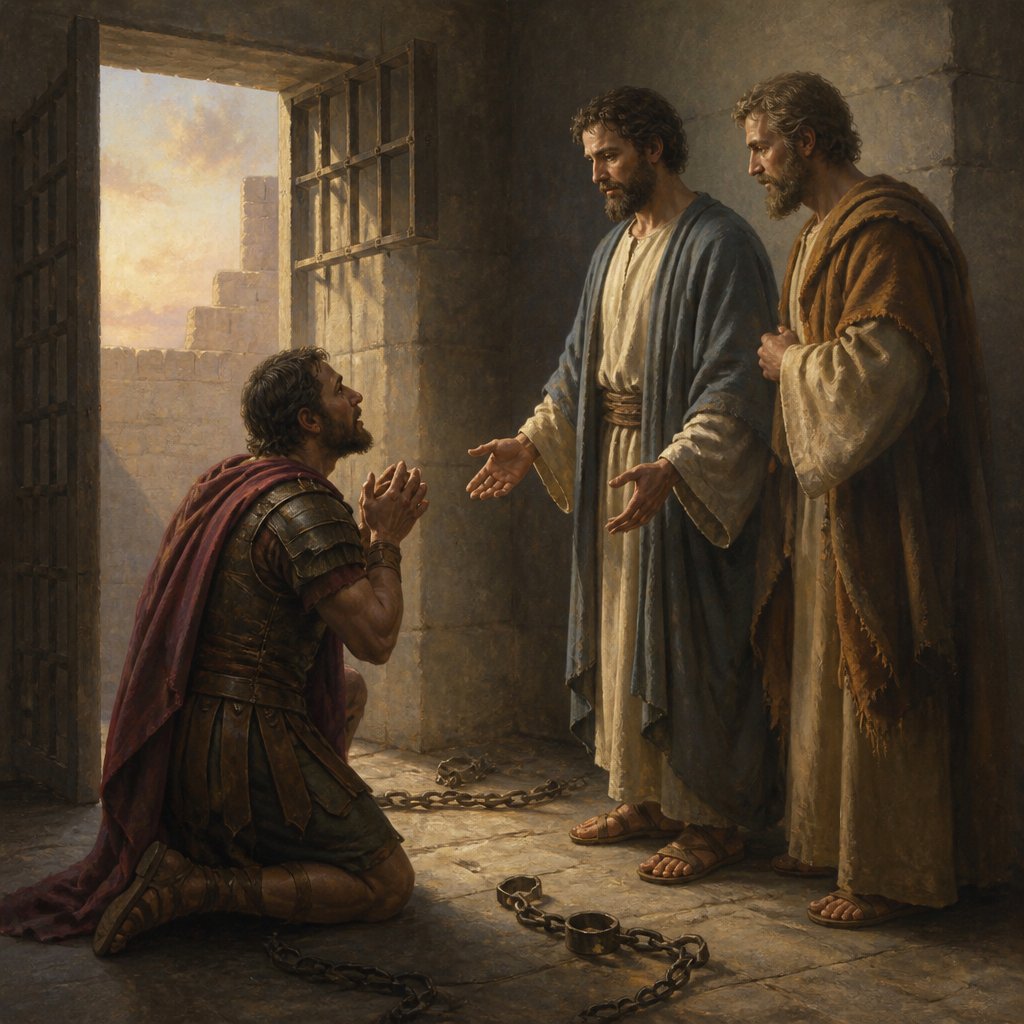
The verse Acts 16:30 in the King James Version of the Bible states, "And brought them out, and said, Sirs, what must I do to be saved?" This verse is part of the larger story of Paul and Silas' imprisonment and the conversion of the jailer in Philippi. It serves as a pivotal moment in the narrative, highlighting the universal need for salvation and the transformative power of faith in Jesus Christ.
To fully understand the meaning and significance of Acts 16:30, it is important to first examine the context in which it is situated. The chapter begins with Paul and Silas traveling through various cities, preaching the gospel and establishing churches. In Philippi, they encounter a slave girl who is possessed by a spirit of divination. After casting out the spirit, they are arrested and thrown into prison.
Despite their dire circumstances, Paul and Silas continue to worship and sing praises to God while in chains. This act of faith and resilience catches the attention of the other prisoners and the jailer. Suddenly, an earthquake rocks the prison, causing the doors to open and the chains to fall off the prisoners. The jailer, fearing that the prisoners have escaped, is about to take his own life when Paul stops him, assuring him that all the prisoners are still there.
This sets the stage for the jailer's question in Acts 16:30, "Sirs, what must I do to be saved?" This question reflects the deep impact of Paul and Silas' witness and the power of God's intervention in the midst of their suffering. It also encapsulates the central theme of salvation that runs throughout the entire Bible. The jailer's inquiry demonstrates a profound awareness of his need for deliverance and a recognition of the authority and knowledge of Paul and Silas as messengers of God.
The themes of faith, redemption, and transformation are central to Acts 16:30. The jailer's question represents a turning point in his life as he seeks a solution to his spiritual dilemma. It also underscores the universal human longing for salvation and the fundamental question of what is required to attain it. The response that Paul and Silas provide in the following verses emphasizes the simplicity and accessibility of salvation through faith in Jesus Christ.
Additionally, Acts 16:30 carries a significant symbolic weight in the larger narrative of the book of Acts. The conversion of the jailer and his household serves as a powerful example of the impact of witnessing God's power and grace. It demonstrates the potential for radical transformation and new beginnings, regardless of one's background or circumstances. The earthquake that precedes the jailer's question symbolizes the upheaval and shaking that often accompanies spiritual awakening and repentance.
Furthermore, the jailer's question in Acts 16:30 has reverberations throughout the rest of the book of Acts and the early church. His conversion marks the expansion of the gospel to new frontiers and the fulfillment of Jesus' command to take the message of salvation to the ends of the earth. It also foreshadows the ongoing work of the Holy Spirit in the lives of believers, as they continue to spread the good news and make disciples of all nations.
In conclusion, Acts 16:30 encapsulates the timeless themes of salvation, faith, and transformation that permeate the entire Bible. It serves as a pivotal moment in the narrative of Paul and Silas' imprisonment, highlighting the universal need for deliverance and the power of God to bring about profound change in the lives of individuals. The jailer's question reflects the fundamental human longing for salvation and the transformative impact of encountering the gospel. Ultimately, Acts 16:30 stands as a powerful reminder of the accessibility of salvation through faith in Jesus Christ and the potential for radical change and new life in Him.
Get our apps


Artwork for Acts 16:30

Acts 16:30 - "And brought them out, and said, Sirs, what must I do to be saved?"

Acts 16:30-31 - "And brought them out, and said, Sirs, what must I do to be saved? And they said, Believe on the Lord Jesus Christ, and thou shalt be saved, and thy house."
"And brought them out, and said, Sirs, what must I do to be saved?" - Acts 16:30
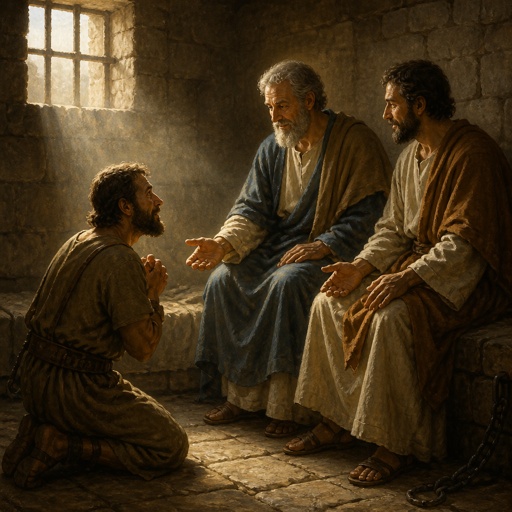
"And brought them out, and said, Sirs, what must I do to be saved? And they said, Believe on the Lord Jesus Christ, and thou shalt be saved, and thy house." - Acts 16:30-31

Acts 4:30

Acts 4:30

Acts 4:30

Acts 4:30

Acts 13:30 - "But God raised him from the dead:"

ACTS 8:30 Philip and the Ethiopian

judges 16:30

Acts 3:16

Acts 3:16

Acts 3:16

Acts 3:16

Acts 11:30 - "Which also they did, and sent it to the elders by the hands of Barnabas and Saul."

Acts 16 v18

Acts 16 v26

Acts 19:30 - "And when Paul would have entered in unto the people, the disciples suffered him not."

Acts 16:17

Exodus 16:30 - "So the people rested on the seventh day."

Acts 17:30 - "And the times of this ignorance God winked at; but now commandeth all men every where to repent:"

Acts 5:30 - "The God of our fathers raised up Jesus, whom ye slew and hanged on a tree."

Sampson's strength judges 16:30

Acts 9:30 - "Which when the brethren knew, they brought him down to Caesarea, and sent him forth to Tarsus."

"But God raised him from the dead:" - Acts 13:30

Acts 26:30 - "And when he had thus spoken, the king rose up, and the governor, and Bernice, and they that sat with them:"

Acts 2:16 - "But this is that which was spoken by the prophet Joel;"

Acts 15:30 - "So when they were dismissed, they came to Antioch: and when they had gathered the multitude together, they delivered the epistle:"

Acts 16:8 - "And they passing by Mysia came down to Troas."