What does Acts 18:13 mean?
“Saying, This fellow persuadeth men to worship God contrary to the law.” — Acts 18:13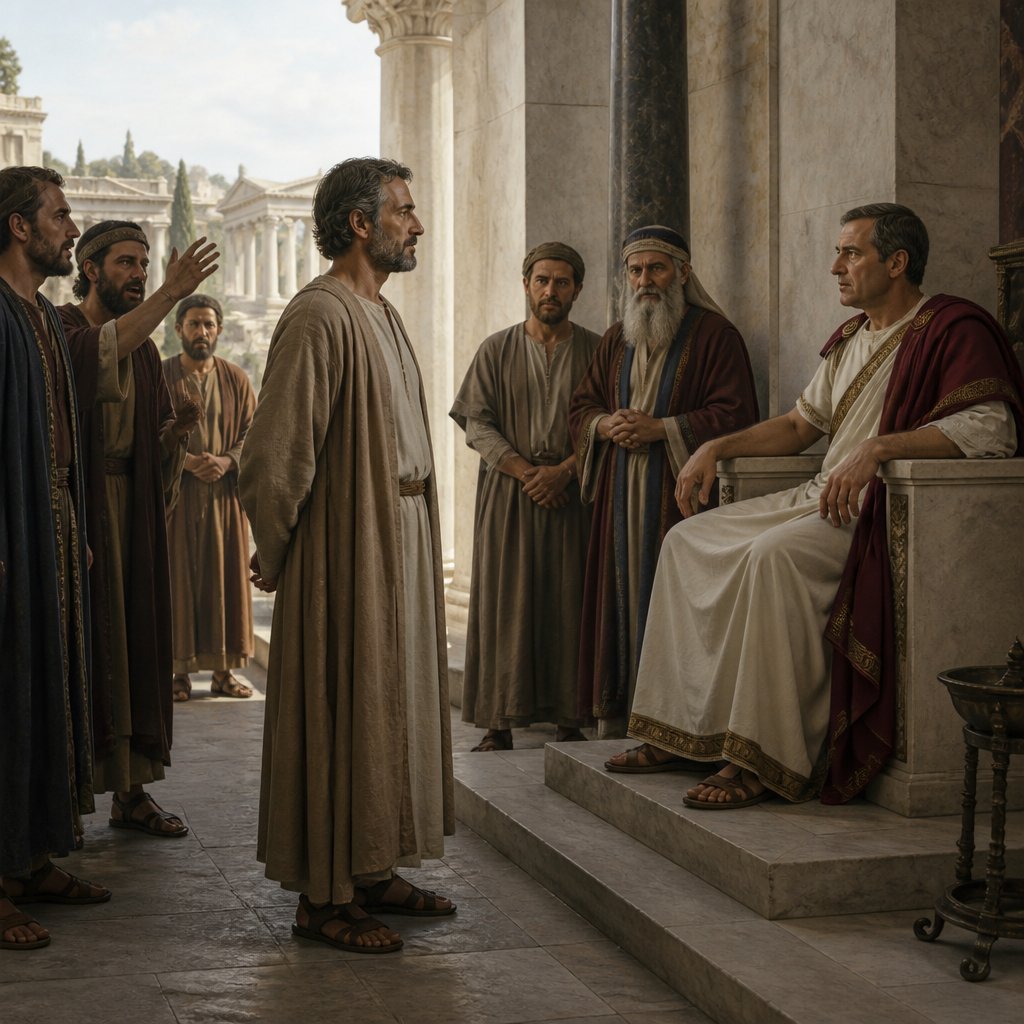
Acts 18:13 (KJV) states, "Saying, This fellow persuadeth men to worship God contrary to the law." This verse is part of the larger account of the Apostle Paul's ministry in Corinth, where he faced opposition and persecution for preaching the gospel.
The context of Acts 18:13 is crucial to understanding its significance. The verse is part of the narrative of Paul's time in Corinth, where he began preaching the gospel and establishing a church. Corinth was a prominent city in the Roman Empire, known for its wealth, culture, and immorality. It was a challenging environment for Paul to share the message of Jesus Christ, as he faced opposition from both the Jewish community and the Gentiles. The Jews accused Paul of teaching against the law, while the Gentiles were largely hostile to his message of repentance and faith in Jesus.
In Acts 18:13, the Jews make a false accusation against Paul, claiming that he was persuading men to worship God contrary to the law. This accusation was likely an attempt to incite the Roman authorities against Paul, as Roman law forbade the introduction of new religions without approval. The Jews were trying to portray Paul as a threat to the Roman order, hoping to suppress his preaching and disrupt the growth of the Christian movement in Corinth.
The theme of persecution is evident in this passage, as Paul faced opposition and false accusations for preaching the gospel. Throughout his ministry, Paul experienced hostility and persecution, yet he remained steadfast in his faith, continuing to proclaim the message of salvation. His example serves as an encouragement to believers facing similar challenges, demonstrating the courage and perseverance required to remain faithful in the face of opposition.
The symbolism in Acts 18:13 is significant, as it reflects the broader tension between the gospel message and the religious and cultural norms of the time. The Jews' accusation against Paul highlights the conflict between the message of grace and the legalistic traditions of the Mosaic law. Paul's teaching emphasized the fulfillment of the law through faith in Jesus Christ, which was perceived as a threat by those who sought to maintain their religious authority and traditions.
This verse also speaks to the universal struggle between the truth of the gospel and the opposition it often faces. The gospel of Jesus Christ challenges the status quo and confronts the sin and unbelief in the world. This clash between truth and opposition is a recurring theme throughout the New Testament and continues to be relevant in the modern world.
The broader message of Acts 18:13 is an affirmation of the power and resilience of the gospel. Despite facing hostility and false accusations, the gospel continued to spread and transform lives in Corinth. The opposition Paul encountered only served to highlight the truth and impact of his message, as many in Corinth embraced the faith and were baptized.
In conclusion, Acts 18:13 provides a powerful illustration of the challenges and opposition faced by those who preach the gospel. The verse demonstrates the theme of persecution and the clash between the message of grace and legalistic traditions. It also symbolizes the universal struggle between truth and opposition. Ultimately, Acts 18:13 serves as a reminder of the unwavering power of the gospel, which continues to overcome opposition and transform lives.
Get our apps


Artwork for Acts 18:13

Acts 18:13 - "Saying, This fellow persuadeth men to worship God contrary to the law."
"Saying, This fellow persuadeth men to worship God contrary to the law." - Acts 18:13

Acts 13:18 - "And about the time of forty years suffered he their manners in the wilderness."

"And about the time of forty years suffered he their manners in the wilderness." - Acts 13:18

Acts 18:12

Acts 18:12

Acts 13:43

Acts 18:16 - "And he drave them from the judgment seat."

Acts 19:18 - "And many that believed came, and confessed, and shewed their deeds."

Acts 7:18 - "Till another king arose, which knew not Joseph."
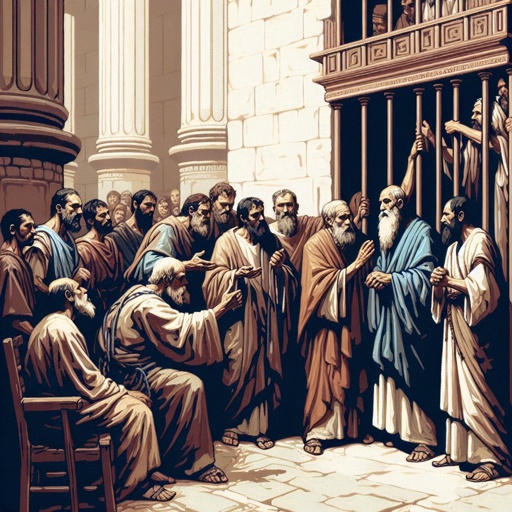
Acts 5:18 - "And laid their hands on the apostles, and put them in the common prison."

Luke 13:18-19

Luke 13:18-19

Acts 13:30 - "But God raised him from the dead:"

Acts 18:1 - "After these things Paul departed from Athens, and came to Corinth;"

Acts 18:4 - "And he reasoned in the synagogue every sabbath, and persuaded the Jews and the Greeks."

Acts 13:49 - "And the word of the Lord was published throughout all the region."

Acts 13:52 - "And the disciples were filled with joy, and with the Holy Ghost."

2 Kings 14:18 - "And the rest of the acts of Amaziah, are they not written in the book of the chronicles of the kings of Judah?"

Acts 15:18 - "Known unto God are all his works from the beginning of the world."

Acts 18:28 - "For he mightily convinced the Jews, and that publickly, shewing by the scriptures that Jesus was Christ."

Acts 10:18 - "And called, and asked whether Simon, which was surnamed Peter, were lodged there."
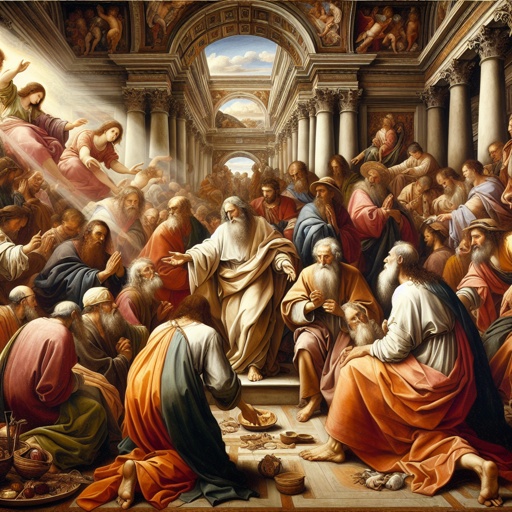
Genesis 18-13

Acts 14:18 - "And with these sayings scarce restrained they the people, that they had not done sacrifice unto them."

Acts 27:18 - "And we being exceedingly tossed with a tempest, the next day they lightened the ship;"

Acts 18:20 - "When they desired him to tarry longer time with them, he consented not;"

Acts 13:37 - "But he, whom God raised again, saw no corruption."

Acts 2:13 - "Others mocking said, These men are full of new wine."

Acts 4:18 - "And they called them, and commanded them not to speak at all nor teach in the name of Jesus."

Acts 18:9 - "Then spake the Lord to Paul in the night by a vision, Be not afraid, but speak, and hold not thy peace:"