What does Acts 18:22 mean?
“And when he had landed at Cæsarea, and gone up, and saluted the church, he went down to Antioch.” — Acts 18:22
In Acts 18:22, the King James Version states: "And when he had landed at Caesarea, and gone up, and saluted the church, he went down to Antioch." This seemingly simple verse holds a profound meaning within the context of the larger biblical narrative and the themes it encompasses.
To fully grasp the significance of Acts 18:22, it's essential to understand the broader context in which it appears. The book of Acts, written by Luke, chronicles the early days of the Christian church and the spread of the gospel after Jesus' resurrection and ascension. This particular verse is found within a passage that describes the travels of the apostle Paul, who is one of the central figures in the spread of Christianity.
In Acts 18, Paul is in the city of Corinth, where he is teaching and preaching the message of Jesus Christ. He faces opposition and persecution, but he remains faithful to his mission. After leaving Corinth, Paul sets sail for Syria, accompanied by Priscilla and Aquila, who were his companions in ministry. The verse in question then describes Paul's arrival in Caesarea and his subsequent journey to Antioch.
One of the central themes that can be inferred from Acts 18:22 is the perseverance and dedication of the early Christian missionaries. Despite facing numerous challenges and obstacles, Paul and his companions continue to spread the message of Christ, traveling long distances and enduring hardships for the sake of the gospel. This serves as a powerful example of unwavering faith and commitment to the mission of sharing the good news of Jesus Christ with others.
Furthermore, the mention of Paul saluting the church in Caesarea highlights the importance of maintaining connections with other Christian communities. This act of greeting and acknowledging fellow believers emphasizes the unity and interconnectedness of the early Christian church, despite geographical distances and cultural differences. It also underscores the significance of building and nurturing relationships within the body of Christ, a theme that is central to the teachings of the New Testament.
The geographical locations mentioned in Acts 18:22 also carry symbolic significance. Caesarea, a prominent city in the Roman Empire, represents the wider world in which the Christian message was being proclaimed. By landing in Caesarea and saluting the church there, Paul's actions symbolize the extension of the gospel to the Gentiles and the fulfillment of Jesus' command to take the message of salvation to the ends of the earth.
On the other hand, Antioch holds its own significance in the context of the early Christian church. Antioch was a diverse and cosmopolitan city, and it was in Antioch that the followers of Jesus were first called "Christians" (Acts 11:26). Therefore, Paul's journey to Antioch not only represents the continuation of his missionary efforts but also the ongoing development and growth of the Christian community in diverse and multicultural settings.
In conclusion, Acts 18:22 carries a rich and multifaceted meaning within the broader narrative of the book of Acts. It highlights the unwavering commitment of early Christian missionaries, the importance of maintaining connections within the body of Christ, and the symbolic significance of geographic locations in the spread of the gospel. As a part of the larger biblical narrative, this verse serves as a reminder of the faithfulness of God and the enduring impact of the message of Jesus Christ, which transcends cultural and geographical boundaries.
Get our apps


Artwork for Acts 18:22

Acts 18:22 - "And when he had landed at Caesarea, and gone up, and saluted the church, he went down to Antioch."

"And when he had landed at Caesarea, and gone up, and saluted the church, he went down to Antioch." - Acts 18:22

Acts 22:18 - "And saw him saying unto me, Make haste, and get thee quickly out of Jerusalem: for they will not receive thy testimony concerning me."

Acts 18:12

Acts 18:12

Acts 1:21-22

Acts 1:21-22
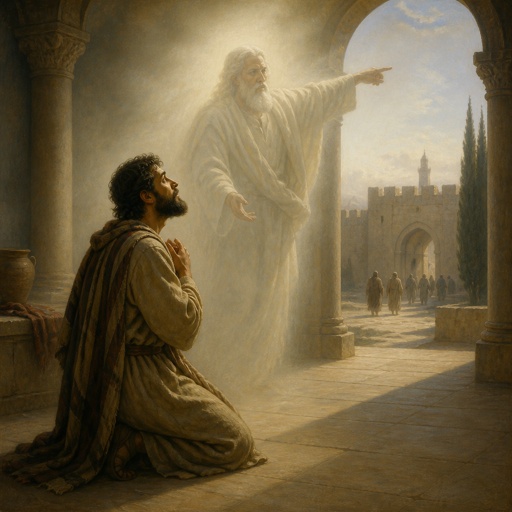
"And saw him saying unto me, Make haste, and get thee quickly out of Jerusalem: for they will not receive thy testimony concerning me." - Acts 22:18

Psalm 22:18

Genesis 22-18

Mathew 18:22

Psalm 22:18

Genesis 18-22

Revelation 22:18

Psalm 22:18

Psalm 22:18

Acts 22:22 - "And they gave him audience unto this word, and then lifted up their voices, and said, Away with such a fellow from the earth: for it is not fit that he should live."

Acts 12:22 - "And the people gave a shout, saying, It is the voice of a god, and not of a man."

Acts 18:16 - "And he drave them from the judgment seat."

Acts 19:18 - "And many that believed came, and confessed, and shewed their deeds."

Acts 5:22 - "But when the officers came, and found them not in the prison, they returned, and told,"

Acts 22:23 - "And as they cried out, and cast off their clothes, and threw dust into the air,"

Acts 7:22 - "And Moses was learned in all the wisdom of the Egyptians, and was mighty in words and in deeds."

Acts 7:18 - "Till another king arose, which knew not Joseph."

Acts 5:18 - "And laid their hands on the apostles, and put them in the common prison."

Acts 4:22 - "For the man was above forty years old, on whom this miracle of healing was shewed."

Acts 18:1 - "After these things Paul departed from Athens, and came to Corinth;"

Acts 18:13 - "Saying, This fellow persuadeth men to worship God contrary to the law."

Acts 18:4 - "And he reasoned in the synagogue every sabbath, and persuaded the Jews and the Greeks."

Acts 13:18 - "And about the time of forty years suffered he their manners in the wilderness."