What does Acts 19:15 mean?
"And the evil spirit answered and said, Jesus I know, and Paul I know; but who are ye?" - Acts 19:15
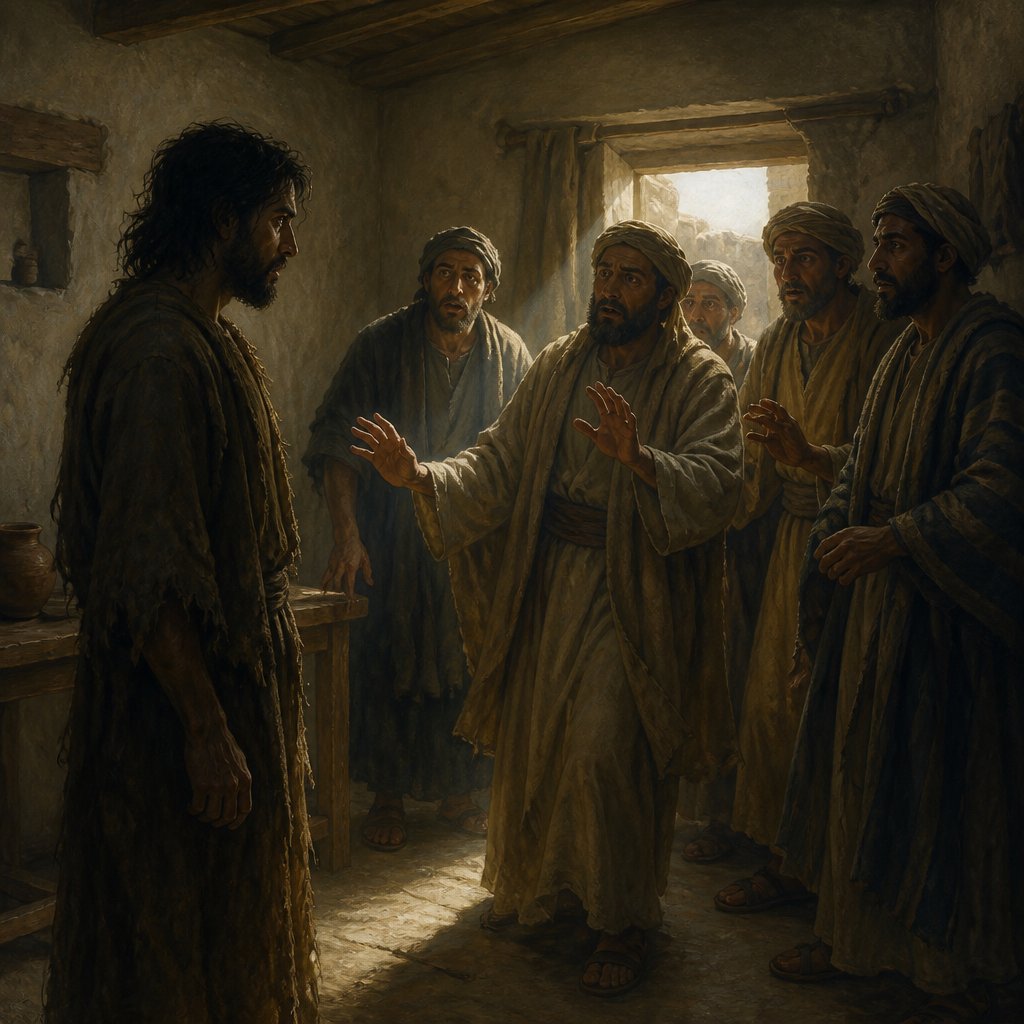
The verse Acts 19:15 in the King James Version of the Bible reads, "And the evil spirit answered and said, Jesus I know, and Paul I know; but who are ye?"
This verse is part of the larger narrative of the book of Acts, which is the fifth book of the New Testament. Acts is a historical account of the early Christian church and the spread of the gospel after Jesus's ascension. In this particular passage, the apostle Paul is in the city of Ephesus, where he was performing various miracles and preaching the gospel. The verse occurs within the context of an exorcism performed by Jewish exorcists who attempted to cast an evil spirit out of a man. However, the evil spirit recognizes the authority of Jesus and Paul, but not the Jewish exorcists, leading to a dramatic and humiliating confrontation.
The themes present in this verse and the larger passage include the power and authority of Jesus, the affirmation of Paul's role as a prominent leader and teacher in the early church, and the danger of false or insincere spiritual practices. Let's delve deeper into these themes and the context in which they appear in Acts 19:15.
One of the central themes in this verse is the power and authority of Jesus. The evil spirit acknowledges Jesus and Paul, recognizing their spiritual authority. This underscores the divine power of Jesus and the recognition of his authority over spiritual forces, as well as the significance of Paul as a chosen vessel to spread the gospel. Moreover, the verse highlights the spiritual battle between good and evil and the ultimate victory of Jesus's authority over the forces of darkness.
Another prominent theme in this passage is the affirmation of Paul's role as a key leader and teacher in the early church. The fact that the evil spirit not only knows of Paul but also acknowledges his authority speaks to the significance of Paul's ministry in advancing the gospel message. Throughout the book of Acts, Paul's missionary journeys and teachings are instrumental in the establishment and growth of the early Christian church. This verse serves as a testament to Paul's spiritual standing and his powerful impact on the spread of Christianity.
Furthermore, the passage addresses the danger of false or insincere spiritual practices. The Jewish exorcists who attempted to command the evil spirit to come out of the possessed man were not genuine believers in Jesus or his authority. Their attempt to perform an exorcism without a true connection to the power of Jesus resulted in a humiliating confrontation and a public demonstration of their lack of spiritual authority. This serves as a warning against false or superficial engagement with spiritual matters, emphasizing the importance of genuine faith and a deep relationship with Jesus.
Symbolism also plays a significant role in this verse. The recognition of Jesus and Paul by the evil spirit symbolizes the spiritual authority and power bestowed upon them by God. It also signifies the ongoing spiritual battle between good and evil, with Jesus and Paul representing the forces of light and the evil spirit representing the forces of darkness. This confrontation serves as a symbolic representation of the broader conflict between God's kingdom and the powers of darkness.
In conclusion, Acts 19:15 in the King James Version of the Bible holds deep thematic and symbolic significance within the larger narrative of the book of Acts. It speaks to the power and authority of Jesus, the affirmation of Paul's role as a prominent figure in the early church, and the danger of false or insincere spiritual practices. This verse serves as a powerful reminder of the ongoing spiritual battle and the ultimate triumph of Jesus's authority over all things.
Have questions about Acts 19:15?
Dive deeper into this scripture with Bible Chat — an AI-powered tool for exploring God's Word through conversation. Ask questions, get context, and grow in your understanding of the Bible.
Get Our Apps


Acts 19:15 Artwork

Acts 19:15 - "And the evil spirit answered and said, Jesus I know, and Paul I know; but who are ye?"
"And the evil spirit answered and said, Jesus I know, and Paul I know; but who are ye?" - Acts 19:15
Acts 15:19 - "Wherefore my sentence is, that we trouble not them, which from among the Gentiles are turned to God:"
"Wherefore my sentence is, that we trouble not them, which from among the Gentiles are turned to God:" - Acts 15:19

Acts 15:15 - "And to this agree the words of the prophets; as it is written,"

acts 15

Acts 19: 11

Acts 19:11

Acts 17:15

"And to this agree the words of the prophets; as it is written," - Acts 15:15

Acts 19:7 - "And all the men were about twelve."

Acts 19:11 - "And God wrought special miracles by the hands of Paul:"

Acts 19:20 - "So mightily grew the word of God and prevailed."

Acts 19:18 - "And many that believed came, and confessed, and shewed their deeds."

Acts 15:34 - "Notwithstanding it pleased Silas to abide there still."

Acts 19:23 - "And the same time there arose no small stir about that way."

Acts 19:5 - "When they heard this, they were baptized in the name of the Lord Jesus."

Genesis 15:19

put on a scroll acts 15:29

2 Kings 15:15 - "And the rest of the acts of Shallum, and his conspiracy which he made, behold, they are written in the book of the chronicles of the kings of Israel."

Genesis 19-15

Depict the events of Acts 19:14-17

Acts 15:31 - "Which when they had read, they rejoiced for the consolation."

Acts 15:6 - "¶ And the apostles and elders came together for to consider of this matter."

Acts 19:41 - "And when he had thus spoken, he dismissed the assembly."

Acts 2:15 - "For these are not drunken, as ye suppose, seeing it is but the third hour of the day."

Acts 15:41 - "And he went through Syria and Cilicia, confirming the churches."

Acts 26:19 - "Whereupon, O king Agrippa, I was not disobedient unto the heavenly vision:"

Genesis 15:19 - "The Kenites, and the Kenizzites, and the Kadmonites,"

Acts 27:19 - "And the third day we cast out with our own hands the tackling of the ship."