What does Acts 2:37 mean?
"¶ Now when they heard this, they were pricked in their heart, and said unto Peter and to the rest of the apostles, Men and brethren, what shall we do?" - Acts 2:37
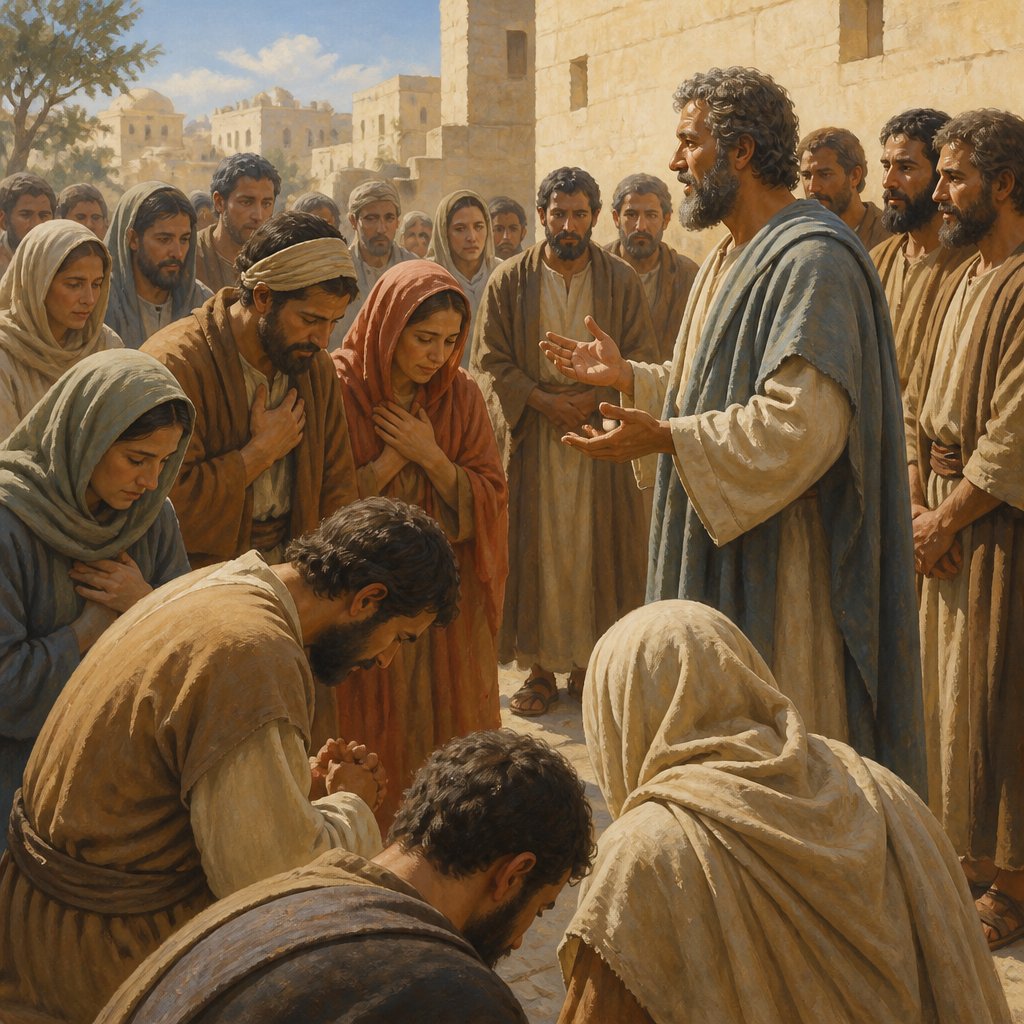
Acts 2:37 in the King James Version states: "Now when they heard this, they were pricked in their heart, and said unto Peter and to the rest of the apostles, Men and brethren, what shall we do?"
This verse comes from the second chapter of the Book of Acts in the New Testament. It is part of the account of the Day of Pentecost, when the Holy Spirit descended upon the apostles and they began to speak in tongues. This event marked the beginning of the Christian church and the spread of the gospel message to all nations.
The verse describes the reaction of the people who were gathered in Jerusalem and heard the apostle Peter's sermon. They were "pricked in their heart" at the words they heard, which means that they were deeply convicted and moved by what Peter was saying. This phrase highlights the emotional and spiritual impact of Peter's preaching on the listeners. It also reflects the power of the Holy Spirit to convict people of their sins and lead them to repentance.
The people's response, "Men and brethren, what shall we do?" demonstrates their recognition of the need for action in response to their conviction. They were seeking guidance from Peter and the other apostles on how to respond to the message they had heard. This question reflects a sense of urgency and a desire for direction in light of the spiritual awakening they were experiencing.
The themes present in this verse include conviction, repentance, and the need for a response to the gospel message. The verse speaks to the universal human experience of recognizing one's own sinfulness and the need for forgiveness and redemption. It also emphasizes the role of the apostles and other leaders in providing guidance and instruction to those who are seeking to understand and apply the message of the gospel to their lives.
In the larger context of the Book of Acts, this verse is significant because it marks the beginning of the expansion of the Christian church. After Peter's sermon, about three thousand people were baptized and added to the community of believers. This event represents the fulfillment of Jesus' commission to his disciples to be his witnesses "in Jerusalem, and in all Judea and Samaria, and to the ends of the earth" (Acts 1:8).
The verse also has symbolic significance in the Christian tradition. It serves as a model for how individuals should respond to the proclamation of the gospel. The people's question, "What shall we do?" reflects a posture of humility and openness to instruction, which is characteristic of a heart that is receptive to the message of salvation. The verse also underscores the central role of the apostles and the church in guiding and supporting new believers as they seek to understand and live out their faith.
Overall, Acts 2:37 captures a pivotal moment in the early church's history and conveys timeless themes of conviction, repentance, and the need for a faithful response to the gospel message. It lays the groundwork for the spread of Christianity and serves as a powerful example of the transformative impact of the Holy Spirit on individuals and communities.
Have questions about Acts 2:37?
Dive deeper into this scripture with Bible Chat — an AI-powered tool for exploring God's Word through conversation. Ask questions, get context, and grow in your understanding of the Bible.
Get Our Apps


Acts 2:37 Artwork

Acts 2:37 - "¶ Now when they heard this, they were pricked in their heart, and said unto Peter and to the rest of the apostles, Men and brethren, what shall we do?"
"¶ Now when they heard this, they were pricked in their heart, and said unto Peter and to the rest of the apostles, Men and brethren, what shall we do?" - Acts 2:37

Acts 13:37 - "But he, whom God raised again, saw no corruption."

Acts 15:37 - "And Barnabas determined to take with them John, whose surname was Mark."

Acts 20:37 - "And they all wept sore, and fell on Paul's neck, and kissed him,"

Acts 4:37 - "Having land, sold it, and brought the money, and laid it at the apostles' feet."

Acts 27:37 - "And we were in all in the ship two hundred threescore and sixteen souls."

Acts 19:37 - "For ye have brought hither these men, which are neither robbers of churches, nor yet blasphemers of your goddess."

Acts 9:37 - "And it came to pass in those days, that she was sick, and died: whom when they had washed, they laid her in an upper chamber."

"But he, whom God raised again, saw no corruption." - Acts 13:37

Acts 8:37 - "And Philip said, If thou believest with all thine heart, thou mayest. And he answered and said, I believe that Jesus Christ is the Son of God."

Acts 10:37 - "That word, I say, ye know, which was published throughout all Judaea, and began from Galilee, after the baptism which John preached;"

"And they all wept sore, and fell on Paul's neck, and kissed him," - Acts 20:37

Luke 2:37

Luke 2:37

Genesis 37:2

Luke 2:37

Luke 2:37

"Having land, sold it, and brought the money, and laid it at the apostles' feet." - Acts 4:37

"And Barnabas determined to take with them John, whose surname was Mark." - Acts 15:37

Luke 2:37

Acts 21:37 - "And as Paul was to be led into the castle, he said unto the chief captain, May I speak unto thee? Who said, Canst thou speak Greek?"

"And we were in all in the ship two hundred threescore and sixteen souls." - Acts 27:37

2 Chronicles 20:37

Acts 2:2

Acts 2:2

Ezra 2:37 - "The children of Immer, a thousand fifty and two."

Acts 7:37 - "¶ This is that Moses, which said unto the children of Israel, A prophet shall the Lord your God raise up unto you of your brethren, like unto me; him shall ye hear."

Acts 5:37 - "After this man rose up Judas of Galilee in the days of the taxing, and drew away much people after him: he also perished; and all, even as many as obeyed him, were dispersed."

1 Chronicles 2:37 - "And Zabad begat Ephlal, and Ephlal begat Obed,"