What does Acts 20:33 mean?
“I have coveted no man’s silver, or gold, or apparel.” — Acts 20:33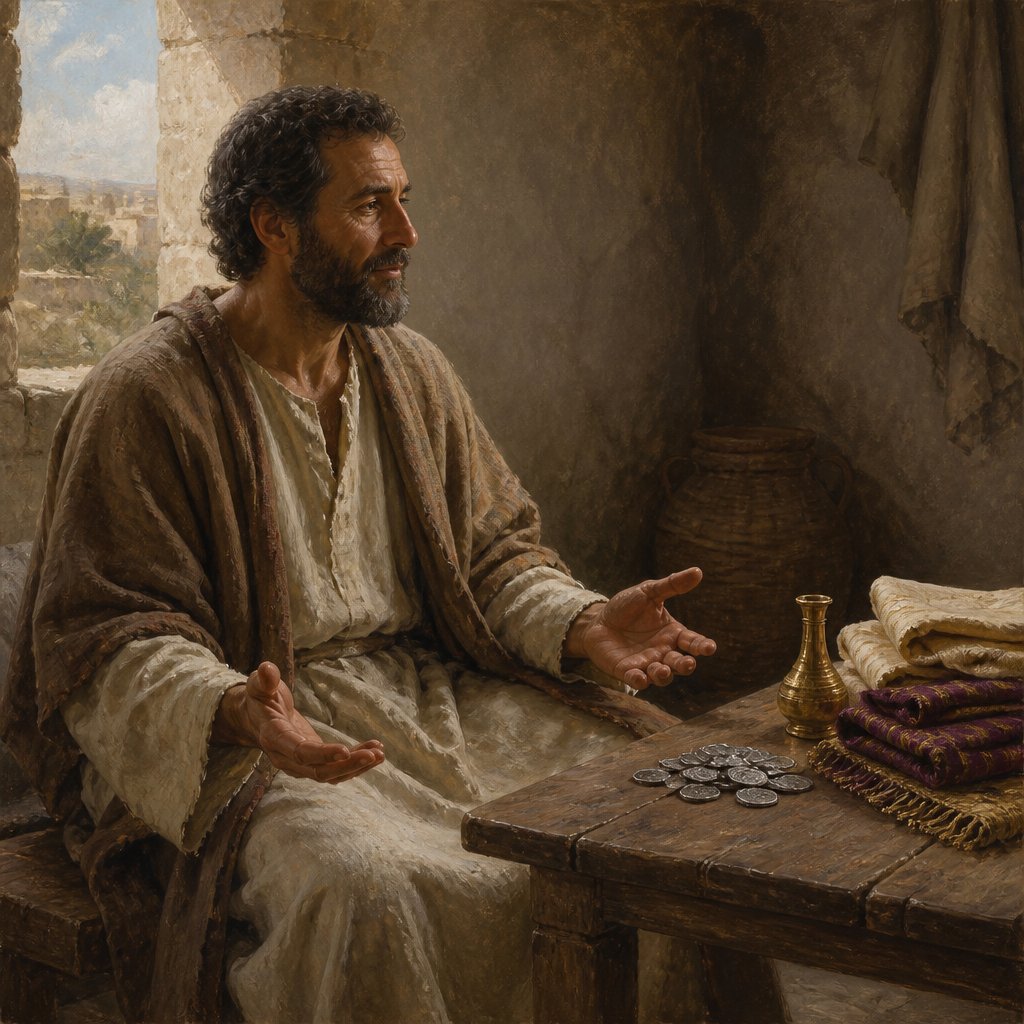
In Acts 20:33, the apostle Paul speaks to the elders of the church in Ephesus, saying, "I have coveted no man's silver, or gold, or apparel." This statement is part of a larger speech in which Paul is addressing the elders and commending them for their faithful service, but also warning them about false teachings and challenges that may arise in the future. This verse is significant in demonstrating Paul's integrity and humility as a leader in the early Christian church.
To fully understand the meaning and significance of this verse, it is important to consider the context in which it is situated. In Acts 20, Paul is on his way to Jerusalem, and he stops in the city of Miletus to meet with the elders of the church in Ephesus. This is a deeply personal and emotional meeting, as Paul knows that he may not see these elders again. In his speech to them, he reflects on his time in Ephesus and urges the elders to continue to serve faithfully and to protect the church from false teachings.
In the verse itself, Paul declares that he has not coveted anyone's silver, gold, or apparel. This statement is significant because it demonstrates Paul's commitment to the principles of the Christian faith. Throughout his ministry, Paul often faced accusations of financial greed and the pursuit of material wealth. In this verse, he directly refutes these claims and emphasizes that his motives and actions were always pure and focused on serving the Lord and spreading the Gospel.
The themes present in this verse include integrity, humility, and the true nature of Christian leadership. By declaring that he has not coveted material possessions, Paul sets an example for the elders and emphasizes the importance of living a life of moral and ethical integrity. His words also serve as a reminder that true leadership in the Christian faith should be marked by selflessness and a focus on serving others rather than seeking personal gain.
This verse also carries broader implications for the Christian community as a whole. It speaks to the importance of financial stewardship and the proper use of material possessions. Throughout the New Testament, there are numerous teachings on the dangers of greed and the love of money. Paul's statement in Acts 20:33 aligns with these teachings and reinforces the idea that Christians should not be driven by worldly wealth, but rather by spiritual values and the pursuit of righteousness.
Symbolically, Paul's declaration in this verse represents a rejection of the values and priorities of the world in favor of the values of the kingdom of God. It serves as a reminder that the pursuit of material wealth and possessions should not be the focus of the Christian life. Instead, the true treasure lies in the service of God and the spread of His kingdom.
In conclusion, Acts 20:33 is a powerful and compelling statement by the apostle Paul that carries significant meaning for the Christian faith. It reflects his integrity, humility, and commitment to the principles of the Gospel. It also speaks to the broader themes of financial stewardship and the true nature of Christian leadership. As believers, we can draw inspiration from Paul's words and strive to emulate his example of selflessness and devotion to the teachings of Jesus Christ.
Get our apps


Artwork for Acts 20:33

Acts 20:33 - "I have coveted no man's silver, or gold, or apparel."

"I have coveted no man's silver, or gold, or apparel." - Acts 20:33

Deuteronomy 33:20 - "¶ And of Gad he said, Blessed be he that enlargeth Gad: he dwelleth as a lion, and teareth the arm with the crown of the head."

Acts 8:33

Acts 17:33 - "So Paul departed from among them."

Acts 5:33 - "¶ When they heard that, they were cut to the heart, and took counsel to slay them."

Numbers 33:20 - "And they departed from Rimmon-parez, and pitched in Libnah."

Genesis 33:20 - "And he erected there an altar, and called it El-elohe-Israel."

Acts 20:11

Matthew 20:33 - "They say unto him, Lord, that our eyes may be opened."

Acts 15:33 - "And after they had tarried there a space, they were let go in peace from the brethren unto the apostles."

Acts 23:33 - "Who, when they came to Caesarea, and delivered the epistle to the governor, presented Paul also before him."

Acts 4:33 - "And with great power gave the apostles witness of the resurrection of the Lord Jesus: and great grace was upon them all."

Acts 16:33 - "And he took them the same hour of the night, and washed their stripes; and was baptized, he and all his, straightway."

Psalms 33:20 - "Our soul waiteth for the LORD: he is our help and our shield."

Job 33:20 - "So that his life abhorreth bread, and his soul dainty meat."

Luke 20:33 - "Therefore in the resurrection whose wife of them is she? for seven had her to wife."

acts 20:7-12

Acts 9:1-20

Acts 9:1-20

"So Paul departed from among them." - Acts 17:33

Acts 9:33 - "And there he found a certain man named Aeneas, which had kept his bed eight years, and was sick of the palsy."

Acts 20:5 - "These going before tarried for us at Troas."

Acts 8:33 - "In his humiliation his judgment was taken away: and who shall declare his generation? for his life is taken from the earth."

Acts 7:33 - "Then said the Lord to him, Put off thy shoes from thy feet: for the place where thou standest is holy ground."

Exodus 33:20 - "And he said, Thou canst not see my face: for there shall no man see me, and live."

Acts 19:20 - "So mightily grew the word of God and prevailed."

"And they departed from Rimmon-parez, and pitched in Libnah." - Numbers 33:20

Acts 21:33 - "Then the chief captain came near, and took him, and commanded him to be bound with two chains; and demanded who he was, and what he had done."

Acts 20:12 - "And they brought the young man alive, and were not a little comforted."