What does Acts 21:18 mean?
“And the day following Paul went in with us unto James; and all the elders were present.” — Acts 21:18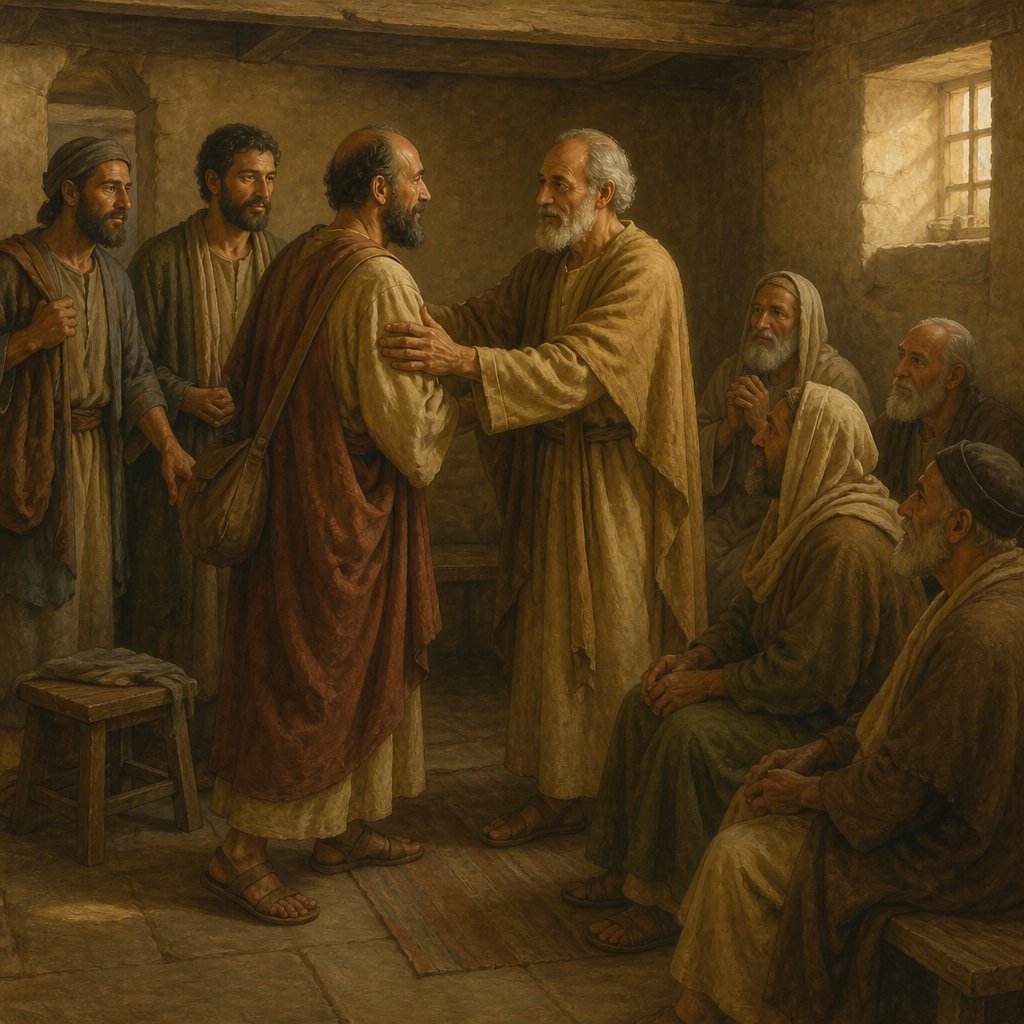
In the King James Version of the Bible, Acts 21:18 reads, "And the day following Paul went in with us unto James; and all the elders were present." This verse is a part of the larger narrative of Paul's journey to Jerusalem, where he faces opposition and persecution for his beliefs. The verse is significant because it demonstrates the unity and fellowship among the early Christian community, as well as the importance of leadership and eldership in the church.
The context of Acts 21:18 is essential for a full understanding of its meaning. In the preceding verses, Paul is on his way to Jerusalem, despite being warned by the Spirit of the challenges and hardships that await him there (Acts 20:22-23). When he arrives, he is warmly welcomed by the disciples and stays with Mnason, a native of Cyprus who was an early disciple (Acts 21:16-17). The verse in question, Acts 21:18, describes Paul's visit to James, who was the leader of the church in Jerusalem, and the gathering of elders to meet with him.
The theme of fellowship and unity is prominent in this verse. The fact that Paul goes in with his companions to meet James and the elders signifies the strong bond and mutual support among the early Christians. Despite the challenges and opposition they face, they remain united in their faith and commitment to the gospel. This theme of fellowship and unity is a recurring one in the New Testament, emphasizing the importance of community and belonging within the body of Christ.
Another significant theme in Acts 21:18 is that of leadership and eldership in the church. James, as the leader of the church in Jerusalem, holds a position of authority and responsibility. The fact that all the elders were present at the meeting with Paul indicates the respect and reverence they had for him, as well as their recognition of his apostolic authority. This theme reflects the early church's organizational structure and the role of leaders and elders in guiding and shepherding the believers.
Acts 21:18 also carries a broader symbolism within the Christian faith. The meeting between Paul, James, and the elders represents the passing down of the gospel message and the transmission of authority from the apostles to the next generation of church leaders. It highlights the importance of continuity and succession in the leadership of the church, as well as the significance of honoring and preserving the teachings of the apostles.
Furthermore, the verse underscores the interconnectedness of the various Christian communities in the early church. Despite their geographical and cultural differences, the believers in Jerusalem, as well as those from other regions, maintained close ties and cooperation in their mission to spread the gospel. This interconnectedness is a testament to the universal nature of the Christian faith and the shared bond that transcends boundaries and divisions.
In conclusion, Acts 21:18 holds a rich and multi-layered meaning within the larger narrative of the early church and the spread of the gospel. It exemplifies the themes of fellowship and unity, leadership and eldership, as well as the symbolism of continuity and interconnectedness within the Christian faith. As believers today, we can draw inspiration from this verse to cultivate unity and cooperation within our own communities, honor and respect our spiritual leaders, and remain steadfast in our commitment to the gospel message.
Get our apps


Artwork for Acts 21:18

Acts 21:18 - "And the day following Paul went in with us unto James; and all the elders were present."

Acts 21:18 On the following day Paul went in with us to James, and all the elders were present.
"And the day following Paul went in with us unto James; and all the elders were present." - Acts 21:18

Acts 18:21 - "But bade them farewell, saying, I must by all means keep this feast that cometh in Jerusalem: but I will return again unto you, if God will. And he sailed from Ephesus."

Acts 18:12

Acts 18:12

Acts 1:21-23

Acts 1:21-22

Proverbs 18:21

Proverbs 18:21

Proverbs 18:21

Proverbs 18:21

Acts 21:5-6

Acts 1:21-22

Proverbs 18:21

Proverbs 18:21

Proverbs 18:21

Proverbs 18:21

Proverbs 18:21

Proverbs 18:21
Proverbs 18:21

Proverbs 18:21

Genesis 18-21

Genesis 21-18

Acts 21:36 - "For the multitude of the people followed after, crying, Away with him."

Acts 18:16 - "And he drave them from the judgment seat."

Acts 19:18 - "And many that believed came, and confessed, and shewed their deeds."

Acts 7:18 - "Till another king arose, which knew not Joseph."
Acts 5:18 - "And laid their hands on the apostles, and put them in the common prison."

Acts 21:21 - "And they are informed of thee, that thou teachest all the Jews which are among the Gentiles to forsake Moses, saying that they ought not to circumcise their children, neither to walk after the customs."