What does Acts 22:15 mean?
“For thou shalt be his witness unto all men of what thou hast seen and heard.” — Acts 22:15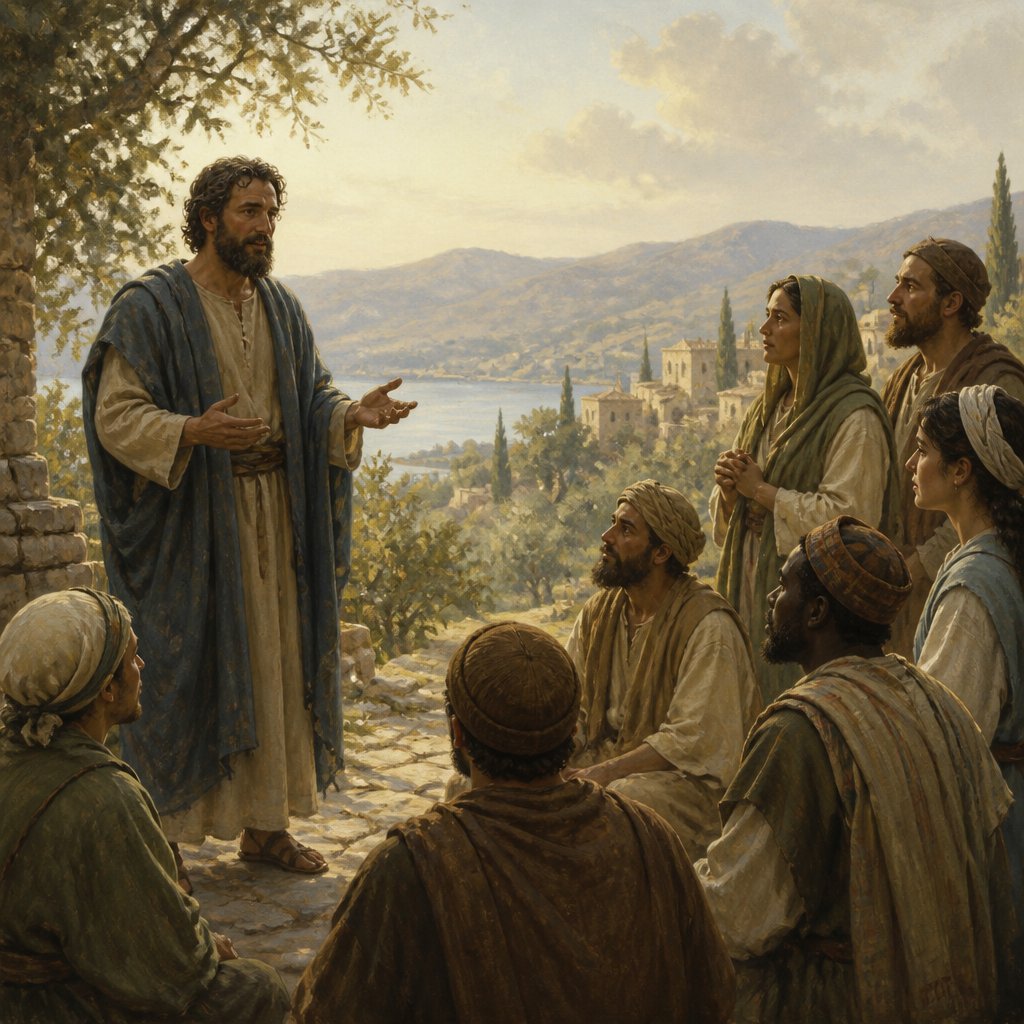
In Acts 22:15, the King James Version (KJV) of the Bible states, "For thou shalt be his witness unto all men of what thou hast seen and heard." This verse is part of a passage in which the apostle Paul recounts his conversion experience on the road to Damascus to a crowd in Jerusalem. In this particular verse, Paul is relaying the message he received from Ananias, a disciple of Jesus, regarding his purpose as a follower of Christ.
The verse holds significant meaning both within its immediate context and within the broader themes of the Christian faith. It speaks to the call to witness and testify to the truth of the Gospel, as well as the divine commission given to believers to spread the message of Jesus Christ.
The immediate context of this verse is Paul's own personal testimony of his encounter with Jesus on the road to Damascus. Prior to his conversion, Paul, then known as Saul, was a zealous persecutor of the early Christians. However, on his journey to Damascus, he was suddenly struck blind and heard the voice of Jesus speaking to him. This encounter led to his conversion and anointing as a chosen instrument to carry the Gospel to the Gentiles. The verse in question reflects the charge given to Paul by Ananias – to be a witness to all men of what he had personally seen and heard, which was the transformative power of the Gospel in his own life.
Thematically, Acts 22:15 aligns with the broader message of the New Testament regarding the role of believers as witnesses to the reality and significance of Jesus Christ. Throughout the Gospels and the Book of Acts, there is a consistent emphasis on the mandate for Christians to testify about Christ and to share the good news of salvation with the world. This verse reinforces the pivotal role of personal testimony in the work of evangelism and the expansion of the Christian faith.
The directive for Paul to be a witness also carries symbolic significance within the context of the early Christian movement. In the first-century Roman world, the concept of witness or testimony (Greek: martys) held legal implications. This same word, "martyr," was later used to describe those who suffered and died for their faith. In this sense, the verse foreshadows not only Paul's dedicated ministry but also the persecution and suffering that he would endure as a result of his fidelity to Christ.
Within the broader Christian tradition, Acts 22:15 continues to have relevance for believers today. It serves as a reminder of the enduring call for followers of Christ to bear witness to the transformative power of the Gospel. It underscores the importance of personal testimony in sharing the faith and demonstrating the impact of God's grace in individual lives. Furthermore, it highlights the sacrificial nature of Christian witness, as exemplified by the life and ministry of the apostle Paul.
In summary, Acts 22:15 is a verse that encapsulates the theme of Christian witness and testimony within the New Testament narrative. It reflects Paul's personal recounting of his divine commission to be a witness to the reality of Christ, as well as the broader mandate for all believers to share the Gospel with the world. The verse holds symbolic significance in its historical and theological contexts, and it continues to resonate as a call to faithful and sacrificial witness for Christians today.
Get our apps


Artwork for Acts 22:15

Acts 22:15 - "For thou shalt be his witness unto all men of what thou hast seen and heard."
"For thou shalt be his witness unto all men of what thou hast seen and heard." - Acts 22:15

Acts 15:22 - "Then pleased it the apostles and elders, with the whole church, to send chosen men of their own company to Antioch with Paul and Barnabas; namely, Judas surnamed Barsabas, and Silas, chief men among the brethren:"

Acts 15:15 - "And to this agree the words of the prophets; as it is written,"

acts 15

Acts 1:21-22

Acts 1:21-22

Acts 17:15

"And to this agree the words of the prophets; as it is written," - Acts 15:15

Acts 22:22 - "And they gave him audience unto this word, and then lifted up their voices, and said, Away with such a fellow from the earth: for it is not fit that he should live."

Acts 12:22 - "And the people gave a shout, saying, It is the voice of a god, and not of a man."

Acts 15:34 - "Notwithstanding it pleased Silas to abide there still."

matt 15:22

matt 15:22

Genesis 22:15

Exodus 15:22

Acts 5:22 - "But when the officers came, and found them not in the prison, they returned, and told,"

Acts 22:23 - "And as they cried out, and cast off their clothes, and threw dust into the air,"

Acts 7:22 - "And Moses was learned in all the wisdom of the Egyptians, and was mighty in words and in deeds."

put on a scroll acts 15:29

2 Kings 15:15 - "And the rest of the acts of Shallum, and his conspiracy which he made, behold, they are written in the book of the chronicles of the kings of Israel."

Acts 15:31 - "Which when they had read, they rejoiced for the consolation."

Acts 15:6 - "¶ And the apostles and elders came together for to consider of this matter."

Acts 4:22 - "For the man was above forty years old, on whom this miracle of healing was shewed."

Joshua 15:22 - "And Kinah, and Dimonah, and Adadah,"

Acts 2:15 - "For these are not drunken, as ye suppose, seeing it is but the third hour of the day."

Acts 15:41 - "And he went through Syria and Cilicia, confirming the churches."

1 Samuel 15:22

1 Samuel 15:22

Leviticus 23:15-22