What does Acts 22:21 mean?
“And he said unto me, Depart: for I will send thee far hence unto the Gentiles.” — Acts 22:21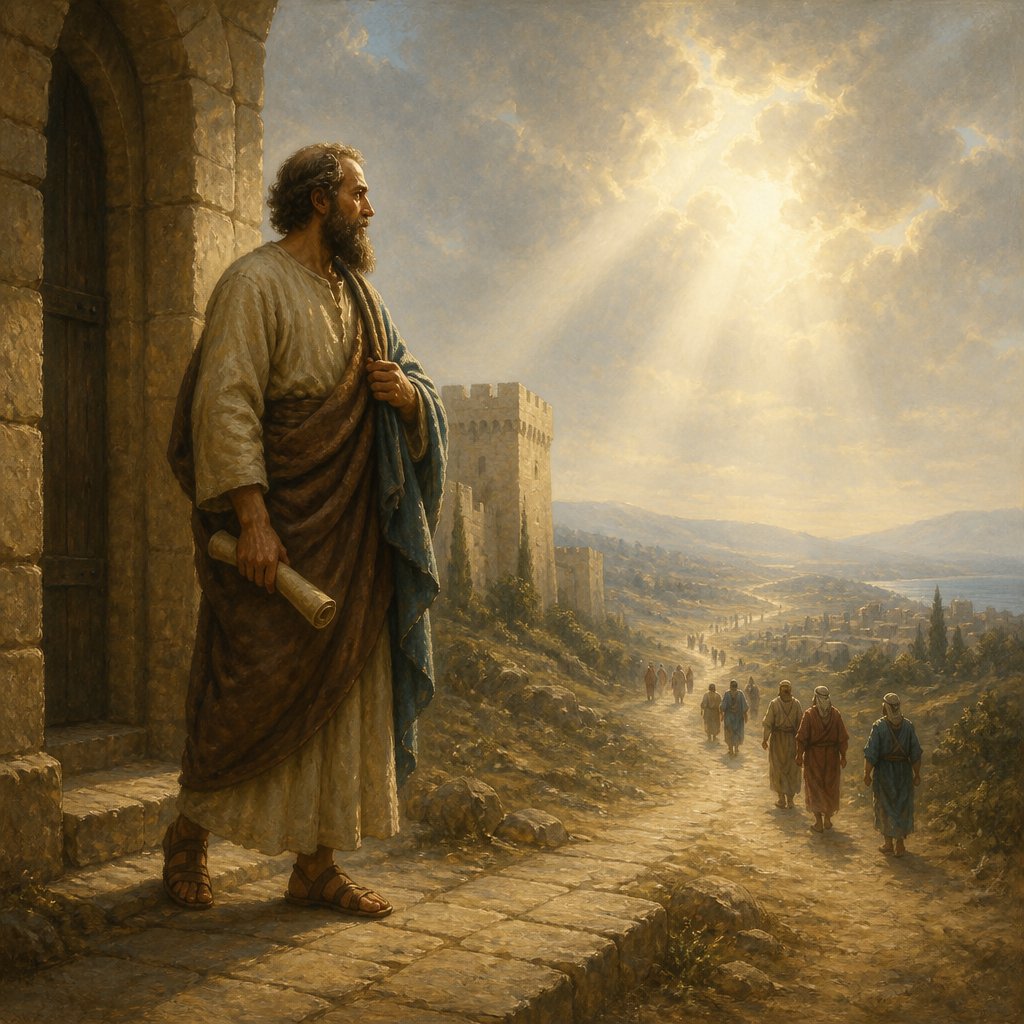
Acts 22:21 in the King James Version (KJV) of the Bible reads: "And he said unto me, Depart: for I will send thee far hence unto the Gentiles."
This verse is part of a larger narrative in the book of Acts, which is the fifth book of the New Testament. It recounts the early days of the Christian church and the spread of the gospel message throughout the Roman Empire. The book of Acts is traditionally attributed to the authorship of Luke, who also wrote the Gospel of Luke, and it is believed to have been written around 80-90 AD.
In this particular verse, the speaker is the apostle Paul, who is recounting his encounter with the risen Christ on the road to Damascus. In this encounter, Paul experiences a powerful conversion and is called to be an apostle to the Gentiles, or non-Jews. This is a significant moment in the history of Christianity, as it represents a shift from the exclusive focus on the Jewish people to a more inclusive message that is meant for all people, regardless of their ethnic or religious background.
The context of this verse is important for understanding its significance. Prior to his conversion, Paul, then known as Saul, was a zealous persecutor of the early Christians. However, his encounter with Christ on the road to Damascus dramatically transformed him and led to his conversion to Christianity. This verse is part of Paul's retelling of this experience, as he is speaking to a crowd in Jerusalem and defending his actions and beliefs.
The themes present in this verse are numerous and rich in meaning. One of the most prominent themes is the universality of the gospel message. The fact that Paul, a devout Jew, is called to be an apostle to the Gentiles reflects the inclusive nature of Christianity. This theme is also found in other parts of the New Testament, such as in the letters of Paul, where he emphasizes the equality of all believers in Christ, regardless of their background.
Another important theme in this verse is the concept of divine calling and purpose. Paul's encounter with Christ on the road to Damascus is a clear example of divine intervention and calling. This event not only transformed Paul's life but also set him on a specific path and mission. This theme is essential to understanding the broader narrative of the book of Acts, as it highlights the role of God in guiding and directing the early church and its leaders.
Furthermore, the verse also speaks to the idea of obedience to God's will. When Christ tells Paul to "Depart: for I will send thee far hence unto the Gentiles," Paul's immediate response is to follow this command. This demonstrates his willingness to obey and submit to God's plan for his life, even though it may have seemed unexpected or challenging. This theme of obedience and submission to God's will is emphasized throughout the Bible and is a crucial aspect of faith for many believers.
Symbolism is also present in this verse. The mention of the Gentiles carries significant symbolic weight, as it represents the inclusion of all people in God's redemptive plan. In the New Testament, the distinction between Jews and Gentiles is often used to illustrate the universality of the gospel and the breaking down of barriers between different groups of people. Paul's mission to the Gentiles is symbolic of the broader message of salvation and reconciliation that is at the heart of the Christian faith.
In conclusion, Acts 22:21 is a pivotal verse in the book of Acts that represents the universal and inclusive nature of the gospel message. It also reflects the themes of divine calling, obedience to God's will, and the symbolism of the Gentiles as recipients of God's grace. This verse holds profound significance for Christians as it speaks to the foundational beliefs of their faith and the mission of the early church.
Get our apps


Artwork for Acts 22:21

Acts 22:21 - "And he said unto me, Depart: for I will send thee far hence unto the Gentiles."

"And he said unto me, Depart: for I will send thee far hence unto the Gentiles." - Acts 22:21

Acts 1:21-22

Acts 1:21-22

Acts 21:22 - "What is it therefore? the multitude must needs come together: for they will hear that thou art come."
"What is it therefore? the multitude must needs come together: for they will hear that thou art come." - Acts 21:22

Acts 14:21-22 - "They preached the gospel in that city and won a large number of disciples. Then they returned to Lystra, Iconium and Antioch, strengthening the disciples and encouraging them to remain true to the faith. “We must go through many hardships to enter the kingdom of God,” they said."

Acts 1:21-23

Matthew 9:21-22

Acts 21:5-6

Matthew 9:21-22

Matthew 9:21-22

Matthew 9:21-22

Matthew 9:21-22

Genesis 21:22

Genesis 22-21

Acts 22:22 - "And they gave him audience unto this word, and then lifted up their voices, and said, Away with such a fellow from the earth: for it is not fit that he should live."

Acts 12:22 - "And the people gave a shout, saying, It is the voice of a god, and not of a man."

Acts 21:36 - "For the multitude of the people followed after, crying, Away with him."

Acts 5:22 - "But when the officers came, and found them not in the prison, they returned, and told,"

Acts 22:23 - "And as they cried out, and cast off their clothes, and threw dust into the air,"

Acts 7:22 - "And Moses was learned in all the wisdom of the Egyptians, and was mighty in words and in deeds."

Acts 21:21 - "And they are informed of thee, that thou teachest all the Jews which are among the Gentiles to forsake Moses, saying that they ought not to circumcise their children, neither to walk after the customs."

Acts 4:22 - "For the man was above forty years old, on whom this miracle of healing was shewed."
Acts 26:21 - "For these causes the Jews caught me in the temple, and went about to kill me."

Acts 21:17 - "And when we were come to Jerusalem, the brethren received us gladly."

Acts 11:21 - "And the hand of the Lord was with them: and a great number believed, and turned unto the Lord."

Acts 21:14 - "And when he would not be persuaded, we ceased, saying, The will of the Lord be done."

Acts 21:9 - "And the same man had four daughters, virgins, which did prophesy."

Acts 16:21 - "And teach customs, which are not lawful for us to receive, neither to observe, being Romans."