What does Acts 23:27 mean?
“This man was taken of the Jews, and should have been killed of them: then came I with an army, and rescued him, having understood that he was a Roman.” — Acts 23:27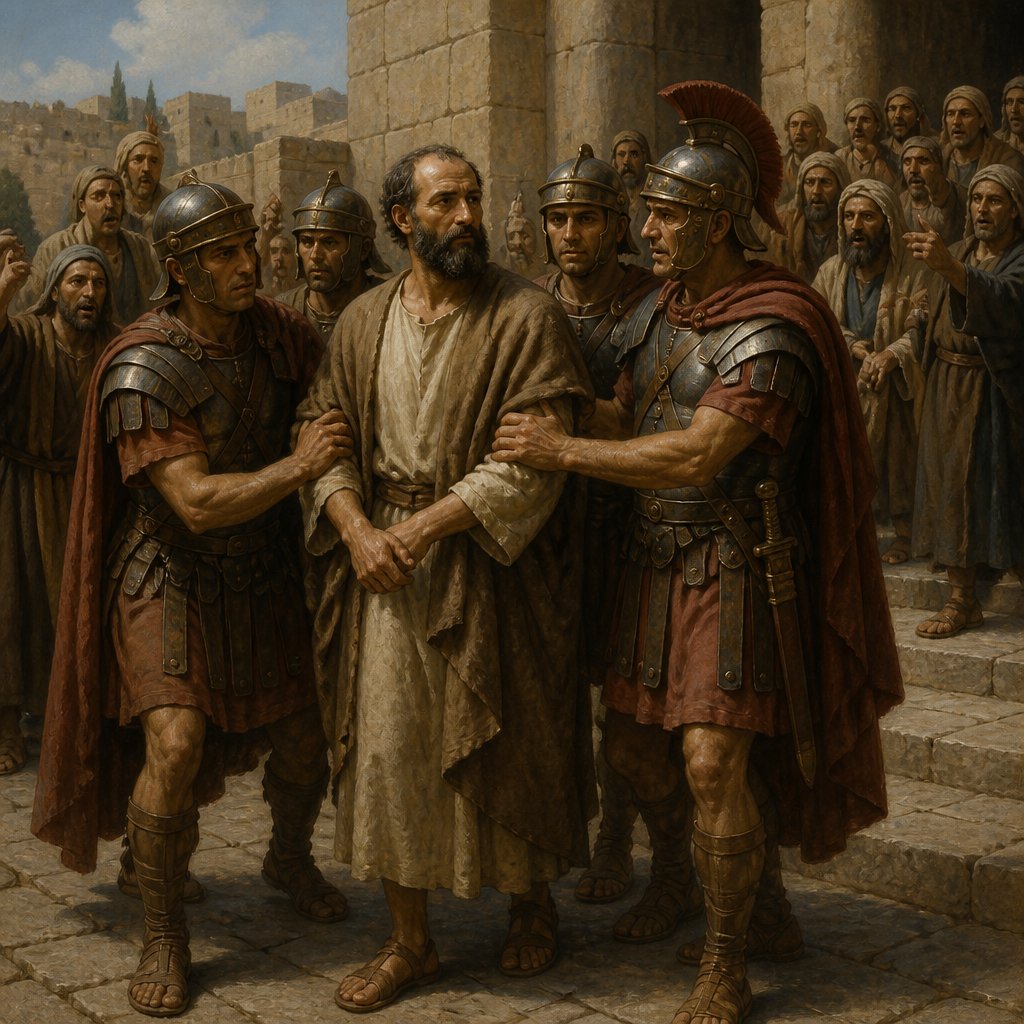
The Bible verse Acts 23:27 in the King James Version (KJV) reads, "This man was taken of the Jews, and should have been killed of them: then came I with an army, and rescued him, having understood that he was a Roman."
This verse is part of a larger passage in Acts 23:12-35, which details the plot to kill the Apostle Paul. In this passage, Paul has been arrested and is brought before the Sanhedrin, the Jewish ruling council, on charges of preaching against the law and defiling the temple. The Jewish leaders conspire to kill him, but the Romans, who are the ruling authority in this region, step in to protect Paul and ensure that justice is served.
The historical and cultural context of this passage is essential to understanding its significance. During this time, the Roman Empire was in control of Israel, and tensions between the Jewish people and the Roman authorities were high. The Jewish leaders were jealous of Paul's growing influence and saw him as a threat to their power. They were willing to go to extreme measures, including murder, to eliminate him.
The verse in Acts 23:27 serves as a turning point in the story of Paul's arrest and imprisonment. It reveals the Roman commander's intervention to protect Paul and ultimately ensure that he receives a fair trial. This act of rescue demonstrates the providence of God in preserving Paul's life and enabling him to continue his mission to spread the Gospel.
One of the central themes of this verse is the sovereignty and providence of God. Throughout the book of Acts, we see how God's hand is at work in the midst of persecution and opposition to the spread of the Gospel. In this passage, we see how God uses the Roman army to protect Paul and fulfill His purposes. It is a reminder that God is in control, even in the midst of difficult and dangerous circumstances.
Another important theme in this verse is the concept of justice and righteousness. The Roman commander's intervention to rescue Paul from the plot to kill him demonstrates a commitment to upholding the law and ensuring that justice is served. It also highlights the contrast between the corrupt motives of the Jewish leaders and the Roman commander's desire to uphold the law and protect an innocent man.
Furthermore, the symbolism in this verse can be seen in the contrast between the Jewish leaders and the Roman commander. The Jewish leaders, who represent the religious establishment, are motivated by jealousy and a desire for power, while the Roman commander, representing the ruling authority, acts with integrity and a commitment to justice. This serves as a reminder that true authority and righteousness come from God, not from human institutions or power struggles.
In conclusion, Acts 23:27 in the KJV offers a profound commentary on the themes of God's providence, justice, and the contrast between human motives and divine sovereignty. It serves as a reminder that God is always at work, even in the most challenging circumstances, and that His purposes will ultimately prevail. This verse also challenges us to consider where our allegiances lie and to seek justice and righteousness in all of our interactions and decisions.
Get our apps


Artwork for Acts 23:27

Acts 23:27 - "This man was taken of the Jews, and should have been killed of them: then came I with an army, and rescued him, having understood that he was a Roman."
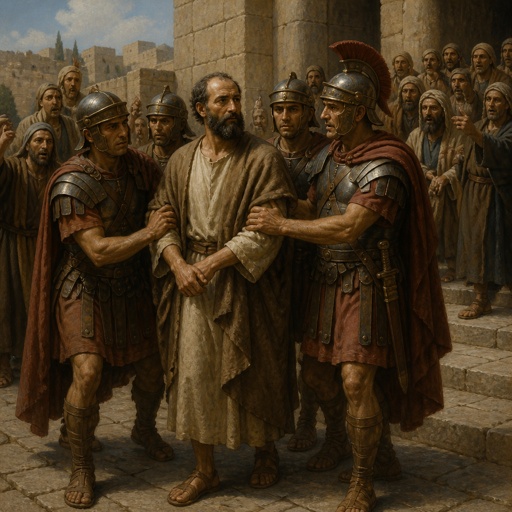
"This man was taken of the Jews, and should have been killed of them: then came I with an army, and rescued him, having understood that he was a Roman." - Acts 23:27

Acts 27:23 - "For there stood by me this night the angel of God, whose I am, and whom I serve,"
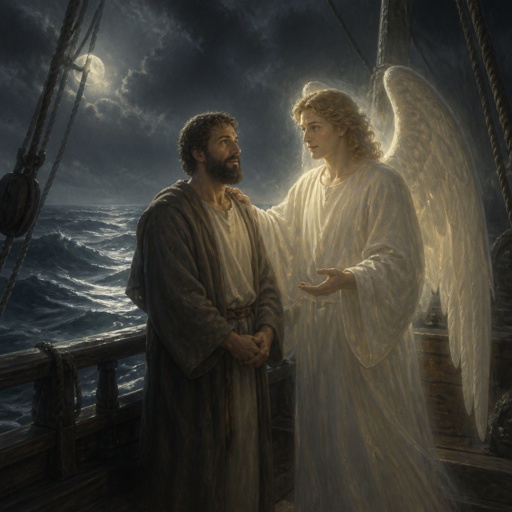
"For there stood by me this night the angel of God, whose I am, and whom I serve," - Acts 27:23

Acts 17:27

Exodus 23:27-28

Acts 1:21-23

Acts 27:26 - "Howbeit we must be cast upon a certain island."

Acts 27:27 - "But when the fourteenth night was come, as we were driven up and down in Adria, about midnight the shipmen deemed that they drew near to some country;"

Acts 11:27 - "¶ And in these days came prophets from Jerusalem unto Antioch."

Acts 23:25 - "And he wrote a letter after this manner:"

2 Samuel 23:27 - "Abiezer the Anethothite, Mebunnai the Hushathite,"

Acts 27:36 - "Then were they all of good cheer, and they also took some meat."

Acts 27:14 - "But not long after there arose against it a tempestuous wind, called Euroclydon."

Acts 27:32 - "Then the soldiers cut off the ropes of the boat, and let her fall off."

Acts 27:18 - "And we being exceedingly tossed with a tempest, the next day they lightened the ship;"

Acts 27:37 - "And we were in all in the ship two hundred threescore and sixteen souls."

Acts 20:27 - "For I have not shunned to declare unto you all the counsel of God."

Acts 26:27 - "King Agrippa, believest thou the prophets? I know that thou believest."

Acts 27:38 - "And when they had eaten enough, they lightened the ship, and cast out the wheat into the sea."

Acts 27:19 - "And the third day we cast out with our own hands the tackling of the ship."
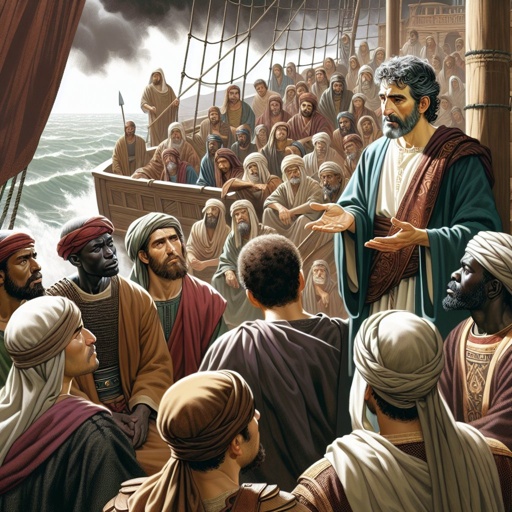
Acts 27:31 - "Paul said to the centurion and to the soldiers, Except these abide in the ship, ye cannot be saved."

Acts 10:27 - "And as he talked with him, he went in, and found many that were come together."

Proverbs 23:27 - "For a whore is a deep ditch; and a strange woman is a narrow pit."

Acts 27:6 - "And there the centurion found a ship of Alexandria sailing into Italy; and he put us therein."

Acts 19:23 - "And the same time there arose no small stir about that way."

Acts 23:4 - "And they that stood by said, Revilest thou God's high priest?"

Acts 23:32 - "On the morrow they left the horsemen to go with him, and returned to the castle:"

Acts 27:42 - "And the soldiers' counsel was to kill the prisoners, lest any of them should swim out, and escape."

Acts 25:27 - "For it seemeth to me unreasonable to send a prisoner, and not withal to signify the crimes laid against him."