What does Acts 26:18 mean?
"To open their eyes, and to turn them from darkness to light, and from the power of Satan unto God, that they may receive forgiveness of sins, and inheritance among them which are sanctified by faith that is in me." - Acts 26:18
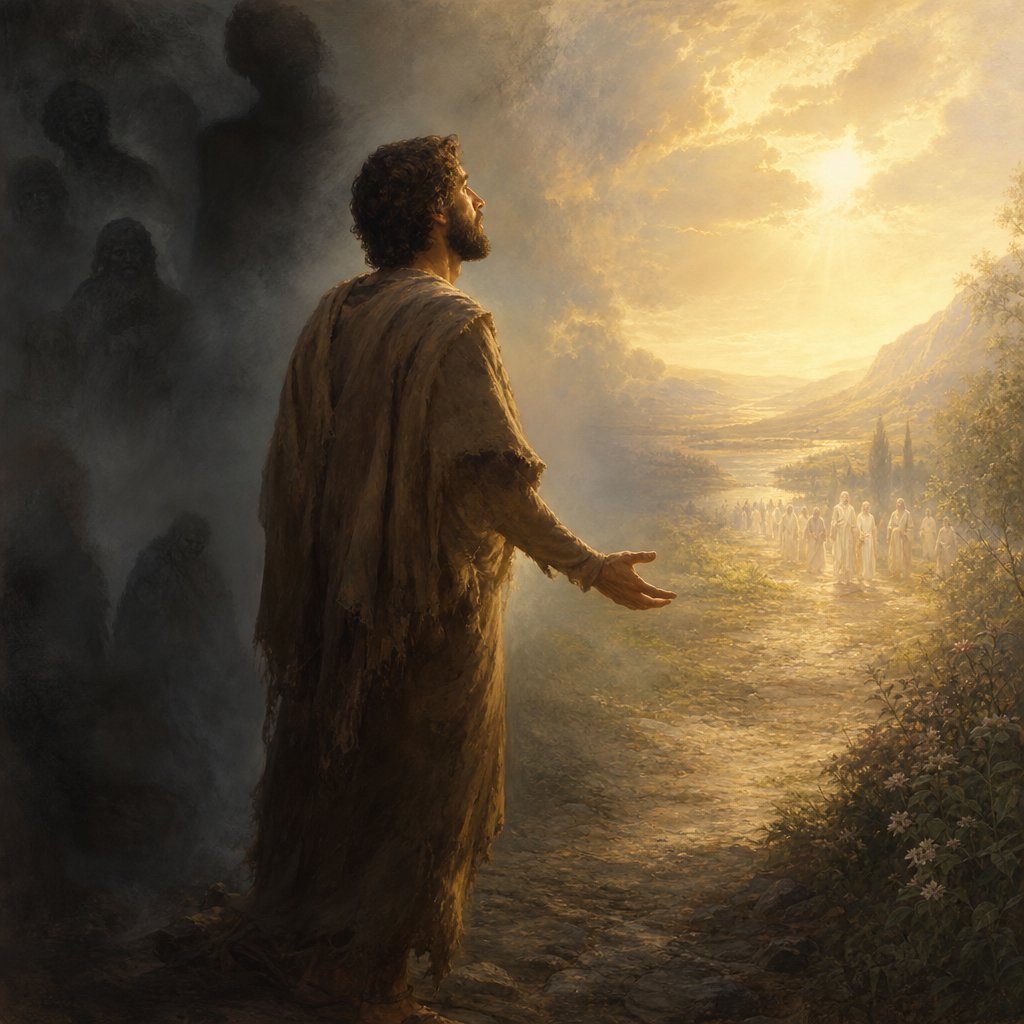
Acts 26:18 stands in the middle of Paul’s defence before king Agrippa, where he recounts the moment the risen Jesus arrested him on the road to Damascus and commissioned him as an apostle. In the KJV, Jesus tells Paul he is sending him to the Gentiles, “to open their eyes, and to turn them from darkness to light, and from the power of Satan unto God, that they may receive forgiveness of sins, and inheritance among them which are sanctified by faith that is in me.” The verse is a compact summary of what the gospel does, what Paul’s preaching is meant to accomplish, and what kind of deliverance and new identity God gives to those who believe.
The immediate context is crucial. Paul is not giving abstract theology; he is explaining why his whole life changed and why he now preaches what he preaches. He had been, by his own earlier testimony, a persecutor of “the way.” In Acts 26 he describes how the Lord met him with light “above the brightness of the sun,” struck him down, and spoke to him. That background makes verse 18 read like the purpose statement of Paul’s calling. It also explains why Paul insists that his message is not treason against Rome or blasphemy against Moses, but the fulfilment of God’s saving intent, extending to the Gentiles. The commission is both personal—Paul is given his life’s work—and universal—what Christ describes is the standard pattern of conversion and salvation.
“To open their eyes” uses the plain symbolism of sight for spiritual perception. In Acts 26 Paul had been physically dazzled and temporarily blinded by the heavenly light; the irony is that the man who thought he saw clearly was, in God’s assessment, blind. When Christ sends Paul “to open their eyes,” the phrase gathers up the biblical theme that sinners do not merely lack information; they lack illumination. They may have natural sight, learning, and religious zeal, yet be unable to perceive the truth of Christ. The opening of eyes is therefore not merely intellectual persuasion but awakening, the granting of discernment so that people can recognize their true condition and the reality of God’s remedy. It implies that apart from God’s intervention, people remain unseeing even when truth stands before them.
“And to turn them from darkness to light” develops the same image by moving from perception to realm and direction. Darkness in Scripture often signifies ignorance of God, moral confusion, and the misery of alienation; light signifies God’s truth, purity, and life. The language of “turn” carries the idea of conversion: a decisive change of course. Paul is not commissioned to decorate a life still governed by darkness, but to call people out of one dominion into another. It is significant that this turning is described as the aim of Christ’s sending: the gospel is not merely a set of doctrines to be assented to, but God’s call for a transfer of allegiance and a new manner of living, rooted in new sight and new light.
“And from the power of Satan unto God” reveals what, underneath the darkness, holds fallen humanity captive. The KJV does not soften the claim: there is a real “power of Satan.” This is not presented as a metaphor for bad habits alone, but as a spiritual tyranny that exerts influence over minds and lives. To be “turned…unto God” is therefore liberation and return. The verse frames salvation as deliverance from a hostile authority into the rightful rule of God, which is why the earlier phrases about eyes and light are not merely psychological. The gospel, in Paul’s commission, is warfare in proclamation: the preached Christ breaks Satan’s hold by bringing people into God’s kingdom.
The next purpose clause states the benefits of this transfer: “that they may receive forgiveness of sins.” Forgiveness in Acts is central to apostolic preaching; it is the removal of guilt and the cancelling of the debt of sin before God. By placing forgiveness after the turning from Satan to God, the verse ties pardon to conversion and faith rather than to ethnicity, ceremonial law, or human merit. It also implies that the darkness and Satan’s power are not only oppressive but condemning, because sin is real and accountable. The gospel does not merely comfort; it remits sin. In Paul’s courtroom setting, this is poignant: he stands accused, yet he proclaims a message in which the true crisis is not Roman judgment but divine judgment, and the true relief is forgiveness from God.
Finally, the verse reaches beyond pardon to destiny: “and inheritance among them which are sanctified by faith that is in me.” The word “inheritance” evokes the Old Testament promise of a portion given by God to His people. In Israel’s history, inheritance included land and covenant belonging; here, it is widened to include Gentiles and deepened into a spiritual and eternal share “among them” that are God’s own. This is not isolation but incorporation: those who believe receive a place in the community of the sanctified. “Sanctified” signals being set apart to God, marked as His possession, and progressively shaped for holiness. The KJV phrase “by faith that is in me” anchors everything in Christ Himself. Forgiveness and inheritance are not earned by works of the law or achieved by moral reform alone; they are received through faith, and the faith is “in me,” meaning Christ is the object and ground of that faith.
The themes therefore interlock. Acts 26:18 presents salvation as illumination, conversion, deliverance, pardon, and belonging, all under the authority of the risen Jesus who sends His messenger. It also portrays Paul’s ministry as fundamentally missionary, because the commission explicitly reaches to the Gentiles, showing that the saving promises of God extend beyond Israel without abandoning Israel’s Scriptures. The symbolism of eyes, darkness, and light stresses that the gospel addresses the deepest human condition; the reference to Satan and God frames life as lived under spiritual powers; the promises of forgiveness and inheritance declare that God not only rescues from bondage and guilt but also grants a new status and future within a sanctified people. In one sentence, the verse sums up the significance of Paul’s calling and the nature of the Christian message he was willing to suffer for: Christ opens blind eyes, turns people from darkness, breaks Satan’s power, forgives sins, and grants an inheritance, all “by faith that is in me.”
Have questions about Acts 26:18?
Dive deeper into this scripture with Bible Chat — an AI-powered tool for exploring God's Word through conversation. Ask questions, get context, and grow in your understanding of the Bible.
Get Our Apps


Acts 26:18 Artwork

"To open their eyes, and to turn them from darkness to light, and from the power of Satan unto God, that they may receive forgiveness of sins, and inheritance among them which are sanctified by faith that is in me." - Acts 26:18

Acts 26:18 - "To open their eyes, and to turn them from darkness to light, and from the power of Satan unto God, that they may receive forgiveness of sins, and inheritance among them which are sanctified by faith that is in me."
"To open their eyes, and to turn them from darkness to light, and from the power of Satan unto God, that they may receive forgiveness of sins, and inheritance among them which are sanctified by faith that is in me." - Acts 26:18

Acts 18:26 - "And he began to speak boldly in the synagogue: whom when Aquila and Priscilla had heard, they took him unto them, and expounded unto him the way of God more perfectly."

Genesis 18-26

Genesis 26:18

Acts 18:12

Acts 18:12

Acts 27:26 - "Howbeit we must be cast upon a certain island."

Joshua 18:26 - "And Mizpeh, and Chephirah, and Mozah,"

Acts 26:26 - "For the king knoweth of these things, before whom also I speak freely: for I am persuaded that none of these things are hidden from him; for this thing was not done in a corner."

Acts 26:19 - "Whereupon, O king Agrippa, I was not disobedient unto the heavenly vision:"

Acts 26:27 - "King Agrippa, believest thou the prophets? I know that thou believest."
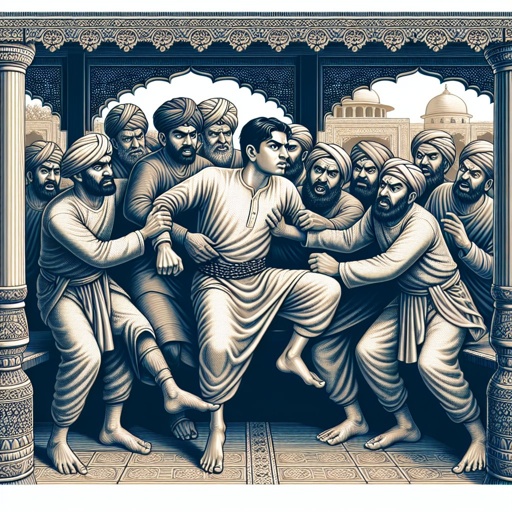
Acts 26:21 - "For these causes the Jews caught me in the temple, and went about to kill me."

Acts 15:26 - "Men that have hazarded their lives for the name of our Lord Jesus Christ."

Acts 23:26 - "Claudius Lysias unto the most excellent governor Felix sendeth greeting."

Acts 26:28 - "Then Agrippa said unto Paul, Almost thou persuadest me to be a Christian."

Acts 26:12 - "Whereupon as I went to Damascus with authority and commission from the chief priests,"

Luke 18:26 - "And they that heard it said, Who then can be saved?"

Acts 26:8 - "Why should it be thought a thing incredible with you, that God should raise the dead?"

Acts 18:16 - "And he drave them from the judgment seat."

Acts 19:18 - "And many that believed came, and confessed, and shewed their deeds."

Acts 1:26 - "And they gave forth their lots; and the lot fell upon Matthias; and he was numbered with the eleven apostles."

Acts 7:18 - "Till another king arose, which knew not Joseph."
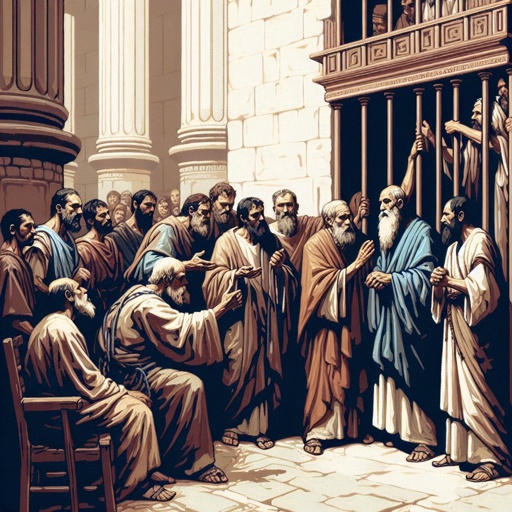
Acts 5:18 - "And laid their hands on the apostles, and put them in the common prison."

Proverbs 26:18 - "As a mad man who casteth firebrands, arrows, and death,"

Acts 26:6 - "And now I stand and am judged for the hope of the promise made of God unto our fathers:"

Acts 26:30 - "And when he had thus spoken, the king rose up, and the governor, and Bernice, and they that sat with them:"

Acts 10:26 - "But Peter took him up, saying, Stand up; I myself also am a man."

2 Chronicles 35:26 - "Now the rest of the acts of Josiah, and his goodness, according to that which was written in the law of the LORD,"