What does Acts 27:23 mean?
“For there stood by me this night the angel of God, whose I am, and whom I serve,” — Acts 27:23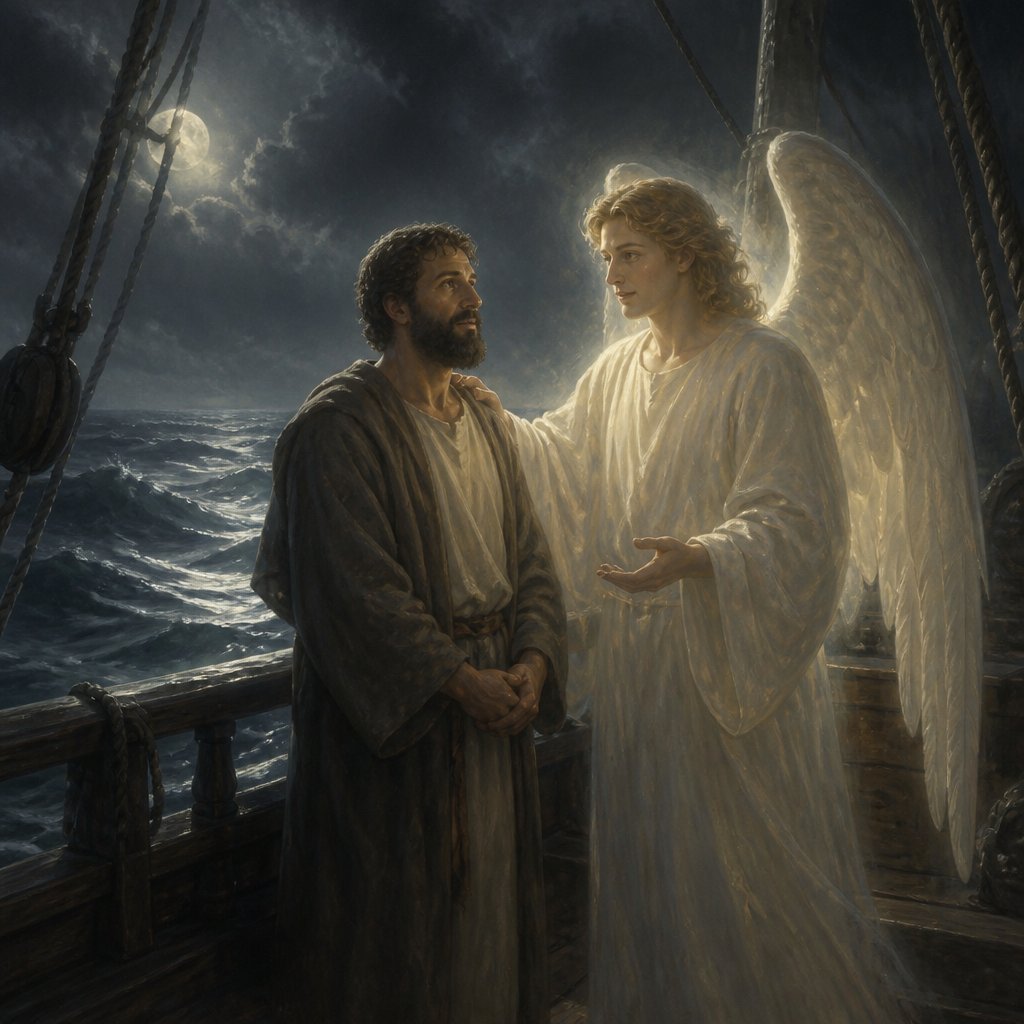
The verse Acts 27:23 from the King James Version of the Bible states: "For there stood by me this night the angel of God, whose I am, and whom I serve."
This verse comes from the New Testament book of Acts, which chronicles the early days of the Christian church and the spread of the gospel message. This particular verse is part of a larger passage in which the apostle Paul is giving an account of a perilous sea journey he undertook as a prisoner. Paul had been taken captive and was being transported to Rome to stand trial before Caesar. In the midst of this harrowing voyage, a violent storm arose, threatening the lives of all on board.
The theme of this verse revolves around the idea of divine intervention and protection. Paul, as a devout servant of God, finds himself in a seemingly hopeless situation, yet he experiences a powerful encounter with the angel of God. This encounter serves as a reminder of God's presence and sovereignty, even in the midst of life-threatening circumstances.
One of the key themes in this verse is the concept of the believer's identity and purpose in God. Paul affirms that he belongs to God and is dedicated to serving Him. This declaration of faith underscores the deep personal relationship that Paul has with God and his unwavering commitment to fulfilling his divine calling, even in the face of overwhelming adversity.
The context of this verse is important for understanding its significance within the larger narrative of Acts 27. The story of Paul's sea journey highlights the challenges and dangers that early Christians faced as they sought to spread the message of Jesus Christ. The storm serves as a metaphor for the turbulent trials and tribulations that believers may encounter in their spiritual journey. Despite the perilous circumstances, Paul's encounter with the angel of God conveys a message of hope and reassurance, emphasizing the presence of divine protection and guidance.
Symbolism plays a significant role in this verse, particularly in the representation of the angel of God. In biblical tradition, angels are messengers of God who serve as instruments of His divine will. The appearance of the angel to Paul signifies the direct intervention of God in the affairs of humanity. It serves as a powerful symbol of God's watchful care and concern for His faithful servants, offering them strength and encouragement in times of distress.
Furthermore, the imagery of the storm at sea and the subsequent appearance of the angel can be seen as a symbolic representation of the spiritual journey of believers. Just as Paul faced tumultuous challenges on the sea, believers may encounter trials and adversities in their lives. The angel's presence symbolizes the hope and reassurance that God provides to His people, guiding them through the storms of life and ultimately delivering them to safety.
In conclusion, Acts 27:23 is a verse that speaks to the enduring themes of faith, divine intervention, and the unwavering commitment of the believer to God. It serves as a powerful reminder of the presence and protection of God, even in the midst of life's most daunting challenges. The verse offers a message of hope and encouragement, emphasizing the deep spiritual bond between the believer and the divine, and the assurance of God's unfailing care and guidance.
Get our apps


Artwork for Acts 27:23

Acts 27:23 - "For there stood by me this night the angel of God, whose I am, and whom I serve,"
"For there stood by me this night the angel of God, whose I am, and whom I serve," - Acts 27:23

Acts 23:27 - "This man was taken of the Jews, and should have been killed of them: then came I with an army, and rescued him, having understood that he was a Roman."

Acts 17:27

"This man was taken of the Jews, and should have been killed of them: then came I with an army, and rescued him, having understood that he was a Roman." - Acts 23:27

Exodus 23:27-28

Acts 1:21-23

Acts 27:26 - "Howbeit we must be cast upon a certain island."

Acts 27:27 - "But when the fourteenth night was come, as we were driven up and down in Adria, about midnight the shipmen deemed that they drew near to some country;"

Acts 11:27 - "¶ And in these days came prophets from Jerusalem unto Antioch."

Acts 23:25 - "And he wrote a letter after this manner:"

2 Samuel 23:27 - "Abiezer the Anethothite, Mebunnai the Hushathite,"

Acts 27:14 - "But not long after there arose against it a tempestuous wind, called Euroclydon."

Acts 27:36 - "Then were they all of good cheer, and they also took some meat."

Acts 27:32 - "Then the soldiers cut off the ropes of the boat, and let her fall off."

Acts 27:18 - "And we being exceedingly tossed with a tempest, the next day they lightened the ship;"

Acts 27:37 - "And we were in all in the ship two hundred threescore and sixteen souls."

Acts 20:27 - "For I have not shunned to declare unto you all the counsel of God."

Acts 26:27 - "King Agrippa, believest thou the prophets? I know that thou believest."

Acts 27:19 - "And the third day we cast out with our own hands the tackling of the ship."

Acts 27:38 - "And when they had eaten enough, they lightened the ship, and cast out the wheat into the sea."
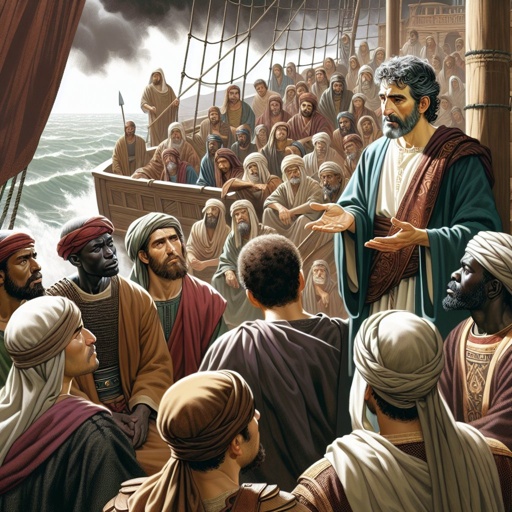
Acts 27:31 - "Paul said to the centurion and to the soldiers, Except these abide in the ship, ye cannot be saved."

Acts 10:27 - "And as he talked with him, he went in, and found many that were come together."

Proverbs 23:27 - "For a whore is a deep ditch; and a strange woman is a narrow pit."

Acts 27:6 - "And there the centurion found a ship of Alexandria sailing into Italy; and he put us therein."

Acts 19:23 - "And the same time there arose no small stir about that way."

Acts 23:4 - "And they that stood by said, Revilest thou God's high priest?"

Acts 23:32 - "On the morrow they left the horsemen to go with him, and returned to the castle:"

Acts 27:42 - "And the soldiers' counsel was to kill the prisoners, lest any of them should swim out, and escape."

Acts 25:27 - "For it seemeth to me unreasonable to send a prisoner, and not withal to signify the crimes laid against him."