What does Acts 28:11 mean?
"And after three months we departed in a ship of Alexandria, which had wintered in the isle, whose sign was Castor and Pollux." - Acts 28:11
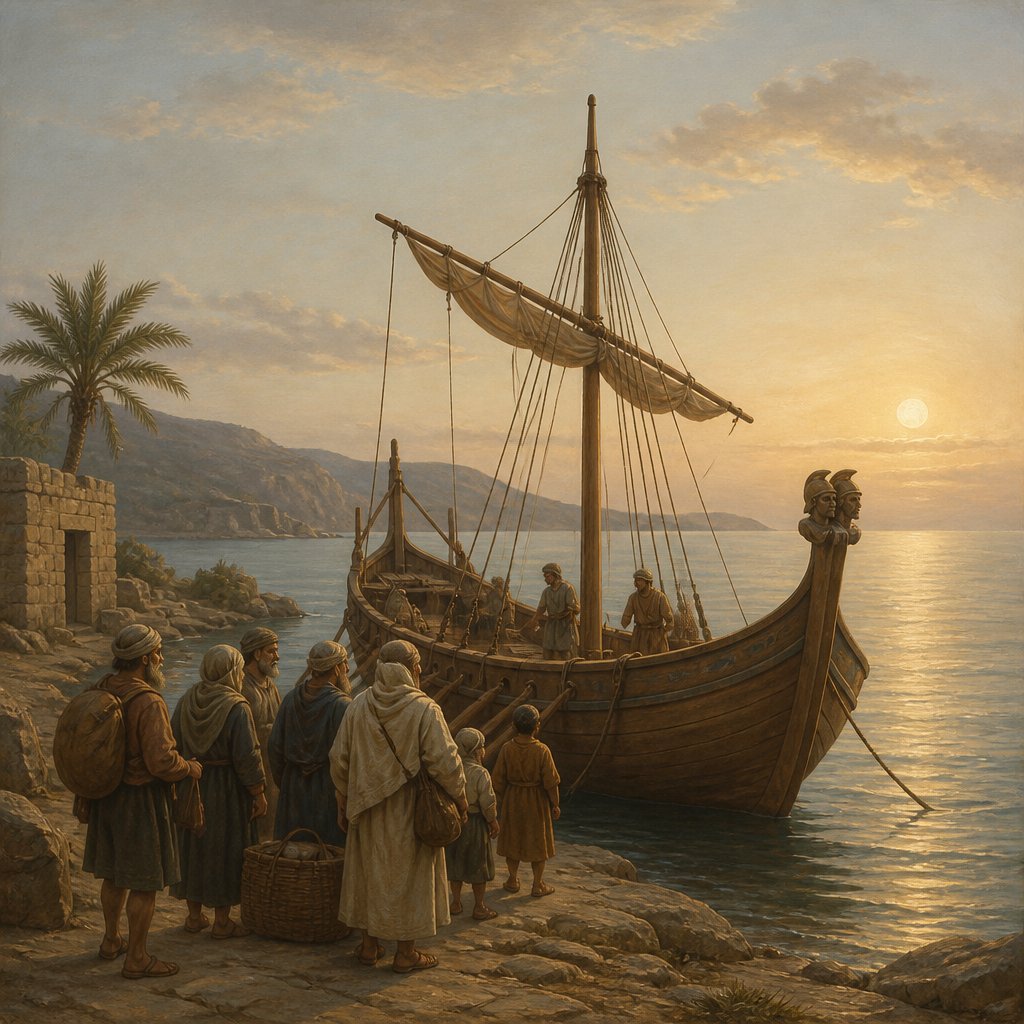
The Bible verse Acts 28:11 from the King James Version (KJV) states, "And after three months we departed in a ship of Alexandria, which had wintered in the isle, whose sign was Castor and Pollux." This verse is part of the book of Acts, which was written by Luke, the companion of the Apostle Paul. The book of Acts documents the spread of Christianity after the resurrection of Jesus and the works of the apostles in the early church.
In this particular verse, Paul and his fellow travelers are embarking on a journey by sea, after spending three months in Malta. They depart in a ship of Alexandria, a city in Egypt known for its bustling port and maritime trade. The ship had wintered in the isle, suggesting that it had been docked in Malta for the winter season. The mention of the ship's sign being Castor and Pollux refers to the twin gods of Greek and Roman mythology, who were the patrons of sailors and voyagers.
From a historical context, this verse gives insight into the methods of travel and commerce in the ancient world. Ships played a crucial role in the transportation of goods and people across the Mediterranean, and Alexandria was a major hub for maritime trade. The fact that Paul and his companions were able to find transport on a ship indicates the interconnectedness of the ancient world and the means by which the early Christians spread their message.
Symbolically, the mention of the ship's sign being Castor and Pollux carries deeper meaning. In Greco-Roman mythology, Castor and Pollux were revered as protectors of sailors, guiding them through treacherous waters and ensuring safe passage. The presence of this symbol on the ship can be seen as a form of divine protection for Paul and his companions as they venture onto the sea. It is a subtle reminder that even in the midst of their earthly travels, God's grace and providence are with them.
Additionally, the mention of the twin gods can also be seen as a contrast to the monotheistic faith of Christianity. While the ancient world was polytheistic, with various deities representing different aspects of life, the Christian faith centered around the belief in one God. The juxtaposition of these beliefs highlights the cultural and religious diversity that the early Christians encountered as they spread the gospel.
Thematically, this verse reinforces the idea of divine guidance and protection in the midst of worldly travels and challenges. Throughout the book of Acts, we see the hand of God at work, guiding the apostles and early believers as they face persecution, imprisonment, and various obstacles. The mention of the ship's sign serves as a reminder that even in the practical matters of travel and navigation, God is present and providing for His people.
In conclusion, Acts 28:11 from the King James Version of the Bible offers a rich tapestry of themes, context, and symbolism. It provides a glimpse into the historical and cultural backdrop of the early Christian church, while also conveying spiritual truths about God's guidance and protection. Whether viewed from a historical, symbolic, or thematic perspective, this verse continues to resonate with readers today, offering encouragement and reassurance in the midst of life's journeys.
Have questions about Acts 28:11?
Dive deeper into this scripture with Bible Chat — an AI-powered tool for exploring God's Word through conversation. Ask questions, get context, and grow in your understanding of the Bible.
Get Our Apps


Acts 28:11 Artwork

Acts 28:11 - "And after three months we departed in a ship of Alexandria, which had wintered in the isle, whose sign was Castor and Pollux."
"And after three months we departed in a ship of Alexandria, which had wintered in the isle, whose sign was Castor and Pollux." - Acts 28:11

Acts 11:28 - "And there stood up one of them named Agabus, and signified by the Spirit that there should be great dearth throughout all the world: which came to pass in the days of Claudius Caesar."

Acts 28:12

Acts 28:28 - "Be it known therefore unto you, that the salvation of God is sent unto the Gentiles, and that they will hear it."

Acts 14:28 - "And there they abode long time with the disciples."
Acts 28:12 - "And landing at Syracuse, we tarried there three days."

Acts 9:28 - "And he was with them coming in and going out at Jerusalem."

Acts 28:1 - "And when they were escaped, then they knew that the island was called Melita."

Acts 28:5 - "And he shook off the beast into the fire, and felt no harm."

Acts 8:28 - "Was returning, and sitting in his chariot read Esaias the prophet."

Ezekiel 28:11-19

Ezekiel 28:11-19

Ezekiel 28:11-19

Ezekiel 28:11-19

Ezekiel 28:11-19

Ezekiel 28:11-19

Acts 28:24 - "And some believed the things which were spoken, and some believed not."

Acts 7:28 - "Wilt thou kill me, as thou diddest the Egyptian yesterday?"

Genesis 28-11

Matthew 28:11

Acts 18:28 - "For he mightily convinced the Jews, and that publickly, shewing by the scriptures that Jesus was Christ."

Acts 26:28 - "Then Agrippa said unto Paul, Almost thou persuadest me to be a Christian."

Acts 4:28 - "For to do whatsoever thy hand and thy counsel determined before to be done."

Ephesians 2:8-9

"And there they abode long time with the disciples." - Acts 14:28

ephesians 2 8-9

Acts 20:11

Acts 11:2

Acts 11:2