What does Acts 28:27 mean?
“For the heart of this people is waxed gross, and their ears are dull of hearing, and their eyes have they closed; lest they should see with their eyes, and hear with their ears, and understand with their heart, and should be converted, and I should heal them.” — Acts 28:27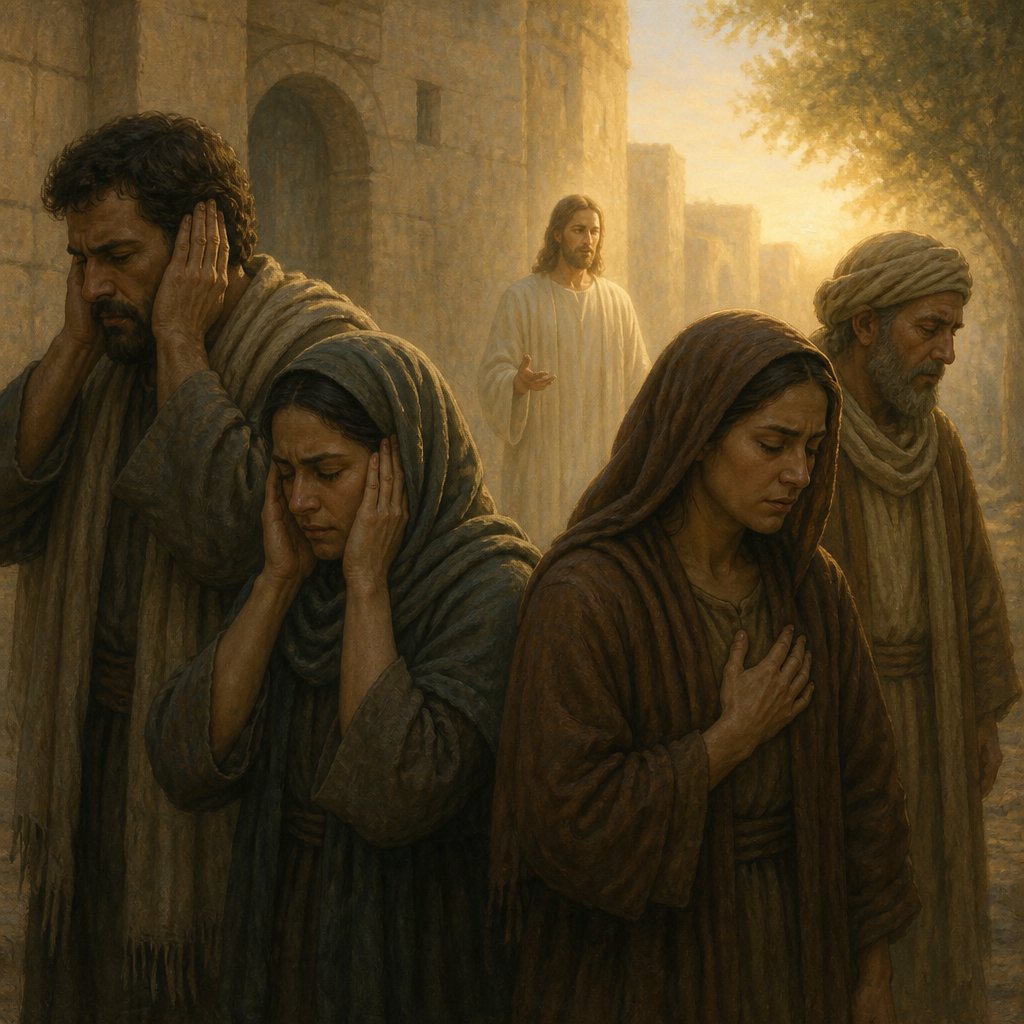
The Bible verse Acts 28:27 from the King James Version (KJV) states, "For the heart of this people is waxed gross, and their ears are dull of hearing, and their eyes have they closed; lest they should see with their eyes, and hear with their ears, and understand with their heart, and should be converted, and I should heal them." This verse is part of the narrative in the book of Acts, which is the fifth book of the New Testament. It is a continuation of the Gospel of Luke and serves as a historical account of the early Christian church and the spread of the gospel.
In the context of Acts 28, the apostle Paul is in Rome, under house arrest, and is preaching the message of Jesus Christ to the Jews. The verse comes at the end of a discussion between Paul and the Jewish leaders, where Paul is explaining to them the reason for his mission and the rejection of the gospel by many of the Jewish people. The verse is actually a quotation from the book of Isaiah, specifically from Isaiah 6:9-10, where the prophet Isaiah is given a message from God to deliver to the rebellious people of Judah.
The verse in Acts 28:27 carries several themes and layers of meaning that are essential for understanding the message being conveyed. The first theme that is evident in this verse is the idea of spiritual blindness and deafness. The people of Israel, to whom Paul is speaking, have closed their hearts, ears, and eyes to the truth of the gospel. Their spiritual senses have become dull and insensitive to the message of salvation that Paul is proclaiming. This echoes the message of Isaiah, where the prophet is told that the people's hearts have grown callous, and they have shut their eyes and ears to the truth.
Another theme present in this verse is the concept of divine hardening. The people's spiritual blindness and deafness are not solely their own doing but are also a result of God's judgment and hardening of their hearts. This is a recurring theme in the Bible, where God is portrayed as actively hardening the hearts of those who persist in their rebellion and unbelief. This hardening serves as a form of divine judgment and punishment for their rejection of God and His message.
The verse also speaks to the concept of repentance and conversion. It suggests that if the people were to open their eyes, ears, and hearts to the message of the gospel, they would be able to understand it and be converted. Their spiritual healing and restoration are contingent upon their willingness to receive the message and respond to it in faith and repentance. This theme of repentance and conversion is central to the Christian message, as it emphasizes the need for individuals to turn away from their sin and embrace the salvation offered through Jesus Christ.
Furthermore, the verse carries a message of hope and invitation. Despite the people's spiritual blindness and deafness, there is still the possibility of healing and conversion if they were to open themselves up to the truth. The verse implies that God is still willing to heal and save them if they were willing to respond in faith and obedience. This underlines the gracious and merciful nature of God, who is always willing to forgive and restore those who turn to Him in repentance.
Symbolically, the verse can be interpreted as a broader commentary on the human condition and the nature of spiritual blindness and deafness. It highlights the tendency of humanity to close themselves off from the truth and the consequences of doing so. It serves as a warning against the hardening of one's heart and the danger of rejecting the message of salvation. It also points to the transformative power of the gospel and the possibility of spiritual healing and restoration for those who are willing to receive it.
In conclusion, Acts 28:27 from the King James Version of the Bible is a powerful and poignant verse that carries profound theological and spiritual significance. It addresses themes of spiritual blindness, divine hardening, repentance, and the merciful nature of God. It serves as a reminder of the human propensity to reject God's truth and the transformative power of the gospel for those who are willing to receive it. It is a verse that challenges individuals to examine the state of their own hearts, ears, and eyes and to open themselves up to the healing and transforming message of Jesus Christ.
Get our apps


Artwork for Acts 28:27

Acts 28:27 - "For the heart of this people is waxed gross, and their ears are dull of hearing, and their eyes have they closed; lest they should see with their eyes, and hear with their ears, and understand with their heart, and should be converted, and I should heal them."
"For the heart of this people is waxed gross, and their ears are dull of hearing, and their eyes have they closed; lest they should see with their eyes, and hear with their ears, and understand with their heart, and should be converted, and I should heal them." - Acts 28:27

Acts 27:28 - "And sounded, and found it twenty fathoms: and when they had gone a little further, they sounded again, and found it fifteen fathoms."

"And sounded, and found it twenty fathoms: and when they had gone a little further, they sounded again, and found it fifteen fathoms." - Acts 27:28

Acts 28:12

Acts 17:27

Acts 28:28 - "Be it known therefore unto you, that the salvation of God is sent unto the Gentiles, and that they will hear it."

Proverbs 17:27-28

Proverbs 17:27-28

Exodus 23:27-28

Proverbs 17:27-28

Luke 13:28-27

Luke 13:28-27

Luke 13:28-27

Acts 14:28 - "And there they abode long time with the disciples."

Matthew 27:28 - "And they stripped him, and put on him a scarlet robe."

Acts 28:12 - "And landing at Syracuse, we tarried there three days."

Acts 9:28 - "And he was with them coming in and going out at Jerusalem."

Ezekiel 27:28 - "The suburbs shall shake at the sound of the cry of thy pilots."

Acts 28:1 - "And when they were escaped, then they knew that the island was called Melita."

Acts 28:5 - "And he shook off the beast into the fire, and felt no harm."

Acts 8:28 - "Was returning, and sitting in his chariot read Esaias the prophet."

Acts 27:26 - "Howbeit we must be cast upon a certain island."

Acts 27:27 - "But when the fourteenth night was come, as we were driven up and down in Adria, about midnight the shipmen deemed that they drew near to some country;"

Acts 26:27-30 (KJVA) 27 King Agrippa, believest thou the prophets? I know that thou believest. 28 Then Agrippa said unto Paul, Almost thou persuadest me to be a Christian. 29 And Paul said, I would to God, that not only thou, but also all that hear me this day, were both almost, and altogether such as I am, except these bonds. 30 And when he had thus spoken, the king rose up, and the governor, and Bernice, and they that sat with them:

Acts 11:27 - "¶ And in these days came prophets from Jerusalem unto Antioch."

Acts 28:24 - "And some believed the things which were spoken, and some believed not."

Acts 7:28 - "Wilt thou kill me, as thou diddest the Egyptian yesterday?"

Job 28:27 - "Then did he see it, and declare it; he prepared it, yea, and searched it out."

Acts 27:36 - "Then were they all of good cheer, and they also took some meat."