What does Acts 28:8 mean?
“And it came to pass, that the father of Publius lay sick of a fever and of a bloody flux: to whom Paul entered in, and prayed, and laid his hands on him, and healed him.” — Acts 28:8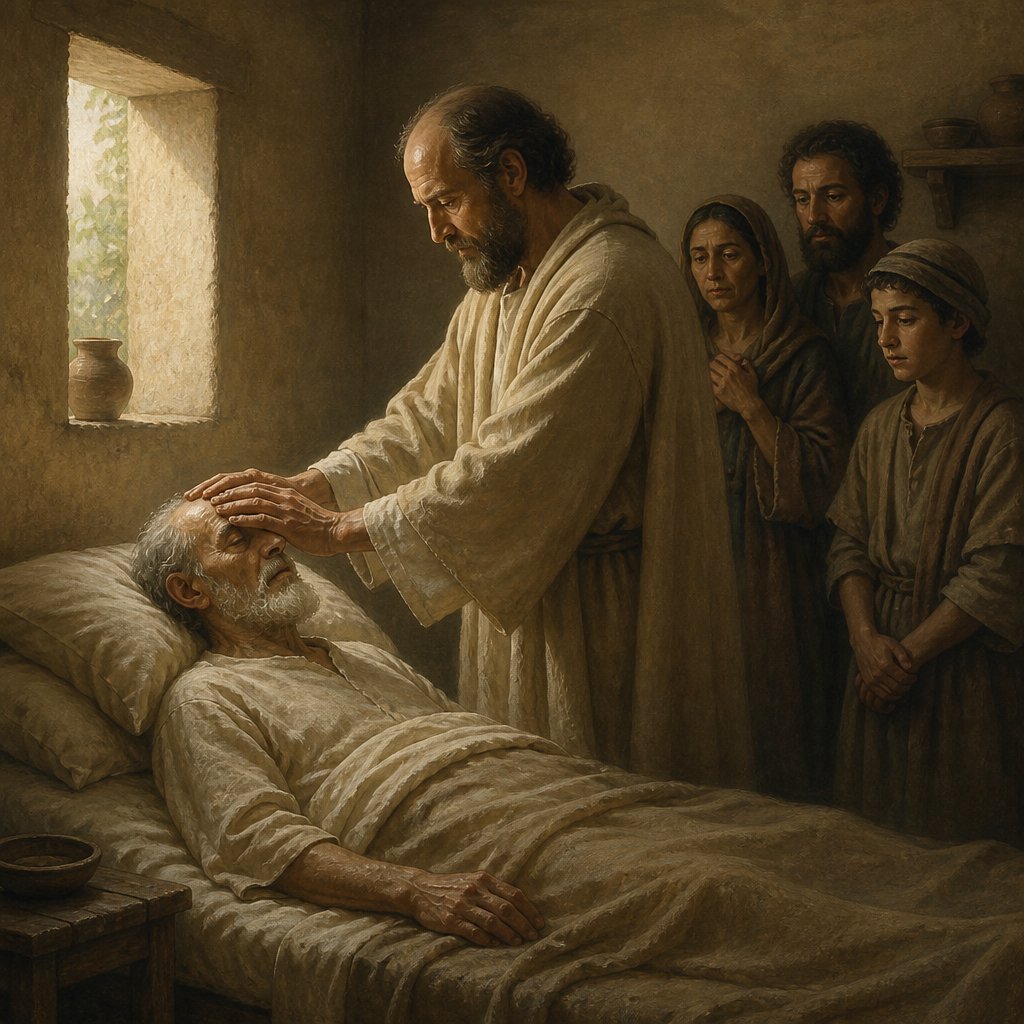
In Acts 28:8 of the King James Version of the Bible, it is written, "And it came to pass, that the father of Publius lay sick of a fever and of a bloody flux: to whom Paul entered in, and prayed, and laid his hands on him, and healed him." This verse is part of the narrative in the book of Acts which details the ministry of the apostle Paul during his time in Malta. This particular passage showcases the power of faith and the healing abilities of Paul, who was chosen by God as a vessel for performing miracles.
The context of this verse is important in understanding its significance. In the previous verses, Paul and the other passengers on the ship are shipwrecked on the island of Malta. After they make it to shore, the local people show them kindness and build a fire to warm them. While Paul is gathering firewood, a viper latches onto his hand, causing the people to think that he must be a murderer being punished by the gods. However, when Paul shakes off the snake without being harmed, the people change their minds and think that he is a god.
Following this incident, the father of Publius, a leading man on the island, falls ill. He is sick with a fever and a bloody flux, which was a serious condition that could easily be fatal in ancient times. In this dire situation, Paul enters his home, prays for him, and lays his hands on him, healing him instantly. This miraculous healing reinforces the belief of the people on the island that Paul is a man of God, and it opens the door for further ministry and the spreading of the gospel in Malta.
One of the key themes in this passage is the power of faith and the authority given to the apostles to perform miracles. Throughout the book of Acts, there are numerous accounts of miraculous healings and demonstrations of divine power through the apostles. These acts serve to validate the message they were preaching and to draw attention to the work of God in the world. The healing of Publius' father not only brought physical relief to the man but also served to confirm the truth of the gospel to the people of Malta.
Another important theme in this passage is the idea of divine purpose and providence. The fact that Paul and his companions were shipwrecked on the island of Malta was not merely a stroke of bad luck, but rather it was part of God's plan to bring the gospel to that place. The events that transpire, including Paul's healing of Publius' father, are all orchestrated by God to fulfill His purposes. This aligns with the overall message of the book of Acts, which portrays the unstoppable spread of the gospel and the fulfillment of God's plan for salvation.
The symbolism in this passage is also significant. The healing of Publius' father serves as a symbol of the transformative power of the gospel. Just as Paul brought physical healing to a man who was suffering, the message of Jesus Christ brings spiritual healing and transformation to those who receive it. The miraculous nature of the healing also serves to point to the authority and power of God, who works through His chosen vessels to accomplish His will.
In conclusion, Acts 28:8 from the King James Version of the Bible offers a powerful example of the miracles performed through the apostle Paul and the impact they had on the spread of the gospel. It highlights the themes of faith, divine providence, and the transformative power of the gospel, and it serves as a symbol of the authority and power of God at work in the world. This passage continues to inspire and encourage believers today, reminding them of the miraculous nature of God's work and His ability to bring healing and transformation to those in need.
Get our apps


Artwork for Acts 28:8

Acts 28:8 - "And it came to pass, that the father of Publius lay sick of a fever and of a bloody flux: to whom Paul entered in, and prayed, and laid his hands on him, and healed him."
"And it came to pass, that the father of Publius lay sick of a fever and of a bloody flux: to whom Paul entered in, and prayed, and laid his hands on him, and healed him." - Acts 28:8

Acts 8:28 - "Was returning, and sitting in his chariot read Esaias the prophet."

"Was returning, and sitting in his chariot read Esaias the prophet." - Acts 8:28

Acts 28:12

Acts 28:28 - "Be it known therefore unto you, that the salvation of God is sent unto the Gentiles, and that they will hear it."

Acts 14:28 - "And there they abode long time with the disciples."

Acts 28:12 - "And landing at Syracuse, we tarried there three days."

Acts 9:28 - "And he was with them coming in and going out at Jerusalem."

Acts 8:8 - "And there was great joy in that city."

Acts 28:1 - "And when they were escaped, then they knew that the island was called Melita."

Acts 28:5 - "And he shook off the beast into the fire, and felt no harm."

Acts 28:24 - "And some believed the things which were spoken, and some believed not."

Acts 7:28 - "Wilt thou kill me, as thou diddest the Egyptian yesterday?"

Acts 18:28 - "For he mightily convinced the Jews, and that publickly, shewing by the scriptures that Jesus was Christ."

Acts 26:28 - "Then Agrippa said unto Paul, Almost thou persuadest me to be a Christian."

Acts 4:28 - "For to do whatsoever thy hand and thy counsel determined before to be done."

matthew 8:28

Romans 8:28

Romans 8:28

Romans 8:28

Romans 8:28

Romans 8:28

"And there they abode long time with the disciples." - Acts 14:28

"And there was great joy in that city." - Acts 8:8

Acts 1:8

"Be it known therefore unto you, that the salvation of God is sent unto the Gentiles, and that they will hear it." - Acts 28:28

Acts 8:33

Acts 16:28 - "But Paul cried with a loud voice, saying, Do thyself no harm: for we are all here."

Acts 13:28 - "And though they found no cause of death in him, yet desired they Pilate that he should be slain."