What does Acts 8:17 mean?
“Then laid they their hands on them, and they received the Holy Ghost.” — Acts 8:17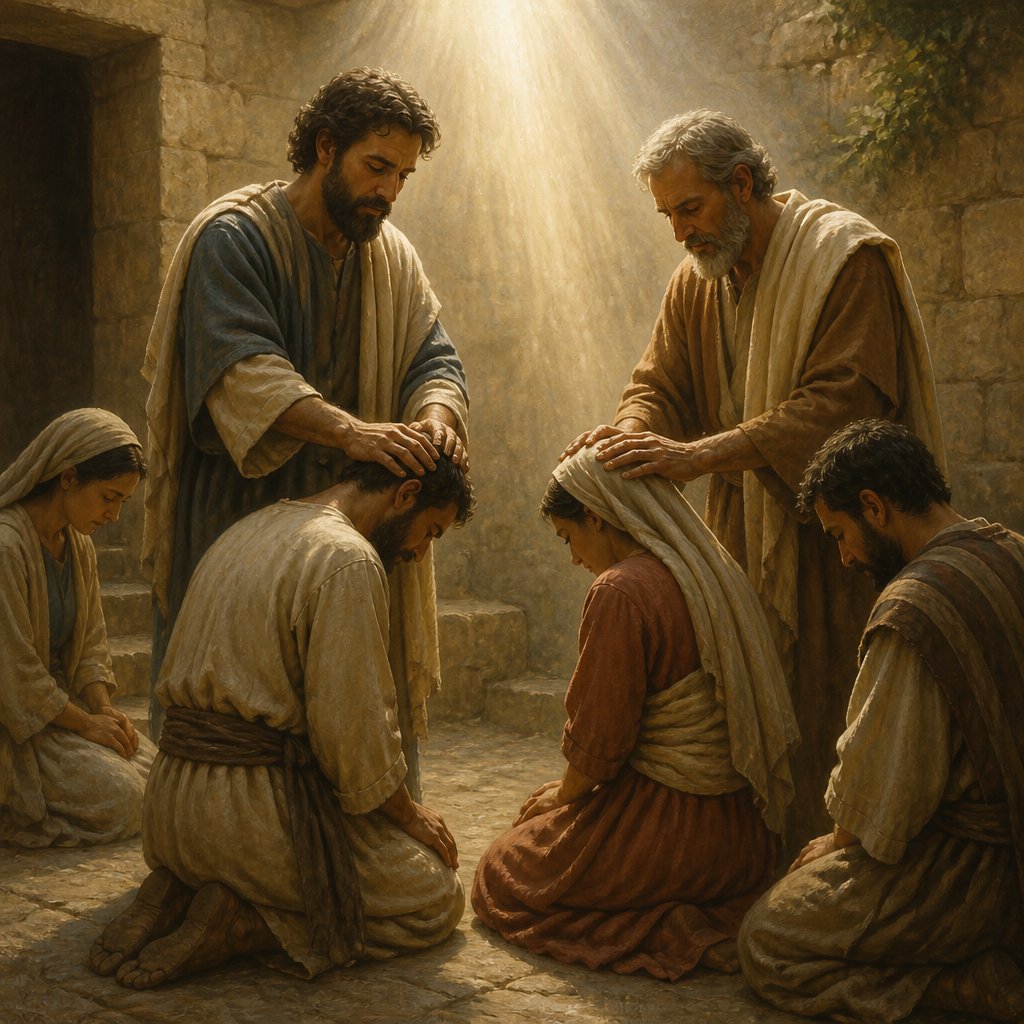
The Bible verse Acts 8:17 in the King James Version (KJV) states, "Then laid they their hands on them, and they received the Holy Ghost." This verse comes from the book of Acts, which is the fifth book of the New Testament and serves as a continuation of the Gospel of Luke. Acts was written by the Apostle Luke, who was a companion of the Apostle Paul and a physician by profession. The book of Acts describes the early days of the Christian church, including the spread of the gospel, the establishment of churches, and the ministry of the apostles.
In Acts 8:17, the laying on of hands is a powerful symbol of the impartation of the Holy Spirit. This verse describes the moment when the apostles Peter and John lay their hands on the new believers in Samaria, and they receive the Holy Spirit. This act of laying on of hands is significant because it signifies the transmission of spiritual power and authority from the apostles to the new believers.
The theme of the Holy Spirit is central to the entire book of Acts, as it is the Holy Spirit who empowers the early church to carry out the mission of spreading the gospel. In Acts 1:8, Jesus tells his disciples, "But ye shall receive power, after that the Holy Ghost is come upon you: and ye shall be witnesses unto me both in Jerusalem, and in all Judaea, and in Samaria, and unto the uttermost part of the earth." The Holy Spirit is the source of strength, guidance, and boldness for the early Christians as they face persecution and opposition.
In the context of Acts 8:17, the believers in Samaria had already been baptized in the name of the Lord Jesus, but they had not yet received the Holy Spirit. When Peter and John lay their hands on them, the Holy Spirit comes upon them, empowering them for ministry and confirming their status as members of the body of Christ. This event also highlights the unity of the early church, as the leaders from Jerusalem come to Samaria to minister to the new believers and ensure that they are fully equipped for the task ahead.
The laying on of hands in Acts 8:17 also serves as a powerful symbol of the continuity of the Christian faith. Throughout the New Testament, we see the laying on of hands used in various contexts, including for healing (Mark 6:5, Acts 28:8), commissioning for ministry (Acts 13:3), and the appointment of elders (1 Timothy 4:14). This act symbolizes the passing on of spiritual authority and blessing from one generation to the next, highlighting the interconnectedness of the Christian community and the importance of mentorship and discipleship.
From a symbolic perspective, the laying on of hands in Acts 8:17 represents the physical manifestation of a spiritual reality. When the apostles lay their hands on the new believers, they are not merely performing a ritual; they are conduits of the power and presence of the Holy Spirit. This act serves as a reminder that God's work in the world often takes on tangible, physical forms, and that the spiritual and the physical are intimately connected in the Christian life.
In conclusion, Acts 8:17 in the King James Version captures a significant moment in the early church when the apostles lay their hands on the new believers in Samaria, and they receive the Holy Spirit. This verse highlights the central role of the Holy Spirit in empowering the church and confirms the unity and continuity of the Christian faith. The laying on of hands is a powerful symbol of the transmission of spiritual authority and blessing, and it serves as a reminder of the tangible, physical manifestations of God's work in the world.
Get our apps


Artwork for Acts 8:17

Acts 8:17 - "Then laid they their hands on them, and they received the Holy Ghost."
"Then laid they their hands on them, and they received the Holy Ghost." - Acts 8:17

Acts 17:8 - "And they troubled the people and the rulers of the city, when they heard these things."
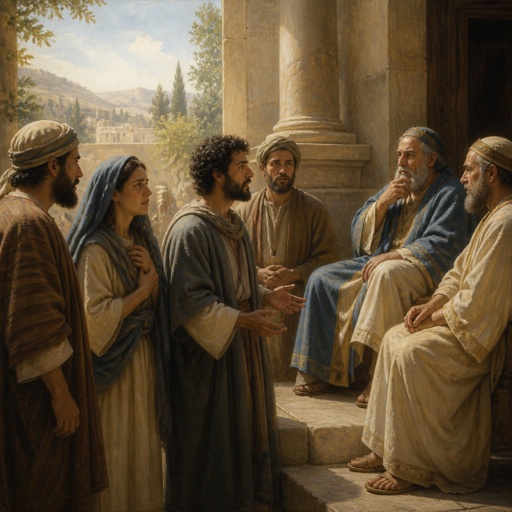
"And they troubled the people and the rulers of the city, when they heard these things." - Acts 17:8

Acts 2:17

Acts 2:17

Acts 2:17

Acts 8:8 - "And there was great joy in that city."

Acts 16:17

Acts 14:17

Acts 17:15

Acts 17:27

Acts 17:17 - "Therefore disputed he in the synagogue with the Jews, and with the devout persons, and in the market daily with them that met with him."

"And there was great joy in that city." - Acts 8:8

Acts 1:8

Acts 8:33

Acts 17:33 - "So Paul departed from among them."

Acts 1:17 - "For he was numbered with us, and had obtained part of this ministry."

Acts 4:8-12

create an image to show Acts 2:17

Depict the events of Acts 19:14-17

Acts 20:17 - "¶ And from Miletus he sent to Ephesus, and called the elders of the church."

Acts 17:9 - "And when they had taken security of Jason, and of the other, they let them go."

Acts 16:8 - "And they passing by Mysia came down to Troas."

Acts 21:17 - "And when we were come to Jerusalem, the brethren received us gladly."

ACTS 8:30 Philip and the Ethiopian

Genesis 17:8

Acts 24:17 - "Now after many years I came to bring alms to my nation, and offerings."

Luke 8:17

Acts 8:28 - "Was returning, and sitting in his chariot read Esaias the prophet."