What does Acts 9:20 mean?
“And straightway he preached Christ in the synagogues, that he is the Son of God.” — Acts 9:20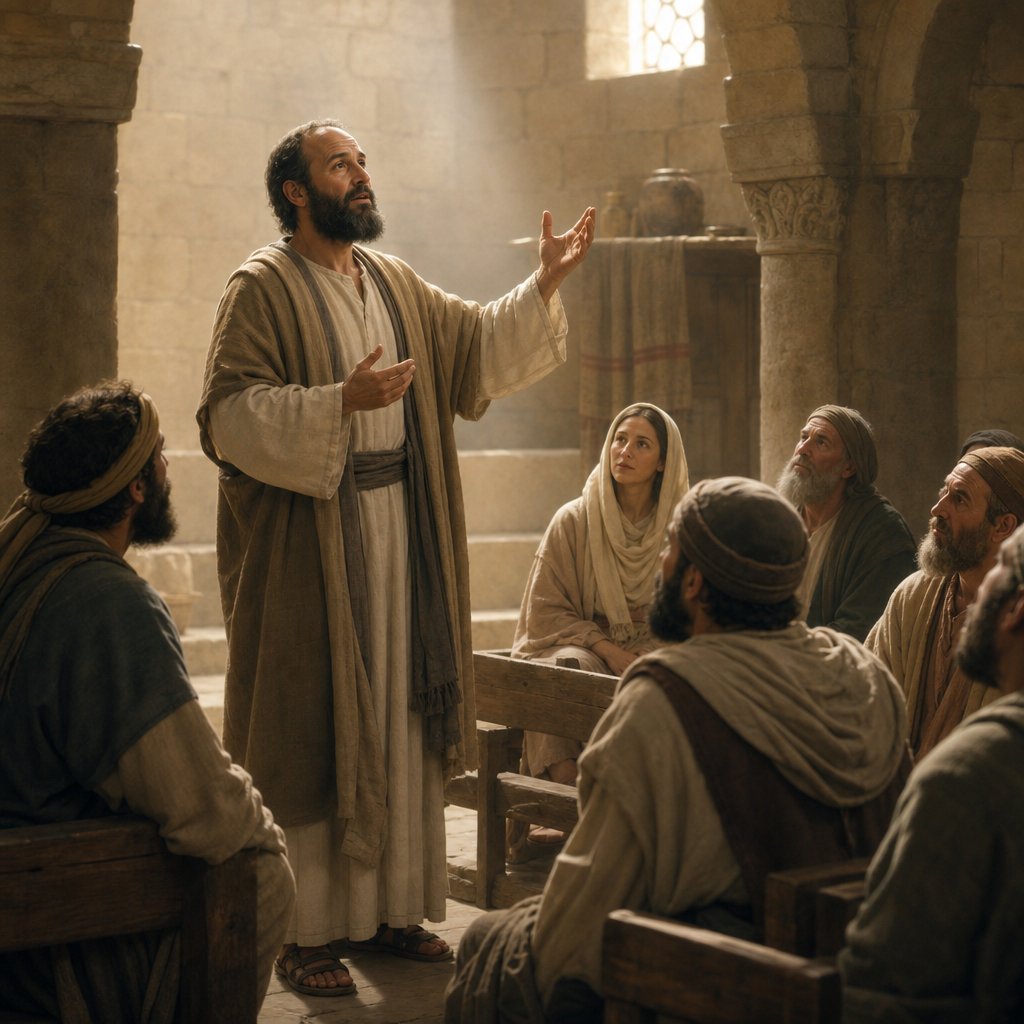
Acts 9:20 in the King James Version says, “And straightway he preached Christ in the synagogues, that he is the Son of God.” The “he” is Saul, later known as Paul, and the verse stands at the first public moment when the one who had been the Church’s fiercest hunter becomes the Church’s boldest herald. Its meaning is not simply that Saul began to speak about Jesus, but that the whole direction of his life, authority, and message was reversed at once, and that the heart of Christian proclamation was placed on his lips immediately after his conversion.
The context presses the force of the word “straightway.” Saul had gone to Damascus “yet breathing out threatenings and slaughter against the disciples of the Lord” and armed with letters giving him power to bind believers and bring them to Jerusalem. On the road he met the risen Lord in a light from heaven, heard the voice of Jesus identifying himself with the people Saul was persecuting, and was struck blind. In Damascus, through Ananias, Saul received his sight, was filled with the Holy Ghost, and was baptized. Immediately after these events, Acts 9:20 records his first decisive act: he went into the synagogues and preached. The verse therefore marks the first outward proof that Saul’s inward encounter with Christ was real. The persecutor does not merely stop persecuting; he begins proclaiming. The man who came with “authority and commission” against the name of Jesus now uses his learning, zeal, and voice in service of that same name.
The setting “in the synagogues” is significant. Synagogues were the recognized places of Scripture reading and teaching among the Jews, and Saul was at home there. He was trained in the law and would have been regarded as credible and qualified to speak. God turns Saul’s former platform into the very place where the new message is sounded. This is also the first sign of the pattern that will mark his life: going “to the Jew first,” reasoning from the Scriptures, and confronting Israel with the claim that Jesus fulfills what the law and prophets pointed toward. The synagogue is therefore symbolic of continuity and confrontation at the same time—continuity, because Saul is speaking in the arena of the Scriptures he has always revered; confrontation, because he is now interpreting those Scriptures in a way that will offend many of those listening.
The content of Saul’s preaching is summed up in two titles: “Christ” and “the Son of God.” In KJV language, “Christ” is not merely a surname for Jesus; it is a confession that Jesus is the promised Anointed One, the Messiah, the One whom Israel had been waiting for. Saul’s proclamation that Jesus is “Christ” is the claim that the hopes of God’s covenant promises have reached their fulfillment in him. Yet Acts 9:20 goes further: Saul preached “that he is the Son of God.” This is not only the claim that Jesus is the Messiah, but that his identity is divine in a unique sense. In the synagogues, where the oneness and holiness of God were central, declaring Jesus as “the Son of God” is a direct confession about who Jesus truly is, and it makes clear that Saul’s conversion is not merely a change of opinion about a teacher, but a new understanding of God’s own revelation.
The verse also carries the theme of witness born from personal encounter. Saul does not begin with a detached theory; he speaks as one who has been confronted by the living Christ. The light, the voice, the blindness, the restoration, and the filling of the Holy Ghost together form the backdrop that gives his preaching urgency and authority. “Straightway he preached” implies that delay would be disobedience; once Saul knows who Jesus is, silence becomes impossible. The immediacy also shows that Christian faith, in Acts, is not meant to remain private. The gospel moves from revelation to proclamation.
There is a deep theme of reversal and grace. Saul had tried to blot out the name of Jesus; now he magnifies it. He had been confident he was serving God by opposing “this way,” but now he serves God by confessing Jesus in the very institutions where he would have once sought to expose and arrest believers. Acts 9:20 thus becomes a living parable of how God’s grace can take the strongest enemy and make him a servant, how God can turn zeal without knowledge into zeal grounded in truth. The power at work is not Saul’s willpower, but the Lord’s conquest of Saul’s heart.
Symbolically, the movement from blindness to sight that surrounds this verse mirrors the movement from spiritual ignorance to spiritual understanding. Saul’s physical blindness on the road and his restored sight through Ananias become an enacted picture of what happens inwardly: he now “sees” who Jesus is. Acts 9:20 is the first spoken fruit of that new sight. The synagogues, places of reading and seeing the Scriptures, become the stage on which the newly enlightened Saul announces the true meaning of those Scriptures—Christ, the Son of God.
The significance of Acts 9:20 also lies in how it introduces Saul’s lifelong mission in miniature. His ministry will be marked by preaching Christ, arguing from Scripture, facing opposition, suffering for the name he once attacked, and carrying the message outward beyond Israel. Here, at the beginning, the core is already present: Christ is proclaimed; Jesus’ identity is confessed; and the gospel is brought first to the Jewish world. The verse therefore functions like a doorway into the rest of Acts and the epistles that will follow, because the man who will write so much of the New Testament begins with the simplest and highest Christian confession in the very place where it will be most contested: “that he is the Son of God.”
Get our apps


Artwork for Acts 9:20

Acts 9:20 - "And straightway he preached Christ in the synagogues, that he is the Son of God."

Acts 9:20 Immediately he preached the Christ in the synagogues, that He is the Son of God.
"And straightway he preached Christ in the synagogues, that he is the Son of God." - Acts 9:20
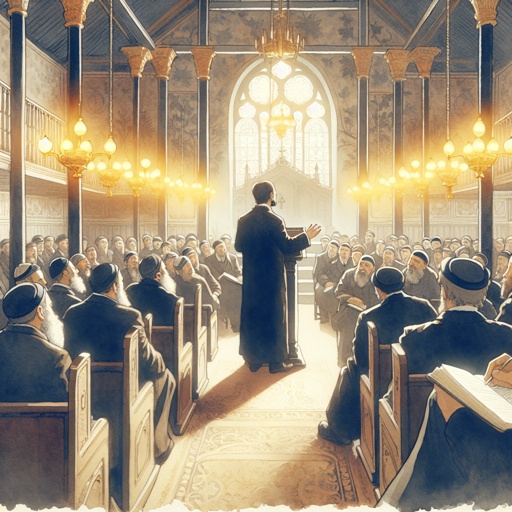
Acts9:20 Immediately he preached the Christ in the synagogues, that He is the Son of God.

Acts 9:1-20

Acts 9:1-20

Acts 20:9 - "And there sat in a window a certain young man named Eutychus, being fallen into a deep sleep: and as Paul was long preaching, he sunk down with sleep, and fell down from the third loft, and was taken up dead."

Acts 20:11

acts 20:7-12

Acts 20:5 - "These going before tarried for us at Troas."

Acts 19:20 - "So mightily grew the word of God and prevailed."

Acts 9:9 - "And he was three days without sight, and neither did eat nor drink."

Acts 20:33 - "I have coveted no man's silver, or gold, or apparel."

Acts 20:12 - "And they brought the young man alive, and were not a little comforted."

Acts 20:17 - "¶ And from Miletus he sent to Ephesus, and called the elders of the church."

Acts 20:20 - "And how I kept back nothing that was profitable unto you, but have shewed you, and have taught you publickly, and from house to house,"

Acts 5:20 - "Go, stand and speak in the temple to the people all the words of this life."

Acts 20:37 - "And they all wept sore, and fell on Paul's neck, and kissed him,"

Acts 20:8 - "And there were many lights in the upper chamber, where they were gathered together."

Acts 20:27 - "For I have not shunned to declare unto you all the counsel of God."

Acts 18:20 - "When they desired him to tarry longer time with them, he consented not;"

2 Kings 20:20 - "¶ And the rest of the acts of Hezekiah, and all his might, and how he made a pool, and a conduit, and brought water into the city, are they not written in the book of the chronicles of the kings of Judah?"

Acts 4:20 - "For we cannot but speak the things which we have seen and heard."

Acts 3:20 - "And he shall send Jesus Christ, which before was preached unto you:"

Genesis 20:9

Acts 20:14 - "And when he met with us at Assos, we took him in, and came to Mitylene."

Acts 9:28 - "And he was with them coming in and going out at Jerusalem."

Acts 20:36 - "¶ And when he had thus spoken, he kneeled down, and prayed with them all."

Acts 20:23 - "Save that the Holy Ghost witnesseth in every city, saying that bonds and afflictions abide me."

Acts 3:9 - "And all the people saw him walking and praising God:"