What does Daniel 5:10 mean?
“Now the queen, by reason of the words of the king and his lords, came into the banquet house: and the queen spake and said, O king, live for ever: let not thy thoughts trouble thee, nor let thy countenance be changed:” — Daniel 5:10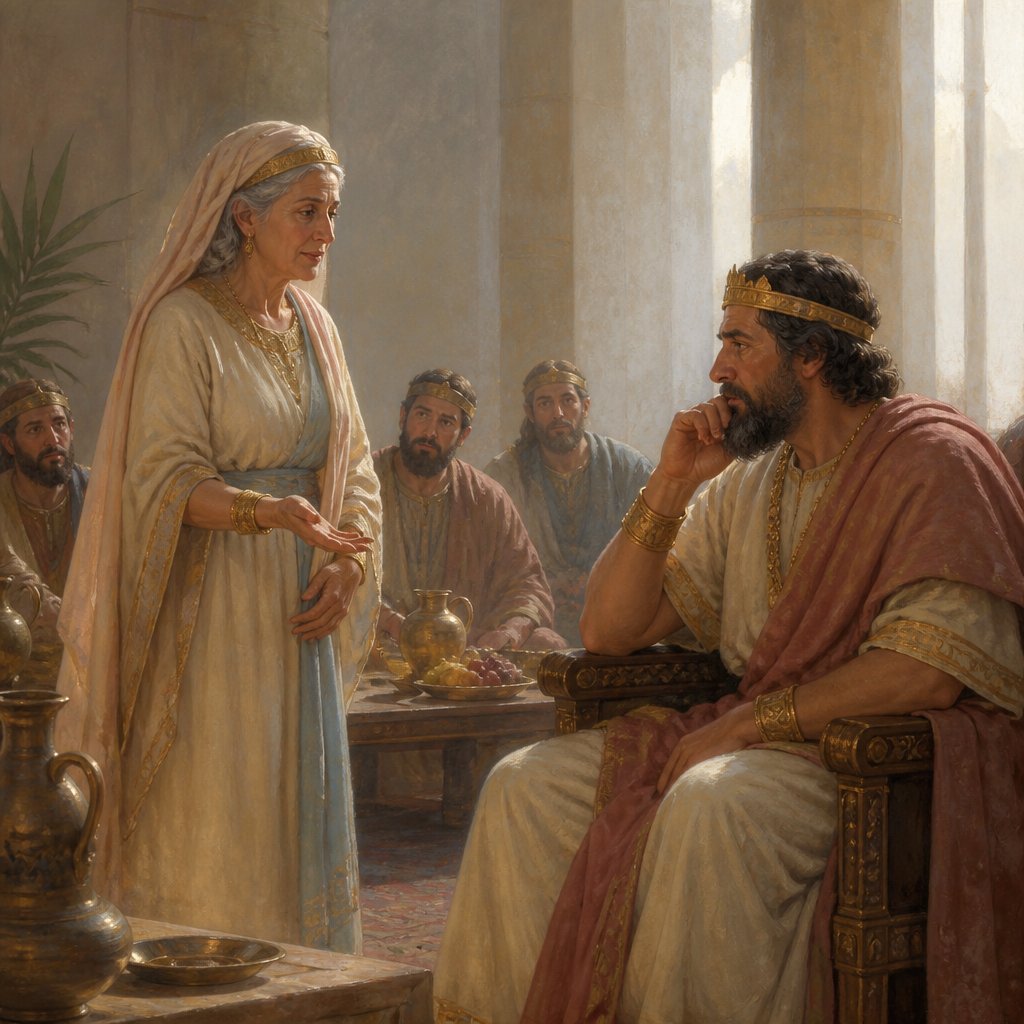
The verse Daniel 5:10 from the King James Version of the Bible reads:
"Now the queen, by reason of the words of the king and his lords, came into the banquet house: and the queen spake and said, O king, live for ever: let not thy thoughts trouble thee, nor let thy countenance be changed:"
This verse is taken from the Book of Daniel in the Old Testament, and it is part of a larger narrative that describes the downfall of King Belshazzar, the last king of Babylon. The verse is situated in the context of a feast where Belshazzar and his court were drinking wine using the sacred vessels that had been taken from the temple in Jerusalem. During the feast, a mysterious hand appeared and wrote on the wall, which greatly troubled the king and his guests.
In this verse, the queen enters the banquet house and addresses the king, urging him not to be troubled by his thoughts or to let his countenance be changed. This intervention occurs at a critical moment in the narrative and provides insight into the character of the queen, as well as the political and social dynamics at play in the Babylonian court.
The queen’s entrance into the banquet house is significant, as it marks the first time she is mentioned in the story. Although the Bible does not provide her name, some biblical scholars have suggested that she may have been Queen Nitocris, the wife of King Nabonidus, who was co-regent with Belshazzar. Her presence speaks to the influence of women in the royal court, and her willingness to intervene in the affairs of the king demonstrates her concern for his well-being.
The queen’s words to the king – "O king, live for ever: let not thy thoughts trouble thee, nor let thy countenance be changed" – convey a sense of urgency and reassurance. She addresses him with respect and expresses a desire for his well-being and peace of mind. This reflects the social and cultural norms of the time, where deference to the king was expected, even in moments of crisis.
The queen’s intervention also reveals the political instability and tension within the Babylonian court. The fact that the queen felt compelled to address the king’s troubled thoughts suggests that there was a palpable sense of unease and concern among the royal household. The appearance of the mysterious hand and writing on the wall had clearly unsettled the king and his guests, and the queen’s words reflect a desire to restore a sense of order and composure in the midst of chaos.
Symbolically, the queen’s intervention can be viewed as a sign of divine providence. Her presence and words serve as a reminder that even in times of distress and uncertainty, there is hope for resolution and reconciliation. In the larger context of the narrative, her actions foreshadow the ultimate downfall of Belshazzar and the triumph of God’s will, as interpreted by the prophet Daniel.
In conclusion, Daniel 5:10 presents a pivotal moment in the story of Belshazzar and the fall of Babylon. The queen’s timely intervention offers a glimpse into the dynamics of power and influence in the royal court, as well as the larger themes of divine justice and providence. Her words serve as a reminder of the importance of maintaining composure and seeking resolution in the face of adversity. This verse resonates with readers as a timeless expression of human resilience and the enduring belief in the power of faith and divine intervention.
Get our apps


Artwork for Daniel 5:10

Daniel 5:10 - "¶ Now the queen, by reason of the words of the king and his lords, came into the banquet house: and the queen spake and said, O king, live for ever: let not thy thoughts trouble thee, nor let thy countenance be changed:"
"¶ Now the queen, by reason of the words of the king and his lords, came into the banquet house: and the queen spake and said, O king, live for ever: let not thy thoughts trouble thee, nor let thy countenance be changed:" - Daniel 5:10

Daniel 10:5

Daniel 10:5

Daniel 10:5 - "Then I lifted up mine eyes, and looked, and behold a certain man clothed in linen, whose loins were girded with fine gold of Uphaz:"

daniel 5:5

Daniel 5:5

Daniel 10:2 - "In those days I Daniel was mourning three full weeks."

Daniel 10

Daniel 10:5 - "Then I lifted up mine eyes, and looked, and behold a certain man clothed in linen, whose loins were girded with fine gold of Uphaz:"

Daniel 5:13 - "Then was Daniel brought in before the king. And the king spake and said unto Daniel, Art thou that Daniel, which art of the children of the captivity of Judah, whom the king my father brought out of Jewry?"

Daniel 7:5

Daniel 7:5

Daniel 5:4

Daniel 5:3

Daniel 7:5
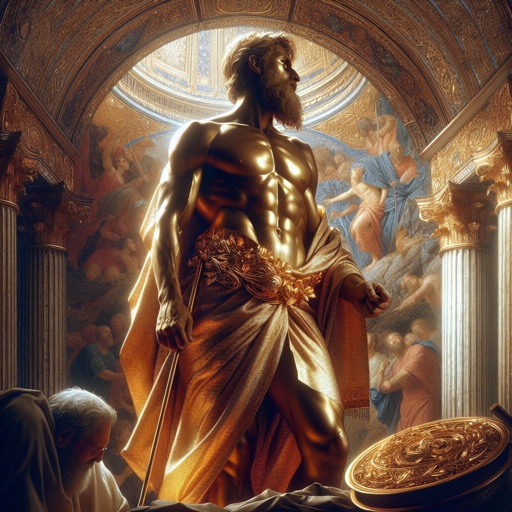
Daniel 10:5 - "Then I lifted up mine eyes, and looked, and behold a certain man clothed in linen, whose loins were girded with fine gold of Uphaz:"

Nehemiah 10:6 - "Daniel, Ginnethon, Baruch,"

Daniel 7: 9-10

Daniel 7:9-10

Daniel 7:9-10

Daniel 7:9-10

Daniel fasting in chapter 10

Daniel 4:10-14

Daniel 12:5 - "¶ Then I Daniel looked, and, behold, there stood other two, the one on this side of the bank of the river, and the other on that side of the bank of the river."

Daniel 5:12 - "Forasmuch as an excellent spirit, and knowledge, and understanding, interpreting of dreams, and shewing of hard sentences, and dissolving of doubts, were found in the same Daniel, whom the king named Belteshazzar: now let Daniel be called, and he will shew the interpretation."

"In those days I Daniel was mourning three full weeks." - Daniel 10:2

Purpose of the vision from Daniel 10

Daniel 6:5 - "Then said these men, We shall not find any occasion against this Daniel, except we find it against him concerning the law of his God."

Daniel 5:30 - "¶ In that night was Belshazzar the king of the Chaldeans slain."