What does Daniel 7:13 mean?
"I saw in the night visions, and, behold, one like the Son of man came with the clouds of heaven, and came to the Ancient of days, and they brought him near before him." - Daniel 7:13
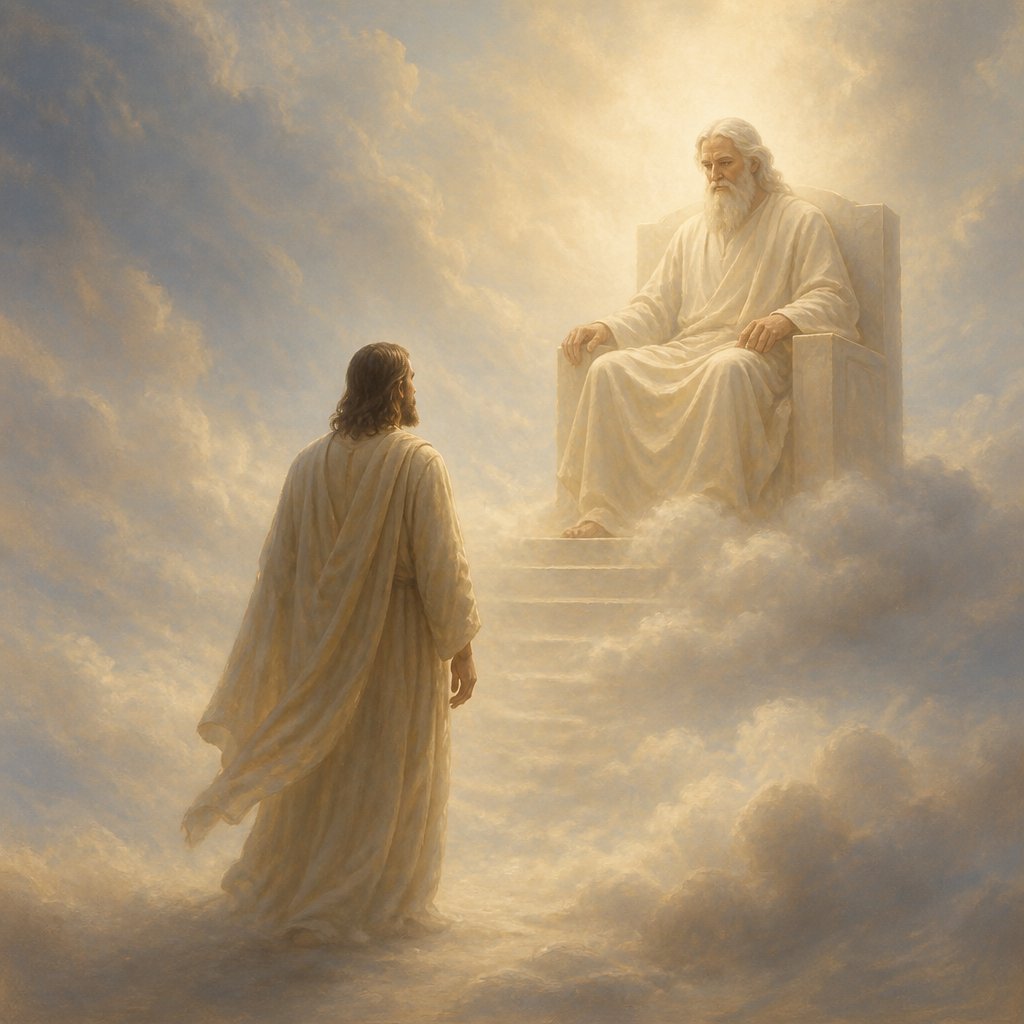
Daniel 7:13 in the King James Version reads, “I saw in the night visions, and, behold, one like the Son of man came with the clouds of heaven, and came to the Ancient of days, and they brought him near before him.” In its immediate setting, this sentence is part of Daniel’s report of a divinely given dream-vision that unfolds “in the night visions,” meaning it is not a casual thought or poetic reflection, but an unveiled scene shown to him from God’s standpoint. The verse stands at the turning point of the chapter: after Daniel has watched terrifying beasts rise out of the sea—figures of violent, shifting earthly dominions—his attention is lifted away from the chaos below to the court of heaven, where rule is settled not by conquest but by judgment and decree.
The first great theme in the verse is the contrast between earth’s kingdoms and heaven’s kingdom. Daniel has seen power on earth pictured as beasts: predatory, unstable, and driven by appetite. Now he sees a figure who is not beastlike but manlike: “one like the Son of man.” The phrasing matters. Daniel does not merely say “a man,” but “one like the Son of man,” as though the vision presses beyond ordinary categories. In the KJV idiom, “Son of man” points to true humanity, but in this context it also functions as a title of destiny: a representative Man, the rightful heir of dominion, the opposite of the beastly rulers that precede him. The symbolism is deliberate. Where beasts seize and devour, this figure approaches and receives. Where the beasts emerge from the troubled sea, this figure comes “with the clouds of heaven,” associated in Scripture with divine majesty, heavenly presence, and the hidden glory of God’s approach. The clouds are not merely weather; they are the veil and vehicle of heavenly authority. The scene signals that the dominion to come is not generated by human politics but is bestowed from above.
A second major theme is enthronement and investiture. Daniel sees the “Ancient of days,” the eternal Judge-King, already seated in majesty earlier in the chapter. In verse 13, the “Son of man” comes to him: “and came to the Ancient of days.” This is not the Son of man coming down to earth in this verse, but coming toward the throne of God in the heavenly court. The direction is toward God’s seat of judgment and rule. The verse depicts formal presentation: “and they brought him near before him.” That language suggests a royal ceremony. Attendants of the court—unnamed in this verse, but implied by the plural “they”—conduct the figure into the presence of the supreme King. The point is that the authority about to be exercised is legitimate, conferred, and recognized in heaven. Power is not grabbed; it is given.
A third theme is mediation and representation. The “Son of man” stands as an individual, yet the chapter will speak of “the saints of the most High” receiving and possessing the kingdom. The vision therefore carries the idea that this manlike figure embodies and represents the people of God in the purposes of God, gathering up in himself the destiny of the saints. Daniel’s world was one where faithful people often seemed crushed under imperial power. This verse answers that despair by showing that history’s end is not the triumph of the beast, but the vindication of the holy, expressed through a kingdom administered by the Man appointed in heaven.
The symbolism of the court scene deepens the significance. In Daniel 7, the beasts rise from the sea, an image of restless nations and threatening disorder. The Son of man comes with the clouds of heaven, an image of stability, purity, and divine initiative. The beasts are driven by natural force; the Son of man moves in the realm of God. The beasts are many and competing; the Son of man is one, unified, fitting to receive a single everlasting dominion. The beasts are judged; the Son of man is presented. The entire architecture of the vision teaches that earthly empires, however monstrous, are temporary, while the kingdom associated with the Son of man is grounded in the eternal counsel of the Ancient of days.
The verse is also significant because it sets up what immediately follows in the KJV: “And there was given him dominion, and glory, and a kingdom, that all people, nations, and languages, should serve him.” Daniel 7:13 is the approach; the next verse is the grant. Taken together, they portray the transfer of rule from the beastly to the righteous, from the temporary to the everlasting. The meaning of verse 13, then, is not only that Daniel saw a mysterious figure, but that he saw the heavenly appointment of the rightful ruler whose kingdom answers the violence and confusion of human history.
Within the wider biblical context, “the Son of man” becomes a phrase closely associated with the Messiah, and “coming with the clouds of heaven” becomes language of divine authority and eschatological triumph. But even staying within Daniel’s own vision, the verse proclaims that God’s final answer to the beastliness of the world is not another beast, not another empire of the same kind, but a kingdom entrusted to a manlike ruler who stands in God’s presence and receives dominion by God’s decree. Daniel 7:13 therefore functions as a revelation of hope: history is moving toward a heavenly verdict, and beyond that verdict stands the enthroned, God-appointed Son of man, brought near before the Ancient of days to receive the kingdom that cannot be overturned.
Have questions about Daniel 7:13?
Dive deeper into this scripture with Bible Chat — an AI-powered tool for exploring God's Word through conversation. Ask questions, get context, and grow in your understanding of the Bible.
Get Our Apps


Daniel 7:13 Artwork
!["I saw in the night visions, and, behold, [one] like the Son of man came with the clouds of heaven, and came to the Ancient of days, and they brought him near before him." - Daniel 7:13](https://media.bible.art/1c5bb122-ade3-4ac8-95dd-fd3ff42e5bd5-thumbnail.jpg)
"I saw in the night visions, and, behold, [one] like the Son of man came with the clouds of heaven, and came to the Ancient of days, and they brought him near before him." - Daniel 7:13

Daniel 7:13 - "I saw in the night visions, and, behold, one like the Son of man came with the clouds of heaven, and came to the Ancient of days, and they brought him near before him."
"I saw in the night visions, and, behold, one like the Son of man came with the clouds of heaven, and came to the Ancient of days, and they brought him near before him." - Daniel 7:13

Daniel 5:13 - "Then was Daniel brought in before the king. And the king spake and said unto Daniel, Art thou that Daniel, which art of the children of the captivity of Judah, whom the king my father brought out of Jewry?"

Daniel 2:13 - "And the decree went forth that the wise men should be slain; and they sought Daniel and his fellows to be slain."

Daniel 7:5
Daniel 7:8

Daniel 7:5

Daniel 7:4

Daniel 7:5

Daniel 4:13-14

Daniel 4:13-14

Daniel 7:15 - "¶ I Daniel was grieved in my spirit in the midst of my body, and the visions of my head troubled me."

Daniel 7: 9-10

Daniel 7:9-10

Daniel 7:9-10

Daniel 7:9-10

Daniel 7:2 - "Daniel spake and said, I saw in my vision by night, and, behold, the four winds of the heaven strove upon the great sea."

Daniel 1:7 - "Unto whom the prince of the eunuchs gave names: for he gave unto Daniel the name of Belteshazzar; and to Hananiah, of Shadrach; and to Mishael, of Meshach; and to Azariah, of Abed-nego."

Daniel 7:28 - "Hitherto is the end of the matter. As for me Daniel, my cogitations much troubled me, and my countenance changed in me: but I kept the matter in my heart."

Daniel 10:7 - "And I Daniel alone saw the vision: for the men that were with me saw not the vision; but a great quaking fell upon them, so that they fled to hide themselves."

Daniel 7:1 - "In the first year of Belshazzar king of Babylon Daniel had a dream and visions of his head upon his bed: then he wrote the dream, and told the sum of the matters."

Daniel 6:13 - "Then answered they and said before the king, That Daniel, which is of the children of the captivity of Judah, regardeth not thee, O king, nor the decree that thou hast signed, but maketh his petition three times a day."

"And the decree went forth that the wise men should be slain; and they sought Daniel and his fellows to be slain." - Daniel 2:13

COSMIC COURTROOM OF FIRE DANIEL 7:9-10

"Then was Daniel brought in before the king. And the king spake and said unto Daniel, Art thou that Daniel, which art of the children of the captivity of Judah, whom the king my father brought out of Jewry?" - Daniel 5:13

Daniel 7:21 - "I beheld, and the same horn made war with the saints, and prevailed against them;"

Daniel 7:9-10 – "His clothing was as white as snow; the hair of his head was white like wool."

Daniel 7:28 “Here is the end of the matter. As for me, Daniel, my thoughts greatly alarmed me, and my color changed, but I kept the matter in my heart.”

Daniel 7:17 - "These great beasts, which are four, are four kings, which shall arise out of the earth."