What does Deuteronomy 1:41 mean?
"Then ye answered and said unto me, We have sinned against the LORD, we will go up and fight, according to all that the LORD our God commanded us. And when ye had girded on every man his weapons of war, ye were ready to go up into the hill." - Deuteronomy 1:41
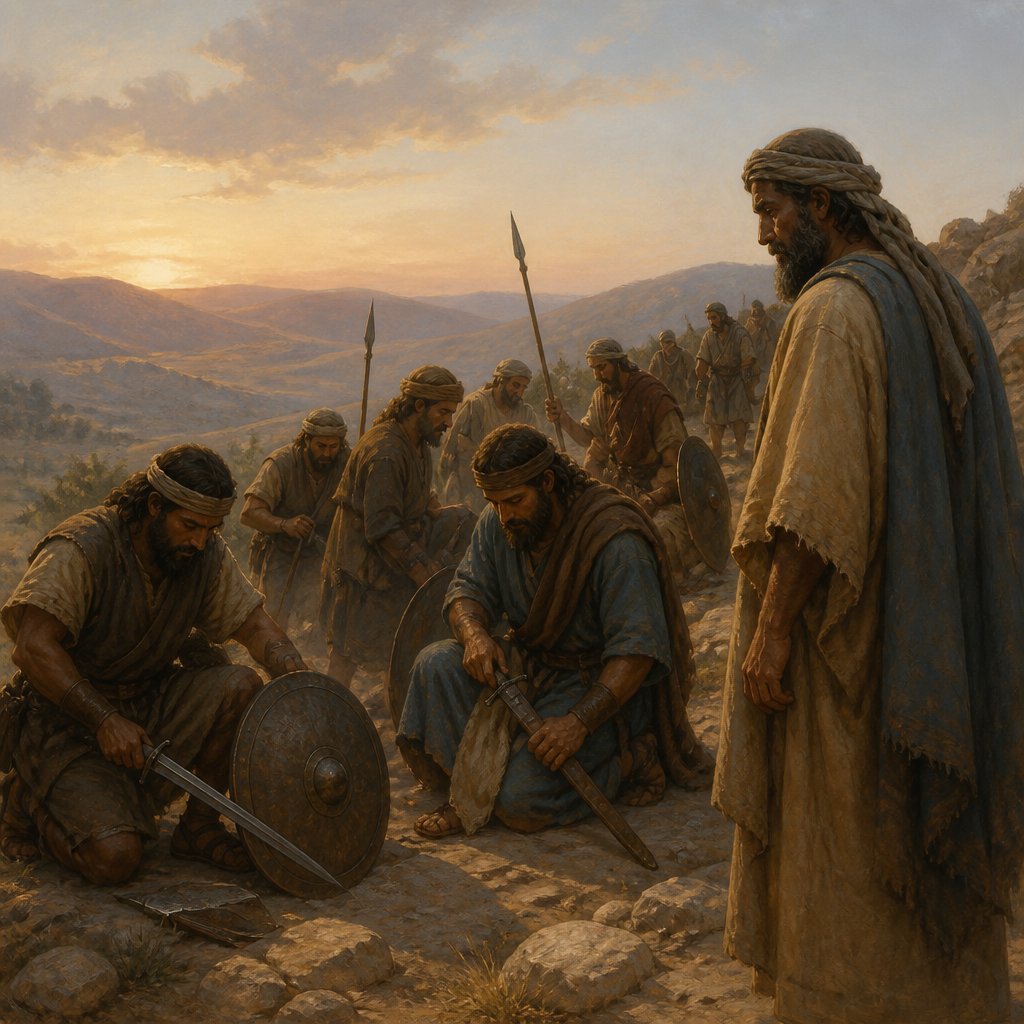
Deuteronomy 1:41 in the King James Version (KJV) reads, "Then ye answered and said unto me, We have sinned against the LORD, we will go up and fight, according to all that the LORD our God commanded us. And when ye had girded on every man his weapons of war, ye were ready to go up into the hill."
This verse is part of a larger passage in which Moses is addressing the Israelites as they prepare to enter the Promised Land. The book of Deuteronomy is essentially Moses' farewell address to the Israelites, given in the form of a series of sermons. In this particular passage, Moses is recalling the Israelites' earlier refusal to enter the land and their subsequent change of heart.
The context of this verse is crucial to understanding its full meaning. The Israelites had been delivered from slavery in Egypt and had been wandering in the wilderness for forty years, waiting to enter the land that God had promised to give them. However, when they finally reached the borders of the land, they sent spies to scout it out. The spies reported back that the inhabitants of the land were strong and the cities were fortified, causing the Israelites to lose heart and doubt God's ability to deliver the land into their hands. As a result of their lack of faith, God declared that the current generation of Israelites would not enter the Promised Land, but would instead wander in the wilderness until they died.
In this verse, the Israelites are acknowledging their sin and expressing a willingness to go up and fight, in accordance with the command of the Lord. It demonstrates a change of heart and a desire to obey God's command, in contrast to their earlier rebellion and lack of faith. However, this change of heart comes too late, as God has already decreed that they will not enter the land. This serves as a reminder of the consequences of disobedience and the importance of faith and obedience in the eyes of God.
One of the key themes in this verse is the idea of repentance and the importance of acknowledging sin. The Israelites' confession of sin is a crucial step in their journey towards restoration and reconciliation with God. It serves as a powerful reminder of the need for humility and contrition in the face of disobedience, as well as the importance of seeking forgiveness from God.
Another theme present in this verse is the concept of obedience to God's commands. The Israelites' declaration that they will go up and fight according to all that the Lord their God commanded them reflects a recognition of God's authority and a willingness to submit to His will. This emphasizes the importance of obedience and faithfulness in the life of a believer, and the consequences that may result from disobedience.
The symbolism in this verse can be seen in the Israelites' act of girding on their weapons of war. This action represents their preparation to engage in physical battle, but it also serves as a metaphor for the spiritual battles that believers face. Girding on the armor of God is mentioned in Ephesians 6:11, as a way of preparing for spiritual warfare. This reinforces the idea that obedience to God's commands and reliance on His strength are essential in facing the challenges of life.
In conclusion, Deuteronomy 1:41 conveys important themes of repentance, obedience, and the consequences of disobedience. It serves as a reminder of the need for humility and contrition in the face of sin, as well as the importance of faithfulness and submission to God's will. It also provides symbolic imagery of preparing for spiritual battle, emphasizing the need for believers to rely on God's strength in facing life's challenges.
Have questions about Deuteronomy 1:41?
Dive deeper into this scripture with Bible Chat — an AI-powered tool for exploring God's Word through conversation. Ask questions, get context, and grow in your understanding of the Bible.
Get Our Apps


Deuteronomy 1:41 Artwork
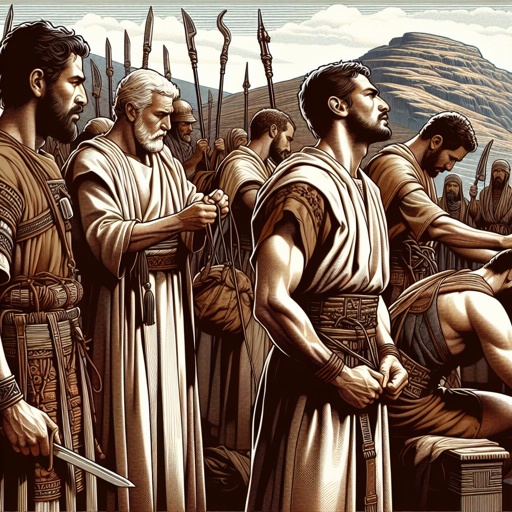
Deuteronomy 1:41 - "Then ye answered and said unto me, We have sinned against the LORD, we will go up and fight, according to all that the LORD our God commanded us. And when ye had girded on every man his weapons of war, ye were ready to go up into the hill."
"Then ye answered and said unto me, We have sinned against the LORD, we will go up and fight, according to all that the LORD our God commanded us. And when ye had girded on every man his weapons of war, ye were ready to go up into the hill." - Deuteronomy 1:41

Deuteronomy 32:41

Deuteronomy 4:41 - "¶ Then Moses severed three cities on this side Jordan toward the sunrising;"

Deuteronomy 28:41 - "Thou shalt beget sons and daughters, but thou shalt not enjoy them; for they shall go into captivity."

"¶ Then Moses severed three cities on this side Jordan toward the sunrising;" - Deuteronomy 4:41

Deuteronomy 32:41 - "If I whet my glittering sword, and mine hand take hold on judgment; I will render vengeance to mine enemies, and will reward them that hate me."

Isaiah 41

Acts 2:41

Isaiah 41:10

Numbers 3:41

Isaiah 41:10
Isaiah 41:10

1 Esdras 1:41 (KJVA) 41 Nabuchodonosor also took of the holy vessels of the Lord, and carried them away, and set them in his own temple at Babylon.

Acts 2:38-41

John 9:1-41

1 Esdras 1:41 (KJVA) 41 Nabuchodonosor also took of the holy vessels of the Lord, and carried them away, and set them in his own temple at Babylon.

1 Esdras 1:41 (KJVA) 41 Nabuchodonosor also took of the holy vessels of the Lord, and carried them away, and set them in his own temple at Babylon.

1 Chronicles 1:41 - "The sons of Anah; Dishon. And the sons of Dishon; Amram, and Eshban, and Ithran, and Cheran."

"Thou shalt beget sons and daughters, but thou shalt not enjoy them; for they shall go into captivity." - Deuteronomy 28:41

1 Chronicles 2:41 - "And Shallum begat Jekamiah, and Jekamiah begat Elishama."

1 Chronicles 6:41 - "The son of Ethni, the son of Zerah, the son of Adaiah,"

1 Chronicles 11:41 - "Uriah the Hittite, Zabad the son of Ahlai,"

1 Chronicles 9:41 - "And the sons of Micah were, Pithon, and Melech, and Tahrea, and Ahaz."

Psalms 41:1 - "Blessed is he that considereth the poor: the LORD will deliver him in time of trouble."

1 Kings 2:41 - "And it was told Solomon that Shimei had gone from Jerusalem to Gath, and was come again."

1 Kings 22:41 - "¶ And Jehoshaphat the son of Asa began to reign over Judah in the fourth year of Ahab king of Israel."

1 Kings 18:41 - "¶ And Elijah said unto Ahab, Get thee up, eat and drink; for there is a sound of abundance of rain."

1 Kings 11:41 - "¶ And the rest of the acts of Solomon, and all that he did, and his wisdom, are they not written in the book of the acts of Solomon?"

1 Samuel 17:41 - "And the Philistine came on and drew near unto David; and the man that bare the shield went before him."