What does Deuteronomy 10:10 mean?
“And I stayed in the mount, according to the first time, forty days and forty nights; and the LORD hearkened unto me at that time also, and the LORD would not destroy thee.” — Deuteronomy 10:10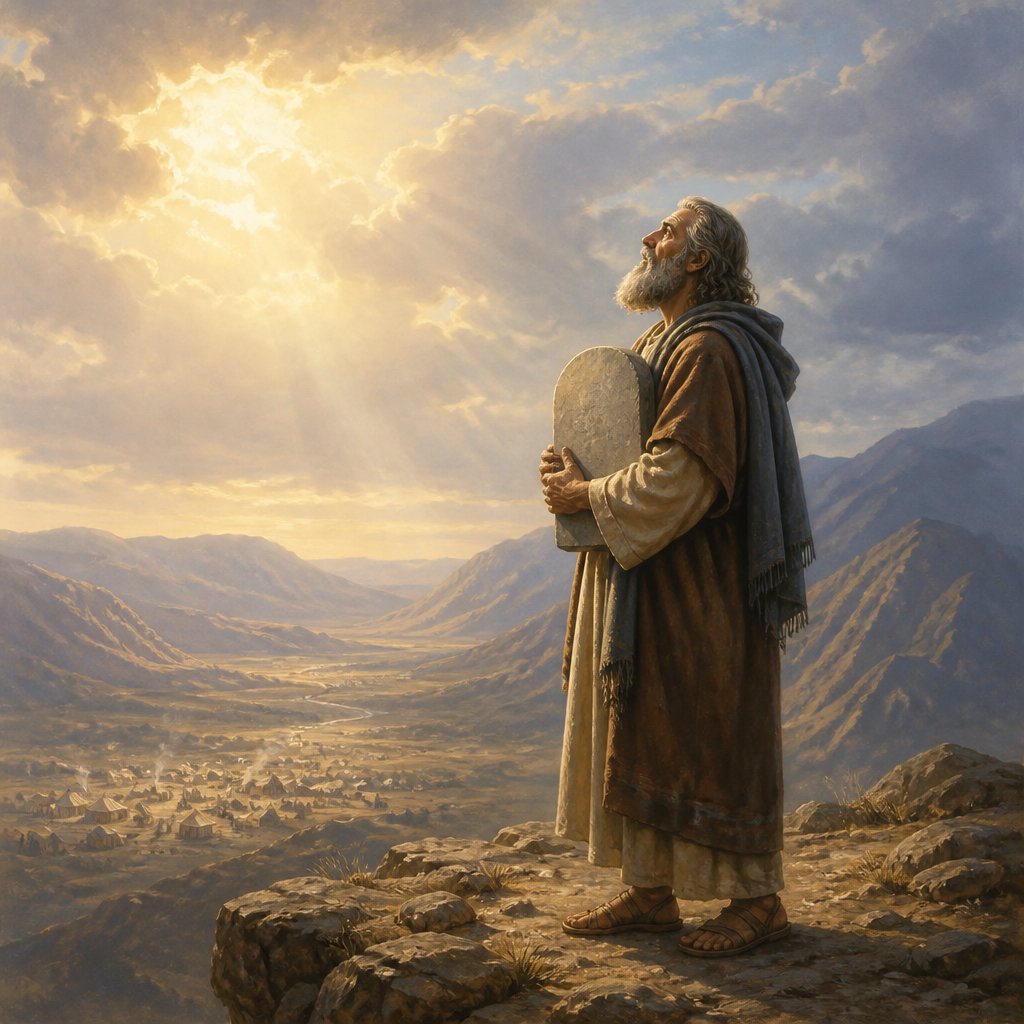
Deuteronomy 10:10 states, "And I stayed in the mount, according to the first time, forty days and forty nights; and the LORD hearkened unto me at that time also, and the LORD would not destroy thee." This verse is part of the recounting of the time when Moses received the second set of tablets containing the Ten Commandments on Mount Sinai. The verse reflects Moses' intimate relationship with God and the mercy and faithfulness of the Lord towards the Israelites.
The book of Deuteronomy is the fifth and final book of the Torah, also known as the Pentateuch, which is the foundational text of the Jewish faith and an important part of the Christian Bible. The book is attributed to Moses and takes the form of three sermons delivered by Moses to the Israelites, as they prepare to enter the Promised Land. Deuteronomy is often seen as a summary of the laws and teachings given by God to the Israelites and serves as a reminder of God's covenant with his chosen people.
In this specific verse, Moses is recalling the time he spent on Mount Sinai, where he received the Ten Commandments from God. The forty days and nights that Moses spent on the mountain are significant, as the number forty often appears in the Bible as a period of testing, probation, or preparation. For example, the Israelites wandered in the wilderness for forty years, Jesus fasted for forty days and nights, and it rained for forty days and nights during the flood in the time of Noah. In this context, the forty days and nights Moses spent on the mountain can be seen as a period of intense spiritual communion and preparation for the task ahead.
The verse also emphasizes the faithfulness of the Lord. Despite the Israelites' repeated disobedience and tendency to turn away from God, the Lord did not destroy them. This underscores the enduring mercy and compassion of God towards his people. It serves as a reminder that, even in the face of human failings and shortcomings, God's love and forgiveness are ever-present.
Furthermore, the verse highlights the importance of prayer and communication with God. Moses' time on the mountain was marked by his fervent prayers and intercession on behalf of the Israelites. The fact that the Lord hearkened unto Moses at that time shows the power of prayer and the responsiveness of God to the cries of his people. It also speaks to the role of Moses as a mediator between God and the Israelites, emphasizing his unique and privileged relationship with the Lord.
Symbolically, the mountain in the verse represents the abode of God and the place of divine encounter. Throughout the Bible, mountains are often associated with encounters with God, such as Moses' experience at Mount Sinai, Elijah's encounter with God on Mount Horeb, and Jesus' transfiguration on a high mountain. The mountain can thus be seen as a sacred space where the earthly and the heavenly realms intersect, and where profound spiritual experiences take place.
In conclusion, Deuteronomy 10:10 encompasses themes of spiritual communion, the faithfulness and mercy of God, the power of prayer, and the symbolic significance of the mountain as a place of divine encounter. It serves as a powerful reminder of God's enduring love and compassion towards his people, and the importance of cultivating a close and intimate relationship with the Lord through prayer and spiritual discipline.
Get our apps


Artwork for Deuteronomy 10:10

Deuteronomy 10:10 - "And I stayed in the mount, according to the first time, forty days and forty nights; and the LORD hearkened unto me at that time also, and the LORD would not destroy thee."
"And I stayed in the mount, according to the first time, forty days and forty nights; and the LORD hearkened unto me at that time also, and the LORD would not destroy thee." - Deuteronomy 10:10

Deuteronomy 26:4-10

Deuteronomy 26:4-10

Deuteronomy 22:10 - "¶ Thou shalt not plow with an ox and an ass together."

Deuteronomy 10:16 - "Circumcise therefore the foreskin of your heart, and be no more stiffnecked."

Deuteronomy 10:19 - "Love ye therefore the stranger: for ye were strangers in the land of Egypt."

Deuteronomy 14:10 - "And whatsoever hath not fins and scales ye may not eat; it is unclean unto you."

Deuteronomy 5:10 - "And shewing mercy unto thousands of them that love me and keep my commandments."

Deuteronomy 2:10 - "The Emims dwelt therein in times past, a people great, and many, and tall, as the Anakims;"

Deuteronomy 25:10 - "And his name shall be called in Israel, The house of him that hath his shoe loosed."

Deuteronomy 20:10 - "¶ When thou comest nigh unto a city to fight against it, then proclaim peace unto it."

Deuteronomy 10:14 - "Behold, the heaven and the heaven of heavens is the LORD'S thy God, the earth also, with all that therein is."

Deuteronomy 10:7 - "From thence they journeyed unto Gudgodah; and from Gudgodah to Jotbath, a land of rivers of waters."

Deuteronomy 34:10 - "¶ And there arose not a prophet since in Israel like unto Moses, whom the LORD knew face to face,"

Deuteronomy 10:18 - "He doth execute the judgment of the fatherless and widow, and loveth the stranger, in giving him food and raiment."

Deuteronomy 1:10 - "The LORD your God hath multiplied you, and, behold, ye are this day as the stars of heaven for multitude."

Deuteronomy 10:13 - "To keep the commandments of the LORD, and his statutes, which I command thee this day for thy good?"

Deuteronomy 28:10 - "And all people of the earth shall see that thou art called by the name of the LORD; and they shall be afraid of thee."

Deuteronomy 31:10 - "And Moses commanded them, saying, At the end of every seven years, in the solemnity of the year of release, in the feast of tabernacles,"

Deuteronomy 3:10 - "All the cities of the plain, and all Gilead, and all Bashan, unto Salchah and Edrei, cities of the kingdom of Og in Bashan."
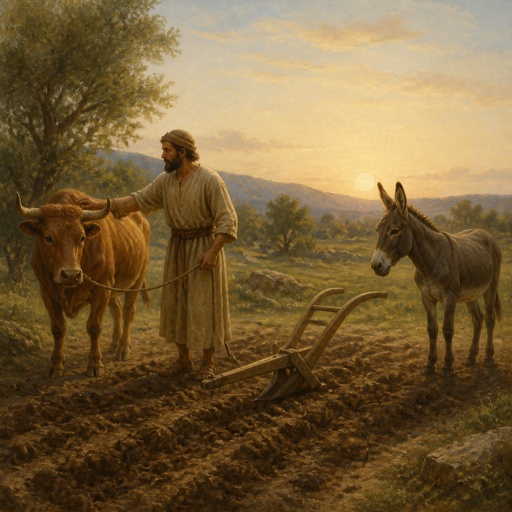
"¶ Thou shalt not plow with an ox and an ass together." - Deuteronomy 22:10

Deuteronomy 10:2 - "And I will write on the tables the words that were in the first tables which thou brakest, and thou shalt put them in the ark."

Deuteronomy 19:10 - "That innocent blood be not shed in thy land, which the LORD thy God giveth thee for an inheritance, and so blood be upon thee."

Deuteronomy 24:10 - "¶ When thou dost lend thy brother any thing, thou shalt not go into his house to fetch his pledge."

"Circumcise therefore the foreskin of your heart, and be no more stiffnecked." - Deuteronomy 10:16

Deuteronomy 10:20 - "Thou shalt fear the LORD thy God; him shalt thou serve, and to him shalt thou cleave, and swear by his name."

Deuteronomy 10:5 - "And I turned myself and came down from the mount, and put the tables in the ark which I had made; and there they be, as the LORD commanded me."

Deuteronomy 10:9 - "Wherefore Levi hath no part nor inheritance with his brethren; the LORD is his inheritance, according as the LORD thy God promised him."

Deuteronomy 7:10 - "And repayeth them that hate him to their face, to destroy them: he will not be slack to him that hateth him, he will repay him to his face."