What does Deuteronomy 12:12 mean?
“And ye shall rejoice before the LORD your God, ye, and your sons, and your daughters, and your menservants, and your maidservants, and the Levite that is within your gates; forasmuch as he hath no part nor inheritance with you.” — Deuteronomy 12:12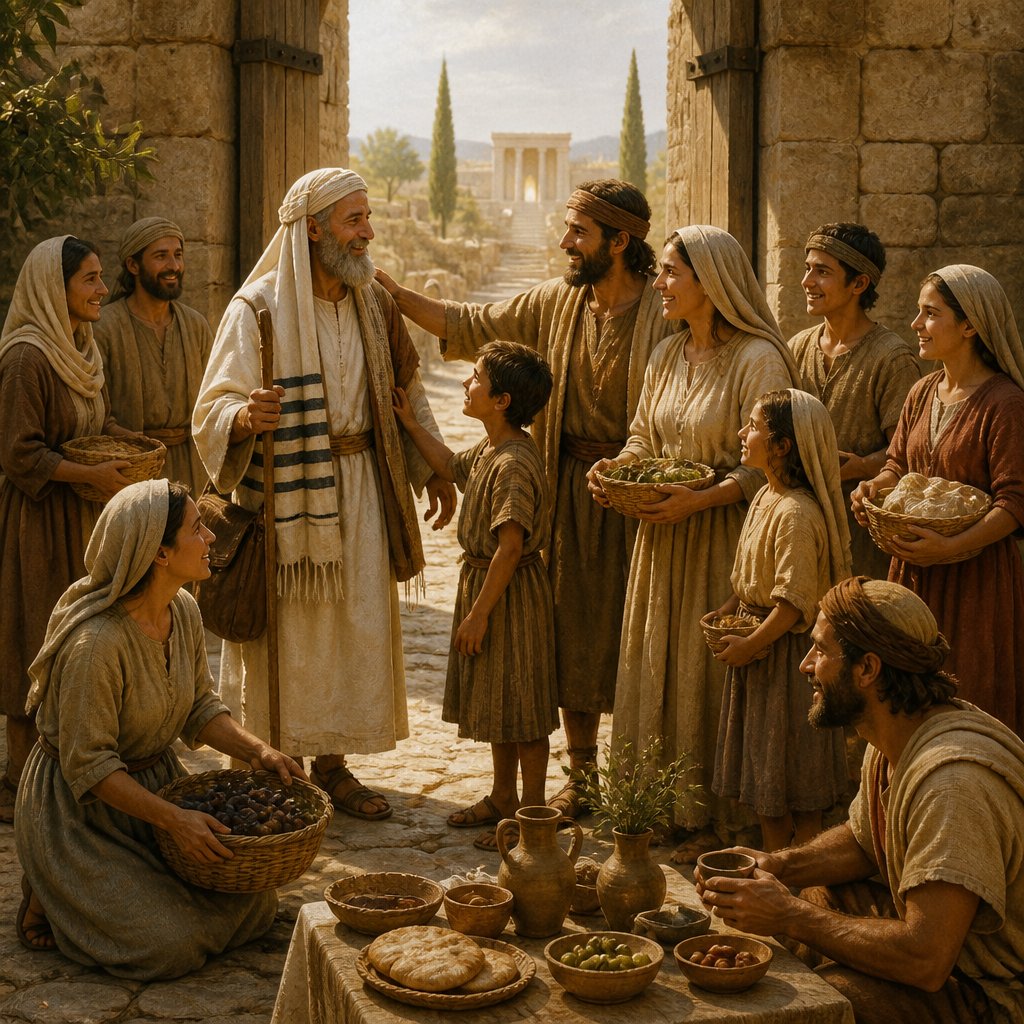
Deuteronomy 12:12 in the King James Version reads, "And ye shall rejoice before the Lord your God, ye, and your sons, and your daughters, and your menservants, and your maidservants, and the Levite that is within your gates; forasmuch as he hath no part nor inheritance with you." This verse comes from the book of Deuteronomy in the Old Testament, which is a record of the speeches given by Moses to the Israelites as they journeyed through the wilderness towards the Promised Land.
The theme of this verse centers around rejoicing before the Lord and the idea of shared celebration within the community. The verse instructs the Israelites to rejoice not only individually but also collectively as a community in the presence of their God. It emphasizes the importance of coming together with all members of society, regardless of their social status, to celebrate and worship the Lord. This demonstrates the inclusive nature of God's love and his desire for all his people to come together in unity and joy.
The context of Deuteronomy 12:12 is set within a larger passage that deals with the centralization of worship. The Israelites are instructed to bring their offerings and sacrifices to the place that God will choose as his dwelling place. This centralization of worship serves to unify the people in their worship of God and prevents them from being tempted to partake in the pagan rituals and practices of the surrounding nations. By coming together in one place to worship and rejoice, the Israelites would be united in their faith and devotion to the Lord.
The inclusion of all members of society in the command to rejoice before the Lord is significant. The verse specifically mentions sons, daughters, menservants, maidservants, and the Levites. This serves as a reminder that all individuals, regardless of their social status, are valued and invited to partake in the collective celebration before the Lord. In a society where hierarchies and inequalities were prevalent, this command reflects God's desire for all to be included in the joy of worship and to be united as one community under His love and grace.
Furthermore, the mention of the Levites in this verse is noteworthy. The Levites were a tribe set apart for religious duties and did not have a portion of land as inheritance like the other tribes of Israel. Instead, they were supported by the tithes and offerings of the other tribes. By including the Levites in the command to rejoice before the Lord, it highlights the importance of caring for those in religious service and ensuring they are not left out of the communal celebrations. This serves as a reminder of the responsibility of the community to support and care for those who dedicate their lives to serving God and the congregation.
Symbolically, the act of rejoicing before the Lord is representative of the joy and gratitude that comes from being in the presence of God. It signifies a deep sense of happiness and contentment that stems from knowing and experiencing God's love, mercy, and blessings. The gathering of all members of society to rejoice before the Lord symbolizes the unity and inclusivity of God's kingdom, where all are welcome and valued. It also symbolizes the importance of communal worship and the strength that comes from coming together as one body to honor and glorify God.
In conclusion, Deuteronomy 12:12 conveys a powerful message of unity, inclusion, and celebration within the community of faith. It emphasizes the importance of coming together to rejoice before the Lord, regardless of social status, and highlights the responsibility of caring for those dedicated to religious service. The verse symbolizes the joy and gratitude that comes from being in the presence of God and the unity that is found in communal worship. It serves as a reminder of God's inclusive love and his desire for all his people to come together in unity and joy before Him.
Get our apps


Artwork for Deuteronomy 12:12

Deuteronomy 12:12 - "And ye shall rejoice before the LORD your God, ye, and your sons, and your daughters, and your menservants, and your maidservants, and the Levite that is within your gates; forasmuch as he hath no part nor inheritance with you."
"And ye shall rejoice before the LORD your God, ye, and your sons, and your daughters, and your menservants, and your maidservants, and the Levite that is within your gates; forasmuch as he hath no part nor inheritance with you." - Deuteronomy 12:12

Deuteronomy 14:12 - "But these are they of which ye shall not eat: the eagle, and the ossifrage, and the ospray,"

Deuteronomy 24:12 - "And if the man be poor, thou shalt not sleep with his pledge:"

Deuteronomy 12:4 - "Ye shall not do so unto the LORD your God."

Deuteronomy 12:24 - "Thou shalt not eat it; thou shalt pour it upon the earth as water."

Deuteronomy 32:12 - "So the LORD alone did lead him, and there was no strange god with him."

Deuteronomy 5:12 - "Keep the sabbath day to sanctify it, as the LORD thy God hath commanded thee."

Deuteronomy 20:12 - "And if it will make no peace with thee, but will make war against thee, then thou shalt besiege it:"

Deuteronomy 12:9 - "For ye are not as yet come to the rest and to the inheritance, which the LORD your God giveth you."

Deuteronomy 12:19 - "Take heed to thyself that thou forsake not the Levite as long as thou livest upon the earth."

Deuteronomy 12:16 - "Only ye shall not eat the blood; ye shall pour it upon the earth as water."

Deuteronomy 16:12 - "And thou shalt remember that thou wast a bondman in Egypt: and thou shalt observe and do these statutes."

Deuteronomy 34:12 - "And in all that mighty hand, and in all the great terror which Moses shewed in the sight of all Israel."

Deuteronomy 12:23 - "Only be sure that thou eat not the blood: for the blood is the life; and thou mayest not eat the life with the flesh."

Deuteronomy 1:12 - "How can I myself alone bear your cumbrance, and your burden, and your strife?"

Deuteronomy 12:13 - "Take heed to thyself that thou offer not thy burnt offerings in every place that thou seest:"

Romans 12:1-2

Deuteronomy 8:12 - "Lest when thou hast eaten and art full, and hast built goodly houses, and dwelt therein;"

Deuteronomy 23:12 - "¶ Thou shalt have a place also without the camp, whither thou shalt go forth abroad:"

romans 12:1-2

Deuteronomy 22:12 - "¶ Thou shalt make thee fringes upon the four quarters of thy vesture, wherewith thou coverest thyself."

Deuteronomy 21:12 - "Then thou shalt bring her home to thine house; and she shall shave her head, and pare her nails;"

Deuteronomy 6:12 - "Then beware lest thou forget the LORD, which brought thee forth out of the land of Egypt, from the house of bondage."

Deuteronomy 12:32 - "What thing soever I command you, observe to do it: thou shalt not add thereto, nor diminish from it."

Deuteronomy 12:22 - "Even as the roebuck and the hart is eaten, so thou shalt eat them: the unclean and the clean shall eat of them alike."

Titus 1:2

Genesis 1:2

Titus 1:2

Hosea 1:2