What does Deuteronomy 13:16 mean?
“And thou shalt gather all the spoil of it into the midst of the street thereof, and shalt burn with fire the city, and all the spoil thereof every whit, for the LORD thy God: and it shall be an heap for ever; it shall not be built again.” — Deuteronomy 13:16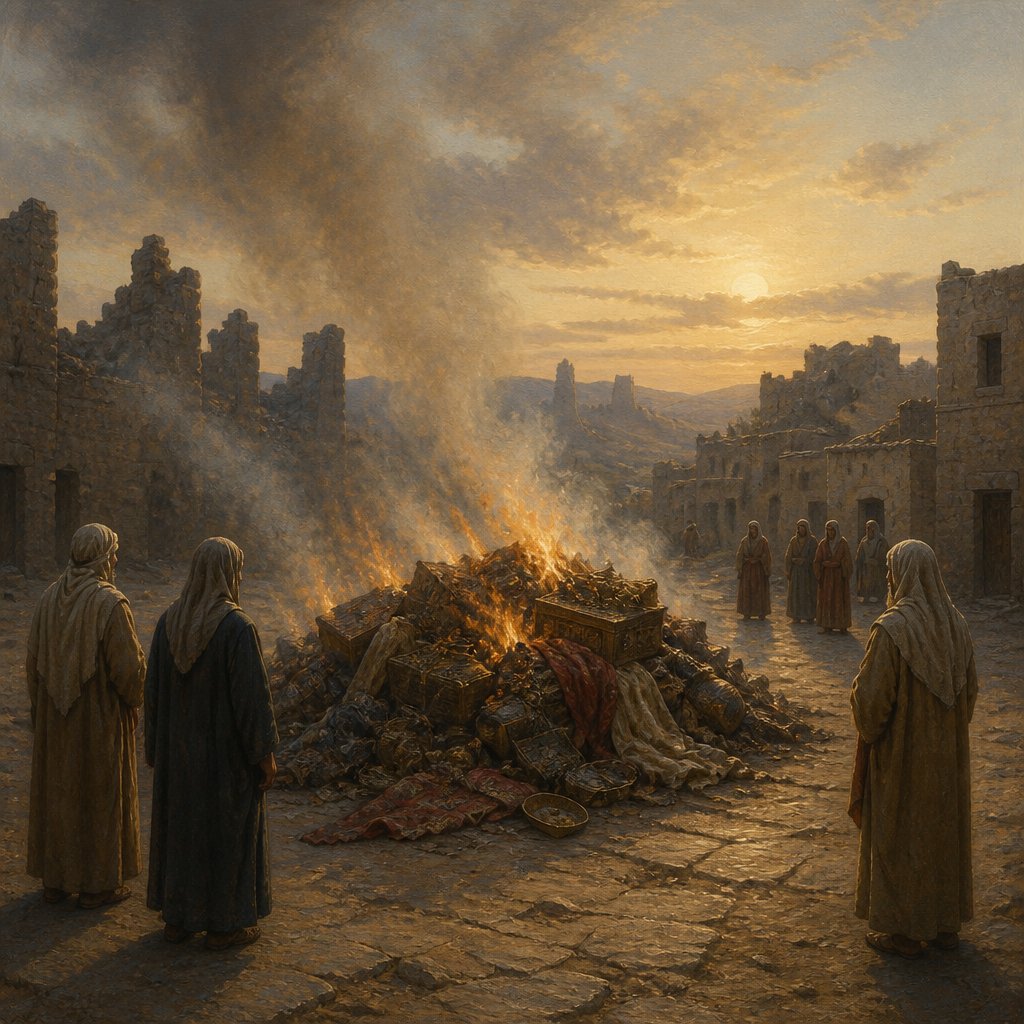
Deuteronomy 13:16 in the King James Version (KJV) reads, "And thou shalt gather all the spoil of it into the midst of the street thereof, and shalt burn with fire the city, and all the spoil thereof every whit, for the Lord thy God: and it shall be an heap for ever; it shall not be built again."
This verse is part of a larger passage in the book of Deuteronomy, which is the fifth book of the Old Testament. Deuteronomy is attributed to Moses and is essentially a series of sermons that he delivered to the Israelites before they entered the Promised Land. This specific verse comes from a section cautioning the Israelites against idolatry and offering guidance on how to deal with false prophets and idolatrous cities.
The overall theme of the passage from which this verse is taken is the importance of remaining steadfast in faith and avoiding the temptation of idolatry. Idolatry was a major concern for the Israelites, as they were constantly surrounded by pagan cultures and faced the temptation to worship false gods. The verse itself provides instructions on what to do when a city falls into idolatry. The Israelites were commanded to gather the spoils of the city into the street and burn everything with fire, making it a heap forever, never to be rebuilt.
Symbolically, the burning of the city and all its spoil represents the complete destruction of idolatry and its influence. By burning the city and its possessions, the Israelites were eradicating any trace of the idolatrous practices that had taken hold. This act served as a visual representation of their commitment to serving the one true God and rejecting any form of false worship.
The language used in this verse is symbolic as well. The act of gathering the spoil into the midst of the street and burning it signifies a public declaration of the consequences of turning away from God. The heap that remains after the burning is a physical reminder of the consequences of straying from God's commandments and serves as a warning to others who might be tempted to follow the same path.
In a broader sense, this verse can also be seen as a lesson in the importance of spiritual discipline and the consequences of disobedience. The destruction of the idolatrous city serves as a warning to the Israelites to remain faithful and to resist the temptation of false worship. It also serves as a reminder of the importance of repentance and the potential for restoration. The city may be destroyed, but it is a reminder of the consequences of turning away from God's will.
In terms of historical and cultural context, it's important to note that the instructions provided in this verse were given to a specific people in a specific time and place. The Israelites were a nation with a unique covenant relationship with God, and the instructions given in Deuteronomy were part of that covenant. While the literal application of this verse may not be relevant in a modern context, the underlying principles of faithfulness, obedience, and the rejection of false worship are still relevant to believers today.
In conclusion, Deuteronomy 13:16 is a powerful and symbolic verse that carries a weighty message about the importance of remaining steadfast in faith and rejecting the temptation of idolatry. The verse serves as a visual representation of the consequences of disobedience and the importance of spiritual discipline. While the historical context of the verse is specific to the Israelites, the underlying principles hold timeless relevance for believers today.
Get our apps


Artwork for Deuteronomy 13:16
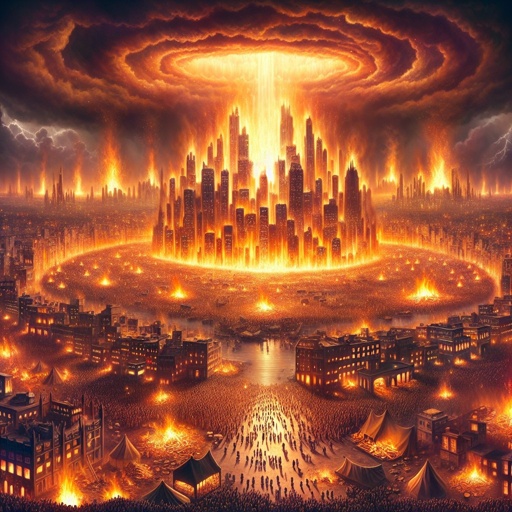
Deuteronomy 13:16 - "And thou shalt gather all the spoil of it into the midst of the street thereof, and shalt burn with fire the city, and all the spoil thereof every whit, for the LORD thy God: and it shall be an heap for ever; it shall not be built again."
"And thou shalt gather all the spoil of it into the midst of the street thereof, and shalt burn with fire the city, and all the spoil thereof every whit, for the LORD thy God: and it shall be an heap for ever; it shall not be built again." - Deuteronomy 13:16

Deuteronomy 16:13 - "¶ Thou shalt observe the feast of tabernacles seven days, after that thou hast gathered in thy corn and thy wine:"

Deuteronomy 20:16

Deuteronomy 20:16

Deuteronomy 20:16
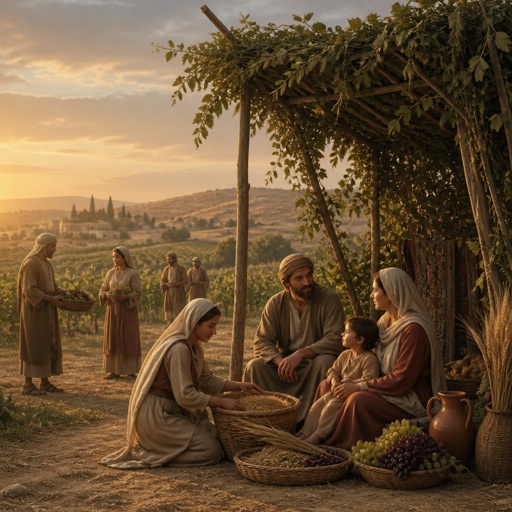
"¶ Thou shalt observe the feast of tabernacles seven days, after that thou hast gathered in thy corn and thy wine:" - Deuteronomy 16:13

Deuteronomy 14:16 - "The little owl, and the great owl, and the swan,"

Deuteronomy 10:16 - "Circumcise therefore the foreskin of your heart, and be no more stiffnecked."

Deuteronomy 28:16 - "Cursed shalt thou be in the city, and cursed shalt thou be in the field."

Deuteronomy 14:13 - "And the glede, and the kite, and the vulture after his kind,"

Deuteronomy 18:13 - "Thou shalt be perfect with the LORD thy God."

Deuteronomy 17:13 - "And all the people shall hear, and fear, and do no more presumptuously."

Deuteronomy 32:16 - "They provoked him to jealousy with strange gods, with abominations provoked they him to anger."

Deuteronomy 25:13 - "¶ Thou shalt not have in thy bag divers weights, a great and a small."

Deuteronomy 5:13 - "Six days thou shalt labour, and do all thy work:"

Deuteronomy 22:13 - "¶ If any man take a wife, and go in unto her, and hate her,"

Deuteronomy 6:16 - "¶ Ye shall not tempt the LORD your God, as ye tempted him in Massah."

Deuteronomy 19:16 - "¶ If a false witness rise up against any man to testify against him that which is wrong;"

Deuteronomy 16:12 - "And thou shalt remember that thou wast a bondman in Egypt: and thou shalt observe and do these statutes."

Deuteronomy 25:16 - "For all that do such things, and all that do unrighteously, are an abomination unto the LORD thy God."

Deuteronomy 12:16 - "Only ye shall not eat the blood; ye shall pour it upon the earth as water."

Deuteronomy 13:1 - "If there arise among you a prophet, or a dreamer of dreams, and giveth thee a sign or a wonder,"

Genesis 16:13

Deuteronomy 2:16 - "¶ So it came to pass, when all the men of war were consumed and dead from among the people,"

Deuteronomy 27:16 - "Cursed be he that setteth light by his father or his mother. And all the people shall say, Amen."

"The little owl, and the great owl, and the swan," - Deuteronomy 14:16

Deuteronomy 6:13 - "Thou shalt fear the LORD thy God, and serve him, and shalt swear by his name."

Deuteronomy 13:11 - "And all Israel shall hear, and fear, and shall do no more any such wickedness as this is among you."

Luke 16:1-13