What does Deuteronomy 14:10 mean?
“And whatsoever hath not fins and scales ye may not eat; it is unclean unto you.” — Deuteronomy 14:10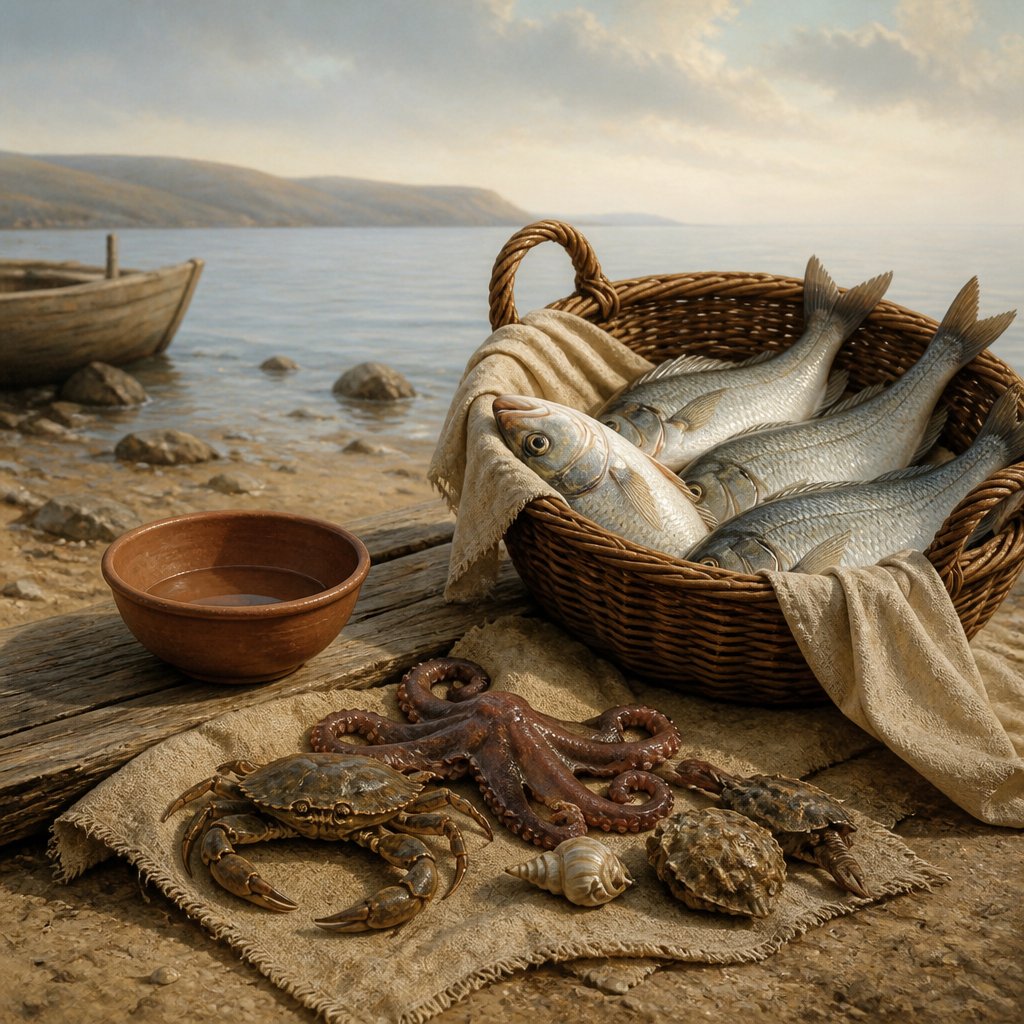
Deuteronomy 14:10 (KJV) states, "And whatsoever hath not fins and scales ye may not eat; it is unclean unto you." This verse is part of the dietary laws given to the Israelites by God through Moses. In this verse, God is instructing them on what types of fish are considered clean and suitable for consumption.
To understand the deeper meaning and commentary of this verse, it is important to consider the context in which it was written. The book of Deuteronomy is a record of Moses' final words to the Israelites before they entered the Promised Land. It serves as a reminder of God's laws and his covenant with the people. The dietary laws, including the specific regulations for fish, are part of the larger framework of holiness and purity that God expects from his chosen people.
The theme of cleanliness and purity is central to the message of Deuteronomy 14:10. The idea of clean and unclean animals extends beyond mere dietary guidelines; it represents a broader principle of spiritual purity and moral conduct. By adhering to these dietary restrictions, the Israelites were demonstrating their obedience to God's commands and their commitment to living holy lives.
The symbolism of the fins and scales of fish in this verse carries spiritual significance. Fins and scales are visible indicators of the fish's health and vitality, and by extension, its suitability for consumption. The requirement that fish must have both fins and scales to be considered clean reflects the idea that obedience to God's laws is a holistic endeavor. Just as a fish must possess both fins and scales to be considered clean, God's people must embody both outward adherence to his commandments and inner righteousness.
Furthermore, the emphasis on fins and scales can be seen as a metaphor for the need for discernment and integrity in the Christian walk. Fins provide fish with the ability to move and navigate through the waters, symbolizing the need for believers to be discerning and prudent in their choices and actions. Scales, on the other hand, serve as a protective covering for the fish, representing the importance of integrity and moral fortitude in the face of temptation and sin. Thus, the requirements for clean fish can be understood as a call for God's people to cultivate both discernment and integrity in their lives.
In a broader theological sense, the dietary laws in the Old Testament, including the regulations for clean and unclean animals, served as a means of setting the Israelites apart from the surrounding pagan cultures. By adhering to these laws, the Israelites were demonstrating their distinct identity as God's chosen people and their commitment to holiness.
It is important to note that with the coming of Christ, the dietary laws of the Old Testament were fulfilled and no longer binding for believers (Mark 7:19). However, the underlying principles of purity, obedience, and holiness remain relevant for Christians today. Deuteronomy 14:10 serves as a reminder of the importance of living in accordance with God's standards and maintaining spiritual purity in all aspects of life.
In conclusion, the verse Deuteronomy 14:10 carries a rich symbolism and profound spiritual implications. It emphasizes the themes of purity, obedience, discernment, and integrity, and serves as a reminder of the importance of living in accordance with God's standards. While the specific dietary regulations may no longer apply to Christians, the underlying principles remain relevant and instructive for believers today. This verse challenges us to pursue holiness and moral integrity in all areas of our lives, demonstrating our commitment to God and embodying the values of the kingdom of heaven.
Get our apps


Artwork for Deuteronomy 14:10

Deuteronomy 14:10 - "And whatsoever hath not fins and scales ye may not eat; it is unclean unto you."
"And whatsoever hath not fins and scales ye may not eat; it is unclean unto you." - Deuteronomy 14:10

Deuteronomy 10:14 - "Behold, the heaven and the heaven of heavens is the LORD'S thy God, the earth also, with all that therein is."

"Behold, the heaven and the heaven of heavens is the LORD'S thy God, the earth also, with all that therein is." - Deuteronomy 10:14

Deuteronomy 14:14 - "And every raven after his kind,"

Deuteronomy 14:17 - "And the pelican, and the gier eagle, and the cormorant,"

"And every raven after his kind," - Deuteronomy 14:14

Deuteronomy 14:16 - "The little owl, and the great owl, and the swan,"

Deuteronomy 26:4-10

Deuteronomy 26:4-10

Deuteronomy 14:3 - "¶ Thou shalt not eat any abominable thing."

Deuteronomy 14:11 - "¶ Of all clean birds ye shall eat."

Deuteronomy 14:20 - "But of all clean fowls ye may eat."

Deuteronomy 14:13 - "And the glede, and the kite, and the vulture after his kind,"

Deuteronomy 14:18 - "And the stork, and the heron after her kind, and the lapwing, and the bat."

Deuteronomy 14:12 - "But these are they of which ye shall not eat: the eagle, and the ossifrage, and the ospray,"

Deuteronomy 14:15 - "And the owl, and the night hawk, and the cuckow, and the hawk after his kind,"

Deuteronomy 29:14 - "Neither with you only do I make this covenant and this oath;"

Deuteronomy 22:10 - "¶ Thou shalt not plow with an ox and an ass together."

Deuteronomy 14:4 - "These are the beasts which ye shall eat: the ox, the sheep, and the goat,"

Deuteronomy 10:16 - "Circumcise therefore the foreskin of your heart, and be no more stiffnecked."

Deuteronomy 14:19 - "And every creeping thing that flieth is unclean unto you: they shall not be eaten."

Deuteronomy 25:14 - "Thou shalt not have in thine house divers measures, a great and a small."

"And the pelican, and the gier eagle, and the cormorant," - Deuteronomy 14:17

Deuteronomy 27:14 - "¶ And the Levites shall speak, and say unto all the men of Israel with a loud voice,"

Deuteronomy 14:5 - "The hart, and the roebuck, and the fallow deer, and the wild goat, and the pygarg, and the wild ox, and the chamois."

Deuteronomy 33:14 - "And for the precious fruits brought forth by the sun, and for the precious things put forth by the moon,"

Deuteronomy 10:19 - "Love ye therefore the stranger: for ye were strangers in the land of Egypt."

Deuteronomy 5:10 - "And shewing mercy unto thousands of them that love me and keep my commandments."

Deuteronomy 2:10 - "The Emims dwelt therein in times past, a people great, and many, and tall, as the Anakims;"