What does Deuteronomy 14:8 mean?
“And the swine, because it divideth the hoof, yet cheweth not the cud, it is unclean unto you: ye shall not eat of their flesh, nor touch their dead carcase.” — Deuteronomy 14:8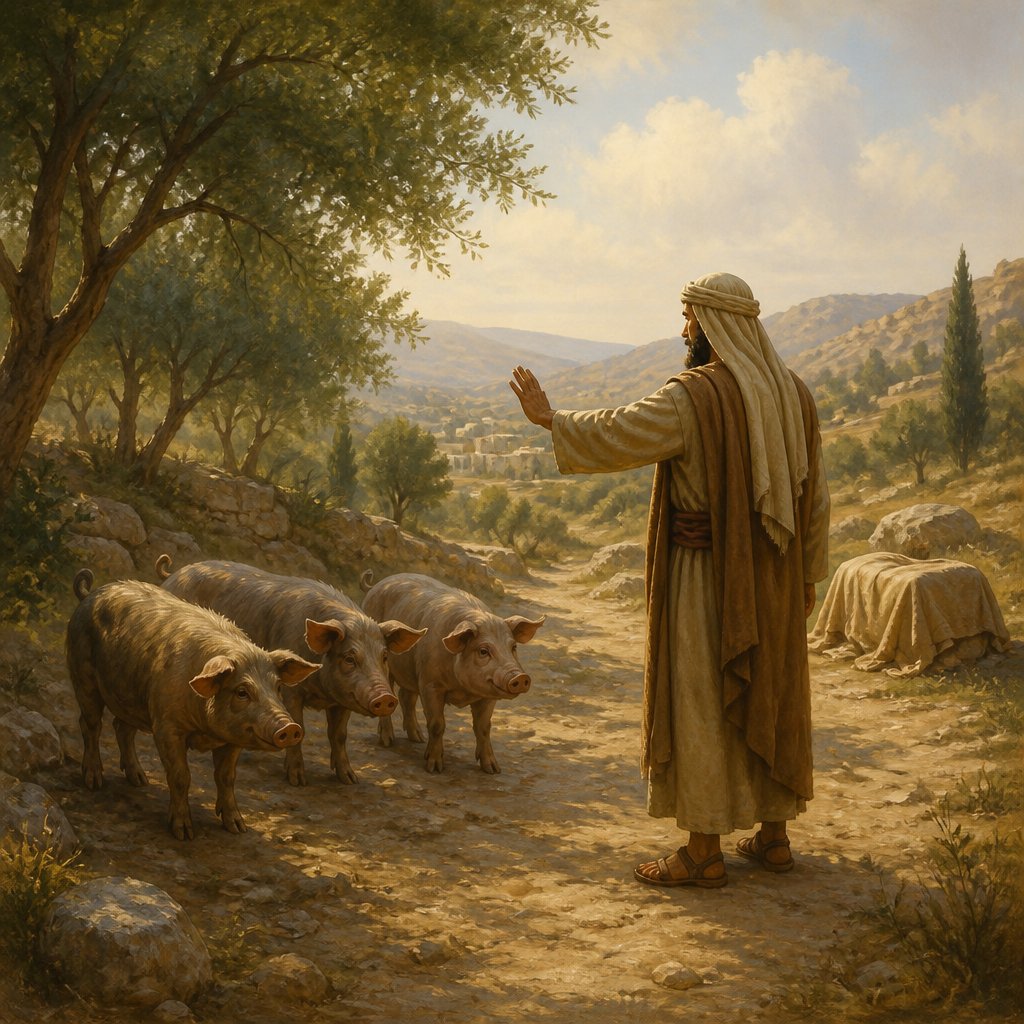
Deuteronomy 14:8 from the King James Version of the Bible states: "And the swine, because it divideth the hoof, yet cheweth not the cud, it is unclean unto you: ye shall not eat of their flesh, nor touch their dead carcase." This verse is part of the dietary laws given to the Israelites by God through Moses. It is part of a larger section in the book of Deuteronomy where the Israelites are given various laws and commandments by God to follow in their everyday lives.
The dietary laws laid out in the Old Testament are still followed by some Jewish and Muslim communities today. These laws essentially categorize certain animals as "clean" or "unclean" for consumption. The swine, or pig, is deemed as unclean in this verse because it both does not chew the cud and does not have a divided hoof. This means that it does not meet the criteria of being a clean animal for the Israelites to eat.
From a historical context, these dietary laws were meant to set the Israelites apart from the nations around them and to also promote good health and hygiene in their society. In ancient times, pork was more likely to harbor disease and parasites, and the handling and cooking of pork was less understood than it is today. By avoiding pork, the Israelites could reduce the risk of foodborne illnesses.
The theme of cleanliness and purity is evident in this verse. The idea of clean and unclean animals goes beyond mere physical hygiene, as it also has spiritual implications. In Jewish tradition, the concept of purity is significant, and it is often tied to rituals and practices that symbolize a state of holiness and separation from impurity. By following these dietary laws, the Israelites were not only protecting their physical health but also their spiritual cleanliness in the eyes of God.
Furthermore, this verse also reflects the idea of obedience and trust in God's wisdom. The Israelites were called to follow these dietary laws as a demonstration of their faith and obedience to God. By abstaining from eating certain foods, they were showing their trust in God's wisdom and authority over their lives. This theme of obedience and trust in God is a recurring theme throughout the Bible, as believers are called to submit themselves to God's will and guidance.
Symbolically, the swine and other unclean animals in the Old Testament represent impurity and defilement. By abstaining from these foods, the Israelites were outwardly demonstrating their commitment to holiness and separation from impurity. This practice of abstaining from certain foods also served as a reminder for the Israelites to be mindful of their actions and choices, both in the physical and spiritual realms.
In the New Testament, these dietary laws are revisited in the context of the early Christian church. In Acts 10, Peter has a vision where he is instructed to eat unclean animals, symbolizing that the dietary laws are no longer applicable in the same way for believers. This shift in perspective reflects a broader theme of inclusion and unity in the Christian faith, where the focus is not on outward rituals but on the condition of the heart.
In conclusion, Deuteronomy 14:8 offers guidance on dietary laws for the Israelites, emphasizing the themes of cleanliness, obedience, and spiritual purity. While these laws may not hold the same significance for all believers today, they provide valuable insight into the historical and cultural context of the Old Testament and the principles of faith and obedience that are relevant for all time.
Get our apps


Artwork for Deuteronomy 14:8

Deuteronomy 14:8 - "And the swine, because it divideth the hoof, yet cheweth not the cud, it is unclean unto you: ye shall not eat of their flesh, nor touch their dead carcase."
"And the swine, because it divideth the hoof, yet cheweth not the cud, it is unclean unto you: ye shall not eat of their flesh, nor touch their dead carcase." - Deuteronomy 14:8

Deuteronomy 8:14 - "Then thine heart be lifted up, and thou forget the LORD thy God, which brought thee forth out of the land of Egypt, from the house of bondage;"

Deuteronomy 14:14 - "And every raven after his kind,"

deuteronomy 31 8

Deuteronomy 31:8

Deuteronomy 14:17 - "And the pelican, and the gier eagle, and the cormorant,"

"And every raven after his kind," - Deuteronomy 14:14

Deuteronomy 14:16 - "The little owl, and the great owl, and the swan,"

Deuteronomy 8:8 - "A land of wheat, and barley, and vines, and fig trees, and pomegranates; a land of oil olive, and honey;"

Deuteronomy 14:3 - "¶ Thou shalt not eat any abominable thing."

Deuteronomy 14:11 - "¶ Of all clean birds ye shall eat."

Deuteronomy 14:20 - "But of all clean fowls ye may eat."

Deuteronomy 14:13 - "And the glede, and the kite, and the vulture after his kind,"

Deuteronomy 14:18 - "And the stork, and the heron after her kind, and the lapwing, and the bat."

Deuteronomy 14:12 - "But these are they of which ye shall not eat: the eagle, and the ossifrage, and the ospray,"

Deuteronomy 14:15 - "And the owl, and the night hawk, and the cuckow, and the hawk after his kind,"

Deuteronomy 29:14 - "Neither with you only do I make this covenant and this oath;"

Deuteronomy 14:4 - "These are the beasts which ye shall eat: the ox, the sheep, and the goat,"

Deuteronomy 14:19 - "And every creeping thing that flieth is unclean unto you: they shall not be eaten."

Deuteronomy 25:14 - "Thou shalt not have in thine house divers measures, a great and a small."

"And the pelican, and the gier eagle, and the cormorant," - Deuteronomy 14:17

Deuteronomy 27:14 - "¶ And the Levites shall speak, and say unto all the men of Israel with a loud voice,"

Deuteronomy 14:10 - "And whatsoever hath not fins and scales ye may not eat; it is unclean unto you."

Deuteronomy 14:5 - "The hart, and the roebuck, and the fallow deer, and the wild goat, and the pygarg, and the wild ox, and the chamois."

Deuteronomy 33:14 - "And for the precious fruits brought forth by the sun, and for the precious things put forth by the moon,"
"Then thine heart be lifted up, and thou forget the LORD thy God, which brought thee forth out of the land of Egypt, from the house of bondage;" - Deuteronomy 8:14

Deuteronomy 23:8 - "The children that are begotten of them shall enter into the congregation of the LORD in their third generation."

Deuteronomy 10:14 - "Behold, the heaven and the heaven of heavens is the LORD'S thy God, the earth also, with all that therein is."

Deuteronomy 27:8 - "And thou shalt write upon the stones all the words of this law very plainly."