What does Deuteronomy 15:7 mean?
“If there be among you a poor man of one of thy brethren within any of thy gates in thy land which the LORD thy God giveth thee, thou shalt not harden thine heart, nor shut thine hand from thy poor brother:” — Deuteronomy 15:7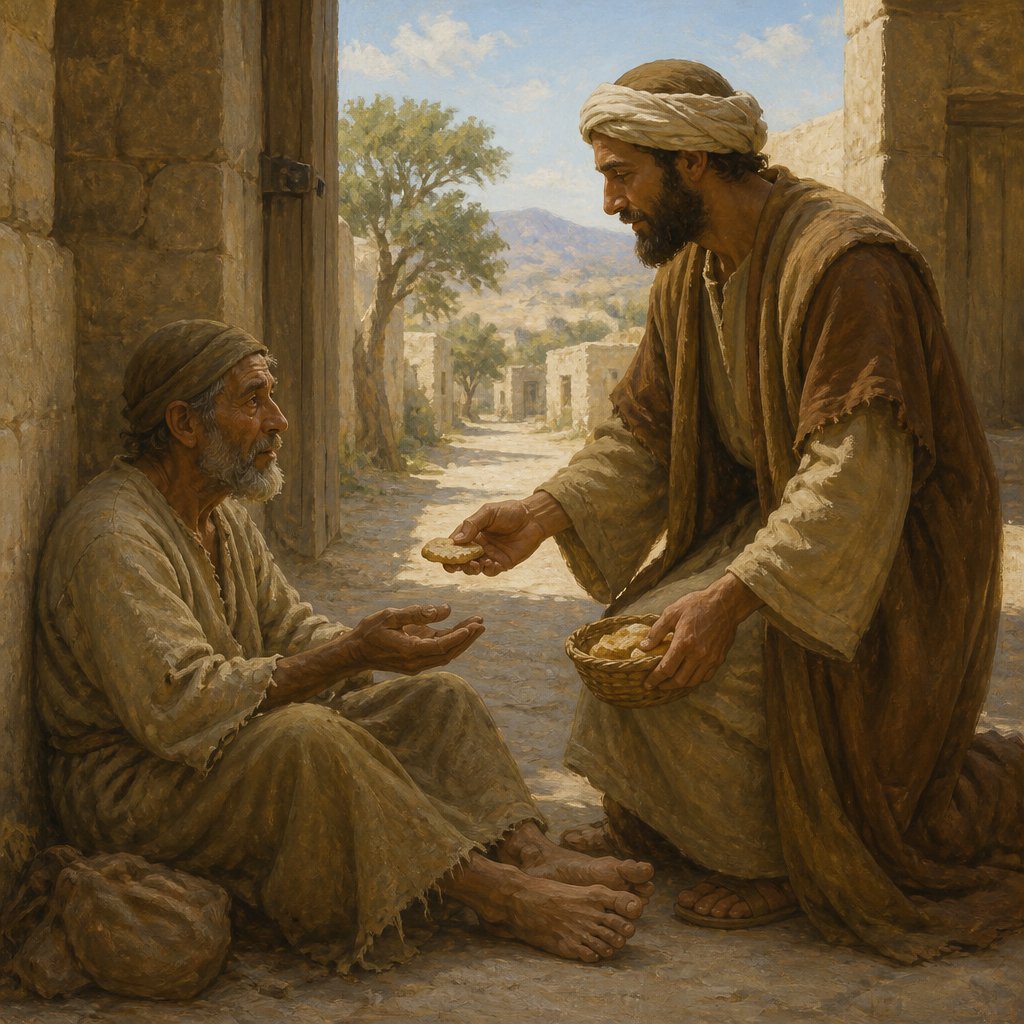
Deuteronomy 15:7 in the King James Version reads, "If there be among you a poor man of one of thy brethren within any of thy gates in thy land which the Lord thy God giveth thee, thou shalt not harden thine heart, nor shut thine hand from thy poor brother." This verse is part of the larger passage in Deuteronomy 15 that deals with the treatment of the poor and the lending of money.
The verse begins with an acknowledgment of the presence of poverty among the Israelites. It addresses the Israelites as a community, instructing them to look out for each other. The poor man is described as "one of thy brethren," emphasizing the interconnectedness and shared heritage of the Israelite people. The phrase "within any of thy gates in thy land" further emphasizes the communal responsibility to care for those in need within their community and their land.
The commandment not to harden one's heart or shut one's hand from the poor brother is a powerful reminder of the importance of compassion and generosity. Throughout the Bible, there is a consistent emphasis on caring for the marginalized and vulnerable members of society. This verse in Deuteronomy aligns with broader biblical teachings about compassion, justice, and community.
The theme of social justice and compassion for the poor is central to the biblical narrative. In the Hebrew Bible, there are numerous passages that emphasize the importance of caring for the poor and vulnerable. For example, in Proverbs 19:17, it is written, "He that hath pity upon the poor lendeth unto the Lord, and that which he hath given will he pay him again." This verse reinforces the idea that caring for the poor is not only a moral obligation but also a way to honor and serve God.
In the New Testament, Jesus also speaks about the importance of caring for the poor and marginalized. In Matthew 25:40, he says, "And the King shall answer and say unto them, Verily I say unto you, Inasmuch as ye have done it unto one of the least of these my brethren, ye have done it unto me." This echoes the sentiment expressed in Deuteronomy 15:7, emphasizing that acts of compassion and generosity towards the poor are seen as directly serving God.
The context of this verse is important for understanding its significance. Deuteronomy is part of the Torah, the first five books of the Hebrew Bible, which are attributed to Moses. These books contain laws and commandments that were given to the Israelites as they journeyed through the wilderness towards the Promised Land. The laws in Deuteronomy were meant to guide the Israelites in their relationships with each other and with God.
In the historical context of ancient Israel, poverty and indebtedness were common issues. The laws in Deuteronomy 15 were intended to address these social and economic challenges by promoting compassion and fairness. The instructions regarding debt cancellation and the treatment of the poor were designed to prevent the accumulation of perpetual debt and to ensure that the vulnerable members of society were not exploited.
The symbolism in this verse lies in the imagery of the "hardened heart" and the "shut hand." These phrases convey the idea of insensitivity and closed-off generosity. The commandment not to harden one's heart and shut one's hand serves as a call to open-heartedness, empathy, and practical assistance for those in need. The symbolism of the "poor brother" emphasizes the interconnectedness and shared identity of the Israelite community, reinforcing the idea that caring for the poor is a communal responsibility.
In conclusion, Deuteronomy 15:7 is a powerful biblical verse that addresses the theme of social justice, compassion, and community responsibility. It serves as a reminder of the importance of caring for the poor and vulnerable members of society, and it emphasizes the interconnectedness of the human community. The verse carries a timeless message about the ethical imperative to show compassion and generosity towards those in need, and its relevance extends beyond its original historical context. It continues to inspire and challenge readers to embody the virtues of empathy and solidarity in their treatment of others.
Get our apps


Artwork for Deuteronomy 15:7

Deuteronomy 15:7-8 - "If there is a poor man among your brothers in any of the towns of the land that the Lord your God is giving you, do not be hardhearted or tightfisted toward your poor brother. Rather be openhanded and freely lend him whatever he needs."

Deuteronomy 15:7 - "¶ If there be among you a poor man of one of thy brethren within any of thy gates in thy land which the LORD thy God giveth thee, thou shalt not harden thine heart, nor shut thine hand from thy poor brother:"
"¶ If there be among you a poor man of one of thy brethren within any of thy gates in thy land which the LORD thy God giveth thee, thou shalt not harden thine heart, nor shut thine hand from thy poor brother:" - Deuteronomy 15:7
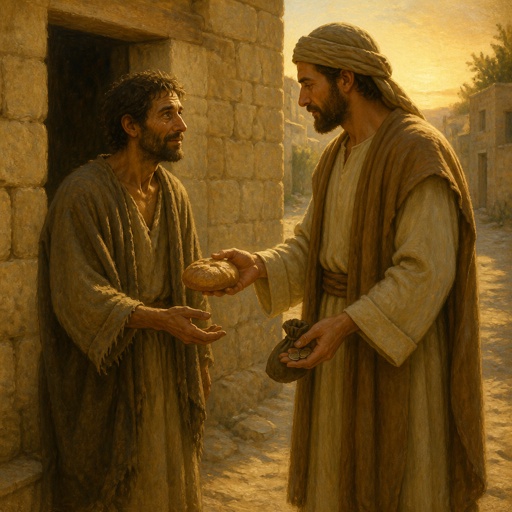
"If there is a poor man among your brothers in any of the towns of the land that the Lord your God is giving you, do not be hardhearted or tightfisted toward your poor brother. Rather be openhanded and freely lend him whatever he needs." - Deuteronomy 15:7-8

Deuteronomy 7:15 - "And the LORD will take away from thee all sickness, and will put none of the evil diseases of Egypt, which thou knowest, upon thee; but will lay them upon all them that hate thee."

Deuteronomy 3:15 - "And I gave Gilead unto Machir."

Deuteronomy 15:1 - "At the end of every seven years thou shalt make a release."

Deuteronomy 14:15 - "And the owl, and the night hawk, and the cuckow, and the hawk after his kind,"

Deuteronomy 33:15 - "And for the chief things of the ancient mountains, and for the precious things of the lasting hills,"

Deuteronomy 15:15 - "And thou shalt remember that thou wast a bondman in the land of Egypt, and the LORD thy God redeemed thee: therefore I command thee this thing to day."

Deuteronomy 31:15 - "And the LORD appeared in the tabernacle in a pillar of a cloud: and the pillar of the cloud stood over the door of the tabernacle."

Deuteronomy 11:15 - "And I will send grass in thy fields for thy cattle, that thou mayest eat and be full."

Deuteronomy 30:15 - "¶ See, I have set before thee this day life and good, and death and evil;"

Deuteronomy 3:7 - "But all the cattle, and the spoil of the cities, we took for a prey to ourselves."

John 15:7

John 15:7

Deuteronomy 5:7 - "Thou shalt have none other gods before me."

Deuteronomy 15:23 - "Only thou shalt not eat the blood thereof; thou shalt pour it upon the ground as water."

"And I gave Gilead unto Machir." - Deuteronomy 3:15

Deuteronomy 15:3 - "Of a foreigner thou mayest exact it again: but that which is thine with thy brother thine hand shall release;"

Deuteronomy 2:15 - "For indeed the hand of the LORD was against them, to destroy them from among the host, until they were consumed."

Deuteronomy 23:15 - "¶ Thou shalt not deliver unto his master the servant which is escaped from his master unto thee:"

Deuteronomy 29:15 - "But with him that standeth here with us this day before the LORD our God, and also with him that is not here with us this day:"

Deuteronomy 15:22 - "Thou shalt eat it within thy gates: the unclean and the clean person shall eat it alike, as the roebuck, and as the hart."

Deuteronomy 19:7 - "Wherefore I command thee, saying, Thou shalt separate three cities for thee."

Genesis 15:7

Deuteronomy 10:7 - "From thence they journeyed unto Gudgodah; and from Gudgodah to Jotbath, a land of rivers of waters."

Deuteronomy 11:7 - "But your eyes have seen all the great acts of the LORD which he did."

Deuteronomy 15:13 - "And when thou sendest him out free from thee, thou shalt not let him go away empty:"

Deuteronomy 22:15 - "Then shall the father of the damsel, and her mother, take and bring forth the tokens of the damsel's virginity unto the elders of the city in the gate:"