What does Deuteronomy 16:10 mean?
“And thou shalt keep the feast of weeks unto the LORD thy God with a tribute of a freewill offering of thine hand, which thou shalt give unto the , according as the LORD thy God hath blessed thee:” — Deuteronomy 16:10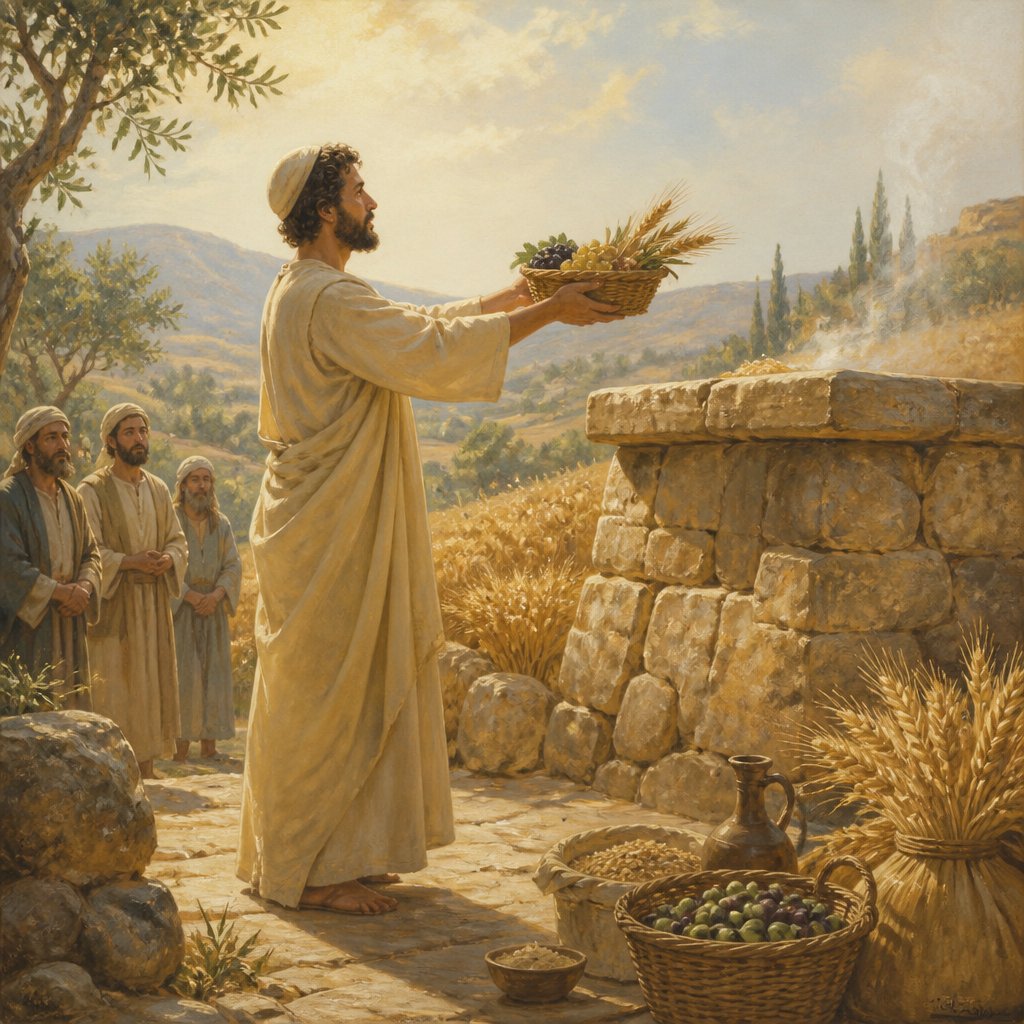
Deuteronomy 16:10 (KJV) says, "And thou shalt keep the feast of weeks unto the Lord thy God with a tribute of a freewill offering of thine hand, which thou shalt give unto the Lord thy God, according as the Lord thy God hath blessed thee."
This verse is part of the instructions given by Moses to the Israelites regarding the celebration of the Feast of Weeks, also known as Shavuot or Pentecost. The feast of Weeks was a significant event in the Jewish religious calendar, occurring seven weeks (or 50 days) after the Passover. It was a time of thanksgiving and celebration, marking the wheat harvest and commemorating the giving of the Law on Mount Sinai.
The verse emphasizes the importance of giving a freewill offering to the Lord as a way of expressing gratitude for His blessings. This offering is not to be given out of compulsion or obligation, but out of a willing and grateful heart. It is a way for the Israelites to demonstrate their devotion and commitment to God, acknowledging Him as the source of all their blessings.
The themes of gratitude, generosity, and devotion are central to this verse. The act of giving a freewill offering is an expression of thankfulness for God's provision and a recognition of His sovereignty. It is a way for the Israelites to show their love and reverence for God, acknowledging His faithfulness and goodness in their lives.
The context of this verse is important for understanding its significance. In the preceding verses, Moses outlines the specific requirements for celebrating the Feast of Weeks, including the offering of firstfruits and the gathering of the people for a sacred assembly. The emphasis on the freewill offering underscores the voluntary and heartfelt nature of the act, distinguishing it from other required sacrifices and offerings.
Symbolically, the freewill offering represents the Israelites' willingness to surrender and dedicate themselves to God. By giving a portion of their harvest as an offering, they are acknowledging God's ownership of all things and demonstrating their trust in His provision. It is a tangible expression of their faith and a way of aligning themselves with God's purposes and values.
The principle of freewill offerings is also relevant in the New Testament, where the apostle Paul encourages believers to give generously and cheerfully, not under compulsion, for "God loves a cheerful giver" (2 Corinthians 9:7). The spirit of freewill giving continues to be an important aspect of Christian stewardship and worship, reflecting a heart of gratitude and a desire to honor God with our resources.
In summary, Deuteronomy 16:10 conveys the message of gratitude, generosity, and devotion in the context of the Feast of Weeks. It highlights the importance of giving a freewill offering as a way of expressing thankfulness for God's blessings and demonstrating devotion to Him. The verse serves as a timeless reminder of the joy and privilege of giving back to God out of love and gratitude for all He has done.
Get our apps


Artwork for Deuteronomy 16:10

Deuteronomy 16:10 - "And thou shalt keep the feast of weeks unto the LORD thy God with a tribute of a freewill offering of thine hand, which thou shalt give unto the LORD thy God, according as the LORD thy God hath blessed thee:"
"And thou shalt keep the feast of weeks unto the LORD thy God with a tribute of a freewill offering of thine hand, which thou shalt give unto the LORD thy God, according as the LORD thy God hath blessed thee:" - Deuteronomy 16:10

Deuteronomy 10:16 - "Circumcise therefore the foreskin of your heart, and be no more stiffnecked."

"Circumcise therefore the foreskin of your heart, and be no more stiffnecked." - Deuteronomy 10:16

Deuteronomy 20:16

Deuteronomy 20:16

Deuteronomy 20:16

Deuteronomy 14:16 - "The little owl, and the great owl, and the swan,"

Deuteronomy 26:4-10

Deuteronomy 26:4-10

Deuteronomy 28:16 - "Cursed shalt thou be in the city, and cursed shalt thou be in the field."

Deuteronomy 22:10 - "¶ Thou shalt not plow with an ox and an ass together."

Deuteronomy 32:16 - "They provoked him to jealousy with strange gods, with abominations provoked they him to anger."

Deuteronomy 6:16 - "¶ Ye shall not tempt the LORD your God, as ye tempted him in Massah."

Deuteronomy 19:16 - "¶ If a false witness rise up against any man to testify against him that which is wrong;"

Deuteronomy 16:12 - "And thou shalt remember that thou wast a bondman in Egypt: and thou shalt observe and do these statutes."

Deuteronomy 25:16 - "For all that do such things, and all that do unrighteously, are an abomination unto the LORD thy God."

Deuteronomy 12:16 - "Only ye shall not eat the blood; ye shall pour it upon the earth as water."

Deuteronomy 10:19 - "Love ye therefore the stranger: for ye were strangers in the land of Egypt."

Deuteronomy 2:16 - "¶ So it came to pass, when all the men of war were consumed and dead from among the people,"

Deuteronomy 27:16 - "Cursed be he that setteth light by his father or his mother. And all the people shall say, Amen."

Deuteronomy 14:10 - "And whatsoever hath not fins and scales ye may not eat; it is unclean unto you."

Deuteronomy 5:10 - "And shewing mercy unto thousands of them that love me and keep my commandments."

Deuteronomy 2:10 - "The Emims dwelt therein in times past, a people great, and many, and tall, as the Anakims;"

"The little owl, and the great owl, and the swan," - Deuteronomy 14:16

Deuteronomy 10:10 - "And I stayed in the mount, according to the first time, forty days and forty nights; and the LORD hearkened unto me at that time also, and the LORD would not destroy thee."

Genesis 16:10

Deuteronomy 11:16 - "Take heed to yourselves, that your heart be not deceived, and ye turn aside, and serve other gods, and worship them;"

Deuteronomy 4:16 - "Lest ye corrupt yourselves, and make you a graven image, the similitude of any figure, the likeness of male or female,"

Deuteronomy 16:22 - "Neither shalt thou set thee up any image; which the LORD thy God hateth."